A non-surgical result can appear before it fully develops. With a skin tightening treatment in Laguna Niguel, some facelift techniques produce an immediate visible effect, while full effects develop over the following weeks. The type of treatment shapes what changes you can expect and how long those results may last.
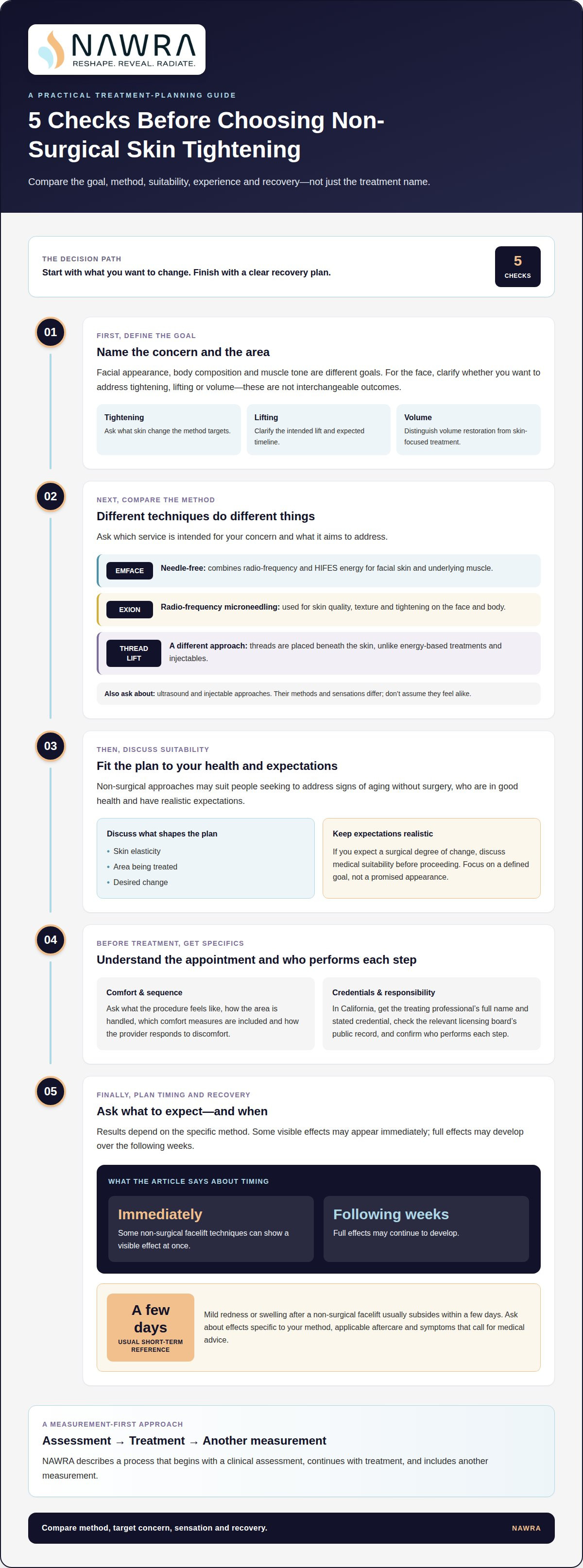
It’s reasonable to want more than a promise of “tighter skin.” You need to understand the likely effect, the experience during treatment, and the recovery that follows before deciding whether an option fits your goals. This guide explains how non-surgical approaches differ and what to weigh when considering them.
You’ll find practical guidance on comparing treatment goals, understanding what a method can and can’t do, and choosing a next step. If your goal is facial skin rejuvenation, consider a service designed for the face; if it’s body composition or contouring, use an approach suited to that goal.
Key Takeaways
- Match the treatment approach to the concern you want to address; non-surgical facelift techniques can include injectables, ultrasound, or radiofrequency.
- Set expectations around timing: some results appear immediately, while full effects may develop over the following weeks.
- Plan for possible short-term redness or swelling, and understand how treatment type affects discomfort and recovery.
- Compare treatment costs by looking at the method, treatment area, and plan involved, rather than relying on a single general figure.
- Use practical preparation and aftercare steps to support recovery and make the experience easier to plan around.
Treatment discomfort and downtime
Start with the concern you want to address and the area involved. Facial skin appearance, body composition, and muscle tone are different goals, so compare services by what they’re designed to target.
Treatment Comfort
Ask what the procedure feels like, how the treatment area is handled, and what comfort measures are part of the appointment. Ultrasound, radiofrequency, and injectable approaches use different methods, so don’t assume their sensations are alike. A useful consultation explains each step and how the provider responds if you feel discomfort. These details help you judge whether a treatment fits your preferences and schedule.
Downtime and Side Effects
Recovery also varies by technique. Mild redness or swelling after a non-surgical facelift usually subsides within a few days. Ask which temporary effects can follow the specific method, how they may affect your appearance, and what aftercare applies. The answer should distinguish expected short-term changes from symptoms that call for medical advice, rather than treating every procedure as having identical downtime.
Candidate suitability matters, too. Non-surgical approaches may suit people seeking to address signs of aging without surgery, who are in good health and have realistic expectations. Skin elasticity, the area being treated, and the desired change shape the discussion. Ask how the method relates to collagen and skin elasticity, and whether its expected effect addresses your main concern. A realistic plan focuses on a defined treatment goal, not a promise of a particular appearance.
In California, you can verify a treating professional’s credential by getting their full name and stated credential, then checking the relevant California licensing board’s public record. Confirm which professional performs each step. This helps distinguish a clinic’s general credentials from those of the person responsible for your care.
For a skin tightening treatment in Laguna Niguel, first clarify whether you mean facial rejuvenation or body contouring. NAWRA is a precision wellness studio in Los Alamitos serving nearby communities, including Laguna Niguel, Cypress, Cerritos, Long Beach, Seal Beach, La Palma, Buena Park, Lakewood, Anaheim, Norwalk, Irvine, Newport Beach, Huntington Beach, Bellflower, Tustin, Fullerton, and Yorba Linda. Its services focus on measured wellness, body contouring, and facial rejuvenation.
Before deciding, request a clear explanation of the appointment sequence, comfort measures, and recovery plan for your chosen technique. Ask how soon you can expect visible changes; non-surgical facelift results may appear immediately, with full effects developing over the following weeks. Then weigh that timeline against your priorities. A precise comparison of method, sensation, and downtime makes the decision more practical than choosing by treatment name alone.
Non-surgical facelift techniques
Non-surgical facial treatments use different methods to address changes in skin and facial appearance. The right comparison starts with your goal: tightening, lifting, or restoring volume are not interchangeable outcomes.
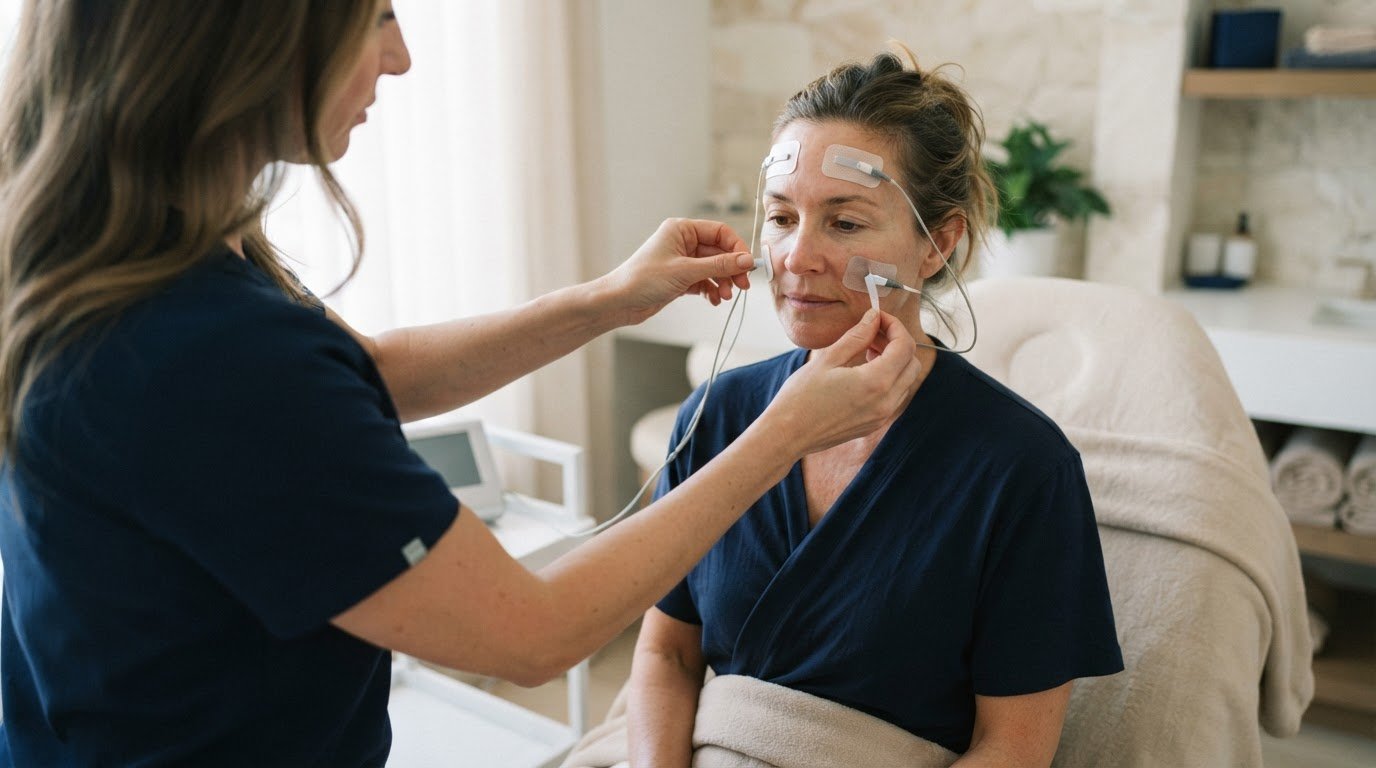
Different technologies work in different ways. EMFACE combines radio-frequency and HIFES energy for facial skin and underlying muscle, without needles. EXION uses radio-frequency microneedling for skin quality, texture, and tightening on the face and body. Ask which service is intended for your concern and what it aims to address.
In Laguna Niguel and nearby communities, people may consider a range of facial services, but the specific method matters more than a broad label such as “facelift.” NAWRA offers EMFACE, a needle-free treatment combining radio-frequency and HIFES energy for facial skin and underlying muscle, as well as EXION radio-frequency microneedling for skin quality, texture, and tightening on the face and body.
Results and timelines depend on the specific method, and no single schedule applies to every treatment. Ask what changes the service is intended to address and how progress is measured. NAWRA’s measurement-first approach starts with a clinical assessment, followed by treatment and another measurement.
Thread lifts are another option to distinguish from energy-based treatments and injectables. They use threads placed beneath the skin, so the procedure differs from RF, ultrasound, laser, and microneedling. Compare the intended lift, expected timeline, and recovery plan. A youthful appearance is a goal, not a treatment specification; clarify the change you want before considering a technique.
Good candidates for non-surgical skin tightening are people seeking to address signs of aging without surgery, who are in good health and have realistic expectations. Those whose health does not meet that criterion, or who expect a surgical degree of change, are poor candidates for proceeding without a medical suitability discussion. A cosmetic treatment plan should fit both your health and your desired outcome.
For skin tightening treatment in Laguna Niguel, compare options by method, target concern, and results timeline. Ask the practitioner to explain why a specific approach suits your goal, what changes it aims to create, and how long effects typically last. This focused discussion helps separate a volume-restoring injectable from a skin-focused energy treatment, and keeps the decision grounded in your priorities rather than a trend.
Recovery time and possible side effects
Recovery planning starts with the exact procedure, not the broad label “skin rejuvenation.” A non-surgical facelift may involve different techniques, and their recovery expectations shouldn’t be treated as interchangeable. Mild redness or swelling after a non-surgical facelift usually subsides within a few days. That gives you a practical short-term reference, but your treatment plan should specify the effects associated with its particular method.
For example, facial thread lifts have a distinct recovery detail: tenderness is usually completely resolved within a week. That timeline differs from the general expectation for mild redness or swelling after a non-surgical facelift. Before scheduling, ask which temporary effects are associated with the procedure you’re considering, when they typically settle, and what to do if they persist or worsen. Clear answers make it easier to plan work, social events, and skincare around treatment.
Visible change and recovery aren’t the same measure. Some non-surgical facelift results are visible immediately, while full effects develop over the following weeks. Temporary redness or swelling can occur during that period, so an early appearance doesn’t necessarily show the final outcome. If your goal is to soften fine lines, clarify whether the technique targets that concern and what changes you should assess as the result develops.
Build a simple recovery record. Note the procedure date, the area treated, and any changes you notice each day. For instance, record whether redness is fading or swelling is changing, rather than relying on memory at a later appointment. Follow the aftercare instructions provided for your treatment, and contact the treating professional if symptoms concern you. This keeps observations specific without assuming every procedure follows one identical pattern.
Recovery expectations also help distinguish a treatment from a convenient event-day fix. If you want a youthful appearance for a particular occasion, account for the possibility of visible short-term effects and developing results. Mild redness or swelling may take a few days to subside, while full effects may take the following weeks to develop. Discuss timing before booking, especially if your calendar leaves little room for recovery.
Ask for a written explanation of the expected recovery sequence before consenting: immediate effects, likely temporary changes, and the point when results are assessed. Include skincare instructions and whom to contact if your recovery differs from the plan. For a thread lift, specifically discuss tenderness and its usual resolution within a week. For other non-surgical approaches, get the timeline tied to that procedure rather than borrowing another technique’s expectations.
Treatment durations and prices
Appointment length and total cost depend on the method, treatment area, and plan. In Laguna Niguel, a non-surgical facelift typically takes between 30 and 60 minutes. Facial thread lifts are often completed in an hour or less. Those timings describe appointment duration, not recovery or how soon full results develop.
Compare the procedure itself, not just the time in the room. A 30-minute energy-based appointment and a thread lift completed in an hour or less involve different techniques. Injectables such as dermal fillers are another category, aimed at restoring volume rather than using the same approach as energy-based therapy. Ask what the appointment includes, which areas it covers, and whether the plan involves more than one visit.
For this treatment category, price depends on the case and is given after a quote request; the main factors include technique, treatment area, and the planned sessions. A cost comparison is useful only when each estimate describes the same scope. For example, an estimate for one facial area cannot be compared directly with a plan covering several areas or visits.
Patients can make estimates easier to understand by separating the treatment components. A written breakdown should identify the procedure, area, number of planned visits, and any included follow-up. If a plan combines fillers with another treatment, the estimate should distinguish those components. That detail helps you see what restores volume, what targets skin, and what the total plan actually covers.
Consultations, financing, and treatment packages are clinic-specific arrangements in Laguna Niguel, not standard features of every procedure. A consultation can clarify the treatment goal and proposed plan; financing concerns payment, while a package groups services or visits. Compare the terms and the included treatment details, not simply the package label. A lower quoted total may reflect a different scope.
Before selecting a plan, write down the treatment area, technique, visit schedule, and the result you want to address. Use those same points to review each estimate. If the goal is to restore facial volume, fillers may be discussed; if the concern is skin laxity, a different approach may be proposed. Clear scope makes duration and price easier to interpret together.
Finally, keep appointment time separate from treatment value. A 30-to-60-minute visit gives a scheduling estimate, but it doesn’t define the treatment’s suitability or outcome. Review the technique, areas treated, planned sessions, and aftercare as one decision. That comparison gives patients a more useful basis for budgeting than time alone.
Before- and aftercare
Use the consultation to turn general advice into a treatment-specific plan. Confirm the procedure, treated area, preparation steps, and aftercare instructions before booking. For a facial treatment, ask which skincare products to pause or continue, and when to resume them. The answer should reflect the technique used, not a generic routine copied from another procedure.
Before a non-surgical facelift, patients are advised to avoid alcohol and blood-thinning medications. If you take prescribed medication, discuss it with the treating professional before making any changes. Bring a clear list of medications and supplements to the consultation. This lets the professional review your situation and give instructions tailored to the procedure, rather than leaving you to interpret a broad recommendation.
Plan around the first day after treatment. Patients are advised to avoid strenuous activities and excessive sun or heat exposure for 24 hours after a non-surgical facelift. That can mean rescheduling a hard workout, skipping a sauna, and limiting direct sun during that period. If your usual routine includes outdoor exercise, arrange a lower-exertion alternative and follow the specific instructions given for your procedure.
Keep the first day practical. Before leaving the appointment, ask what cleansing and skincare are appropriate for the treated area, and whether any products should wait. Don’t assume that a routine suitable for one facial procedure fits another. For example, instructions after an energy-based treatment may differ from those after injectables. Use the written plan from the treating professional as your guide.
Track the treated area without overcomplicating the process. Note the procedure date, the products used afterward, and any changes in appearance or texture. A simple daily record can help you describe what you notice at follow-up. If a symptom concerns you, contact the treating professional and explain when it began, where it appears, and whether it is changing.
Before scheduling around an event, include the 24-hour activity and sun or heat guidance in your calendar. Ask during the consultation how the treatment’s expected timeline affects your plans, and when to resume your usual skincare. These practical details matter for a facial procedure, especially if your routine includes intensive products or frequent outdoor activity.
For a separate facial-care option, explore the Cryo Facial. Keep it distinct from post-treatment instructions: your aftercare plan should remain specific to the skin-tightening procedure you receive.
NAWRA
NAWRA helps clients explore body composition and non-invasive contouring through a measurement-first approach. DEXA Body Composition measures body composition, while EMSCULPT NEO combines radio-frequency heating with HIFEM electromagnetic energy to address fat and build muscle in the same session. ExoPod Full-Body Therapy and BOA Lymphatic Drainage are additional wellness services.
These offerings address adjacent wellness and body-contouring interests; they aren’t a substitute for choosing a facial skin-tightening technique based on its intended results, recovery, and suitability. Consider NAWRA when you want to connect aesthetic goals with a more data-informed view of body composition and wellness. Contact NAWRA to discuss which of these options aligns with your goals.
Choose a Next Step That Fits Your Goal
Your next step is to define the change you want and choose a service designed for that goal. A skin tightening treatment in Laguna Niguel should be assessed according to the concern, intended effect, and treatment plan. If you’re also exploring body composition or wellness, keep those goals distinct from facial rejuvenation.
NAWRA offers EMSCULPT NEO, DEXA Body Composition, and ExoPod Full-Body Therapy for clients exploring non-invasive body contouring, body composition, or full-body wellness. These options address different goals, so a consultation can help you identify the direction that fits your priorities without confusing them with facial treatments.
Contact NAWRA to discuss your options and decide on a practical next step. Move forward with clear priorities, a realistic plan, and confidence in the questions you’re asking.
Frequently Asked Questions
What Type of Results Should I Expect?
Choose a service according to its intended purpose, not the promise of a complete transformation. EMFACE addresses facial skin and underlying muscle, while EMSCULPT NEO is a body-contouring treatment. The area matters: facial rejuvenation and body composition are distinct goals. Identify what you want to address and ask how the proposed method relates to it.
Are there any side effects?
Yes, some non-surgical facelift techniques can cause temporary effects such as redness or swelling. The likelihood and type depend on the method used and the treated area. A facial thread lift can involve tenderness, which is usually completely resolved within a week. Ask for the expected effects of your specific procedure and instructions for what to do if a reaction concerns you.
How many sessions are needed?
There isn’t one session count that applies across all skin and body treatments. The plan depends on the service, area, and goal. NAWRA’s process starts with a clinical assessment, followed by treatment and another measurement. Ask how the proposed plan is structured and how progress will be assessed.
What is Skin Tightening?
Skin tightening describes approaches intended to improve the appearance of lax skin, but methods differ. NAWRA offers EMFACE for facial skin and underlying muscle, and EXION radio-frequency microneedling for skin quality, texture, and tightening on the face and body. These services have not been evaluated by the FDA and are not intended to diagnose, treat, cure, or prevent any disease.
How much does skin tightening cost in Laguna Niguel by treatment type?
Price depends on the case and is given after a quote request. The main cost factors are the technique, treatment area, and planned sessions. For a useful comparison, look at the full treatment scope rather than a procedure name alone. For example, an estimate covering multiple areas or visits isn’t directly comparable with one for a single area and appointment.
How many sessions are typically needed, and how long do results last?
Session needs depend on the approach and treatment plan; no single schedule applies to every method. Results from non-surgical facelifts can last several months to a year, depending on the treatments used. Facial thread lift effects typically last several months to over a year. Compare longevity by technique, and distinguish how long results last from how many appointments the plan includes.
What results can skin tightening achieve for the face, neck, and body?
The right approach depends on the area and the change you want. For facial concerns, EMFACE addresses facial skin and underlying muscle, while EXION is used for skin quality, texture, and tightening on the face and body. Body composition and muscle goals call for different services. Define your priority before comparing options.
What are the risks, side effects, and recovery time for skin tightening treatments?
Recovery and possible effects vary by procedure. Mild redness or swelling after a non-surgical facelift usually subsides within a few days; tenderness after a facial thread lift is usually completely resolved within a week. Before booking, ask for the expected recovery sequence and aftercare for the exact technique. Plan around that guidance, especially if an event or travel could conflict with the treatment timeline.