
VO2 Max — aerobic capacity
VO2 max is how much oxygen your body can actually use at maximum effort. It’s the standard measure of aerobic capacity, it’s strongly associated with long-term health outcomes, and unlike most fitness metrics it can only be measured — not estimated from your wrist.
Free consultation
Tell us where it hurts and we’ll send a personalized cold + infrared protocol plan within one business day.
Test itself
Why measure it
Consumer wearables estimate VO2 max from heart rate and pace using a model. It’s a reasonable approximation for tracking your own trend, and a poor one for knowing your actual number — the error is wide enough that two people with identical watch readings can have meaningfully different aerobic capacity.
A laboratory test measures it directly. You wear a mask that captures every breath while the intensity steps up, and the analyser tracks the oxygen you consume and the carbon dioxide you produce until your oxygen uptake plateaus. That plateau is your VO2 max.
The more practical output is your heart rate zones. Most people train in a zone they’ve calculated from the old 220-minus-age formula, which was never intended as a precise tool. Getting real thresholds means your easy days are actually easy and your hard days are actually hard — which is the difference between training and just accumulating fatigue.
What you get
Here they are on a sample report, and what each one is for.
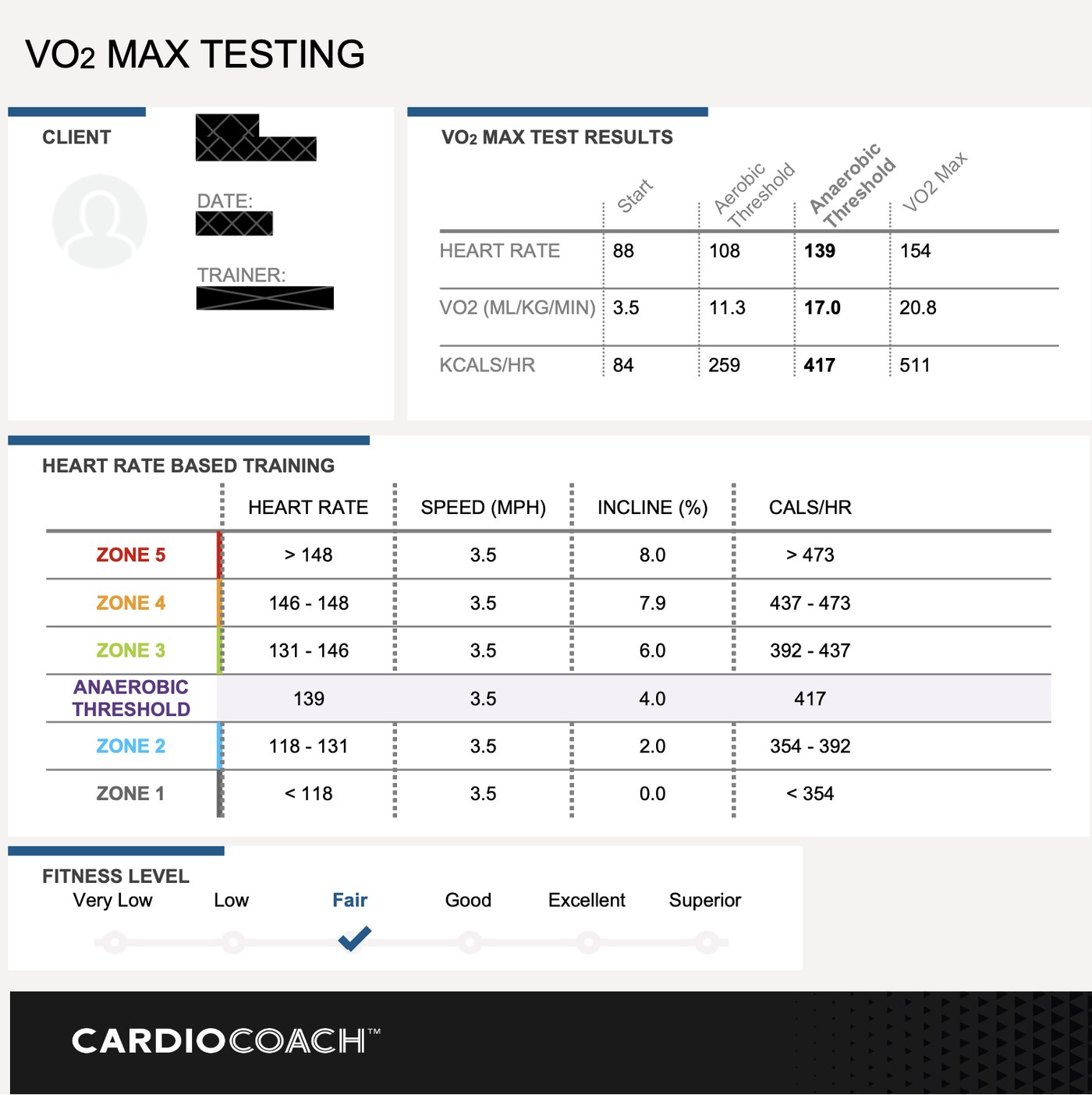
A sample report. Identifying details removed.
The maximum volume of oxygen your body can use per kilogram of body weight per minute. Reported against age- and sex-matched norms so you know where you sit, not just what the figure is. Higher aerobic capacity is consistently associated with better long-term health outcomes in the research literature.
Moderate, conversational effort — the zone most endurance training should live in, and the one people most often get wrong by training too hard. Knowing your real Zone 2 range in beats per minute is, for most clients, the single most actionable thing they leave with.
Where intervals belong. Having a measured ceiling means hard sessions are calibrated rather than guessed — and it makes it obvious when you’re accidentally doing them on what was supposed to be an easy day.
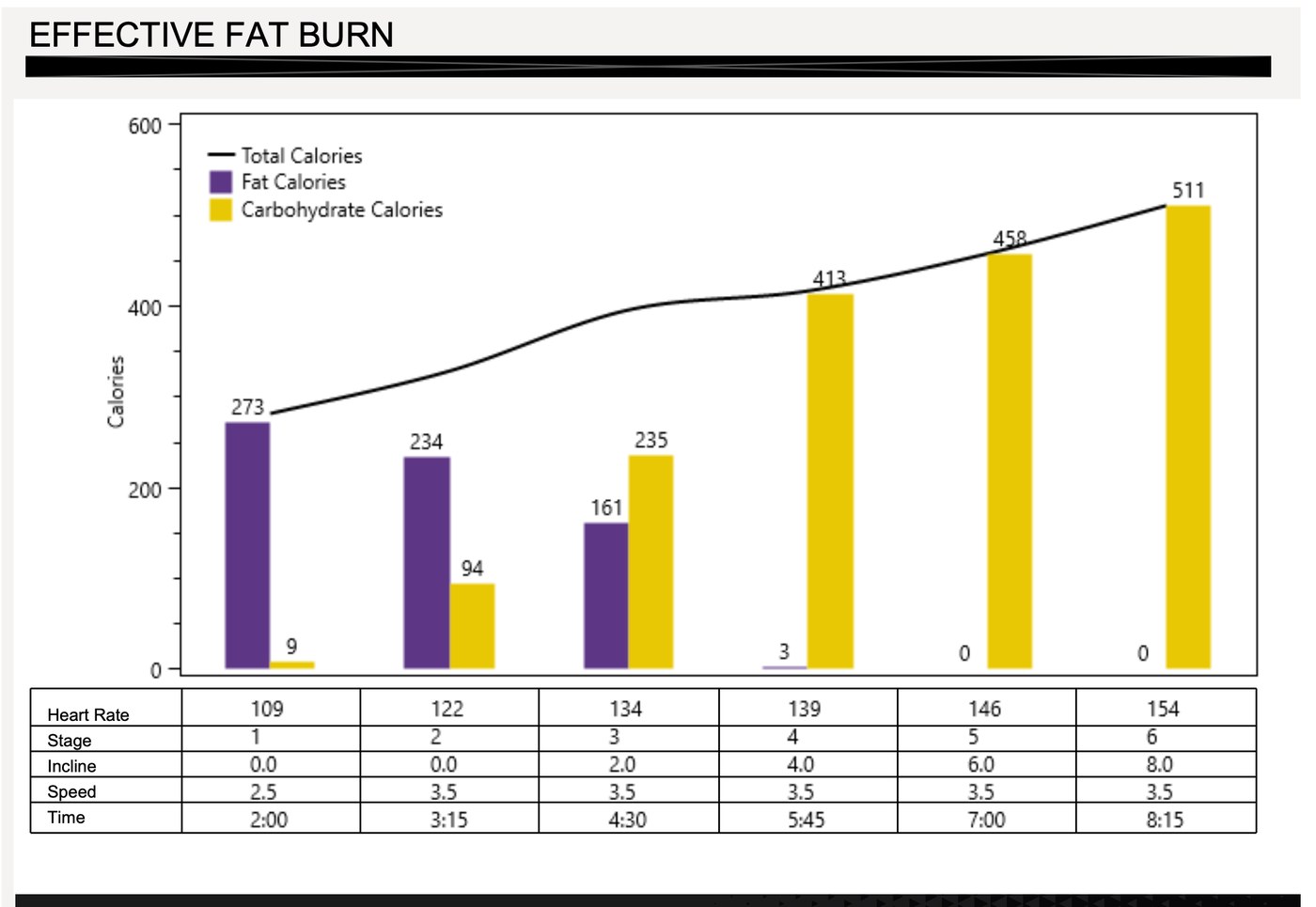
How your fuel mix shifts from fat toward carbohydrate as effort rises, including roughly where your fat oxidation peaks. Useful for planning nutrition around longer sessions and events.
What the report shows
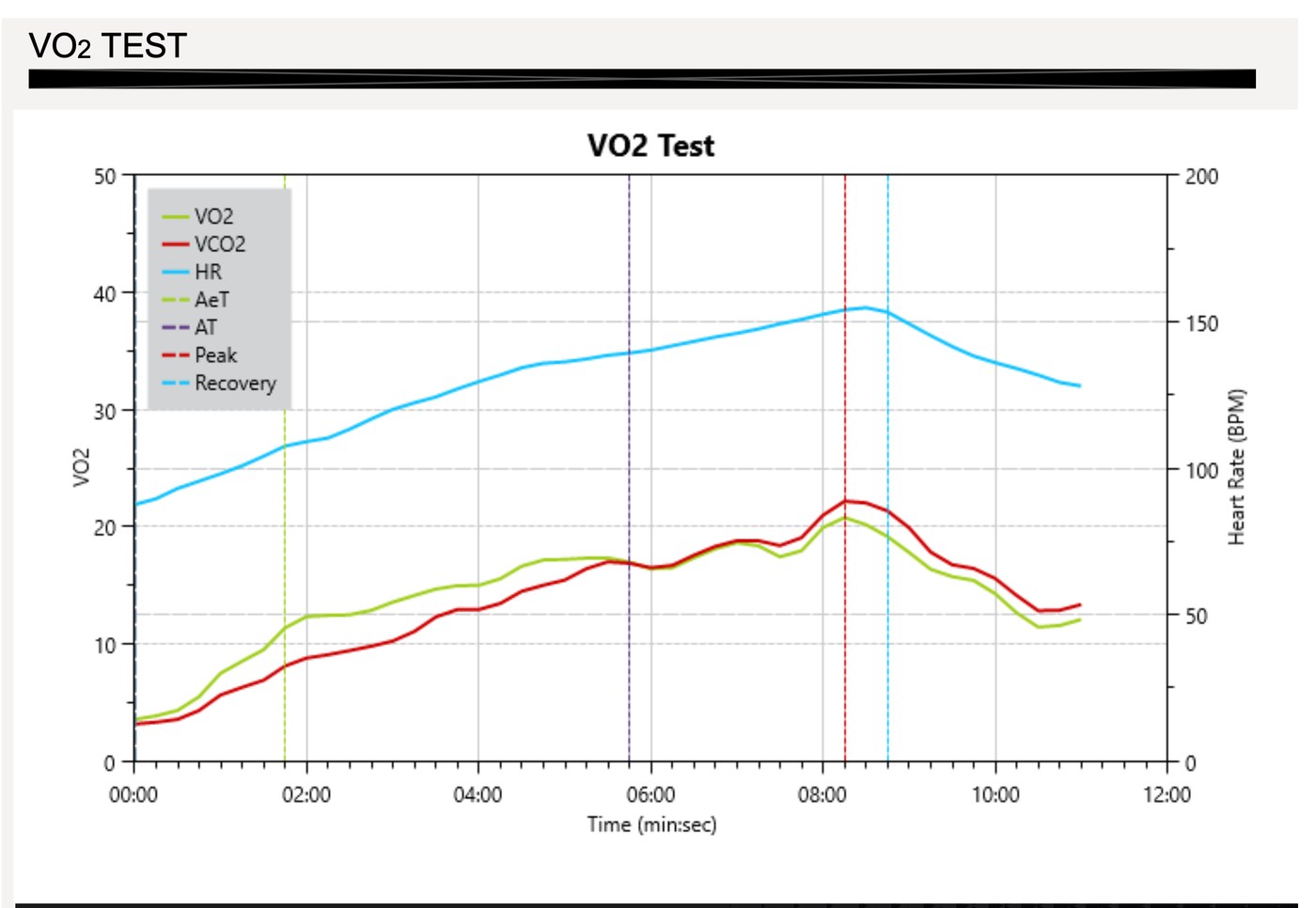
Two of the pages you leave with. The first is the test itself — oxygen uptake, carbon dioxide output, and heart rate across the whole session, with your aerobic and anaerobic thresholds and your VO2 max marked where they actually fell.
The second shows how your fuel mix shifts as effort rises — fat calories giving way to carbohydrate stage by stage. It’s the clearest picture there is of why easy training and hard training do different things.
Your test
No hard training for 24 hours — you can’t reach your ceiling on tired legs. Eat a light meal two to three hours before, stay hydrated, skip caffeine on the day, and bring proper training shoes and clothes.
Speed or resistance increases at set intervals. You keep going until you can’t sustain the effort — that’s the point of it. Typically 7 to 15 minutes depending on your fitness. You can stop at any time, and someone is with you the whole way.
A few minutes easy, then we go through your results together — your number against age-matched norms, your thresholds, and your zones in beats per minute. You leave with the report.
You don’t need to be an athlete. You do need to be able to exercise to maximum effort safely — which is what the screening below is about.
Every client completes a pre-exercise health screen before testing. If you’re over 45, sedentary, or unsure, talk to your physician before booking — a brief conversation now is easier than stopping a test halfway.
Higher aerobic capacity is consistently associated with better long-term health outcomes across large population studies. That’s an association across groups, not a prediction about you — a good number doesn’t make you safe and a modest one doesn’t doom you, and we won’t sell it to you as a life-expectancy readout.
What it genuinely gives you is a measured starting point and correctly calibrated training zones. VO2 max also responds well to training, which makes it one of the more satisfying things to retest — measure, train deliberately for a few months, measure again.
Pricing
$290 separately
You save $25
VO2 max sets how you train. RMR sets how you eat. Both are measured with the same analyser in the same visit, and together they cover the two halves of a plan that most people are guessing at.
7–15 minutes of testing plus warm-up, cool-down, and your results review. Full report to keep.
Common questions