EMSCULPT NEO — functional wellness
You’ve had the cortisone. Maybe the gel shots. They worked for a while and then they didn’t. Surgery has been mentioned, but not yet — either it’s too soon, or you’re not willing. So you wait, and you manage it, and it doesn’t get better.
Here’s what nobody explains in that gap: the pain is in the joint, but the problem is usually the muscle around it. You stopped using it because it hurt. Now it hurts partly because you stopped.
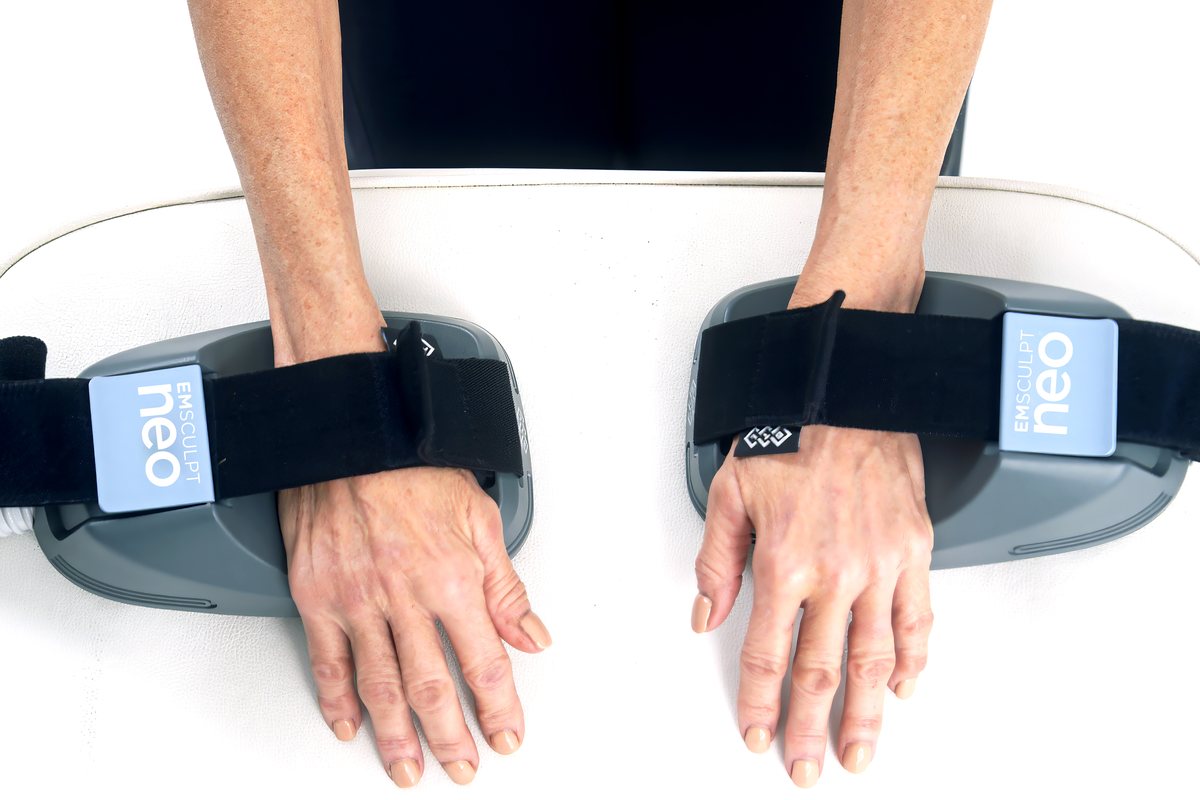
It contracts that muscle for you — twenty thousand times in thirty minutes, while you lie still and the joint does nothing at all.
FDA-cleared adjunctive therapy, delivered under physician-supervised protocols. Not a substitute for medical care — see the scope note below. Figures marked * are manufacturer-reported study data. Individual results vary.
Free consultation
Tell us where it hurts and we’ll send a personalized cold + infrared protocol plan within one business day.
Why this happens
It works as a loop. Something hurts, so you use it less. Use it less and the muscle around it weakens — measurably, within a week or two of favouring a limb. Weaker muscle means the joint absorbs more of the load, which means it hurts more, which means you protect it further.
This is why the ache that started after one bad weekend is still there eight months later, and why the comeback from any injury takes longer than the injury did. The original problem may have healed. The muscle didn’t come back on its own.
Electromagnetic energy acts directly on the motor neurons and contracts the muscle without you moving — so the muscle gets worked while the joint stays still. That’s a way into the loop from a direction that doesn’t hurt.
The cleared indications
Taken directly from the device’s indications for use. Neuromuscular stimulation is cleared for the arms and legs; the pain indication covers specific named pain types. We keep to this list, and we’d encourage you to be sceptical of anywhere that doesn’t.
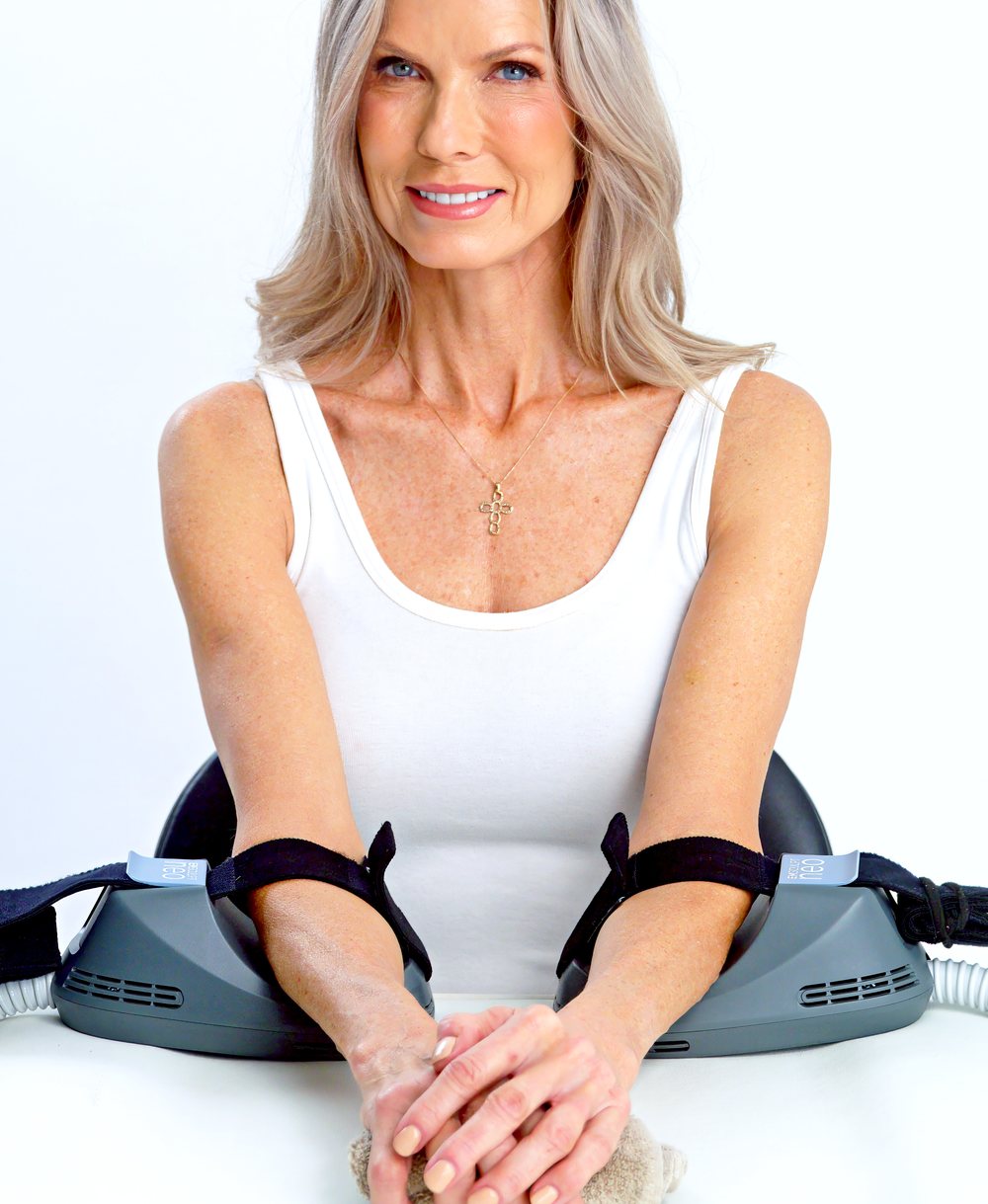
Neuromuscular stimulation is cleared for the arms and legs. Aesthetic treatment of the abdomen, flanks, buttocks and thighs is a separate indication — that’s our body sculpting service.
Helping a muscle relearn how to fire properly — after immobilisation, or when a limb has been compensating long enough that the pattern has stuck.
Cycles of contraction and release can help a muscle that’s locked up let go. Symptom relief, not a fix for whatever caused the spasm.
Muscle wastes fast when it isn’t used. If you can’t load a limb — after surgery, in a brace, during an enforced break — passive contraction can help slow that loss.
Repeated contraction increases blood flow through the treated area, supporting the tissue’s own recovery processes.
Where restriction is muscular rather than structural, working the muscle through repeated contraction can help restore movement.
Cleared to stimulate peripheral nerves for relief of chronic intractable pain, post-traumatic pain, post-surgical pain, and chronic painful diabetic peripheral neuropathy in the lower extremities. Patients 18 and over.
This is a specific list. It is not a clearance to treat back pain, arthritis, or pain in general — and this indication in particular requires medical supervision.
Immediate post-surgical stimulation of the calf muscles to help prevent venous thrombosis. A clinical indication, delivered only in coordination with your surgical team.
Your session
We’ll ask what you’re working with, what your physician or physical therapist has advised, and whether they’re happy for you to add this. If you’re under active care for an injury, that conversation comes first — bring us their guidance rather than working around it.
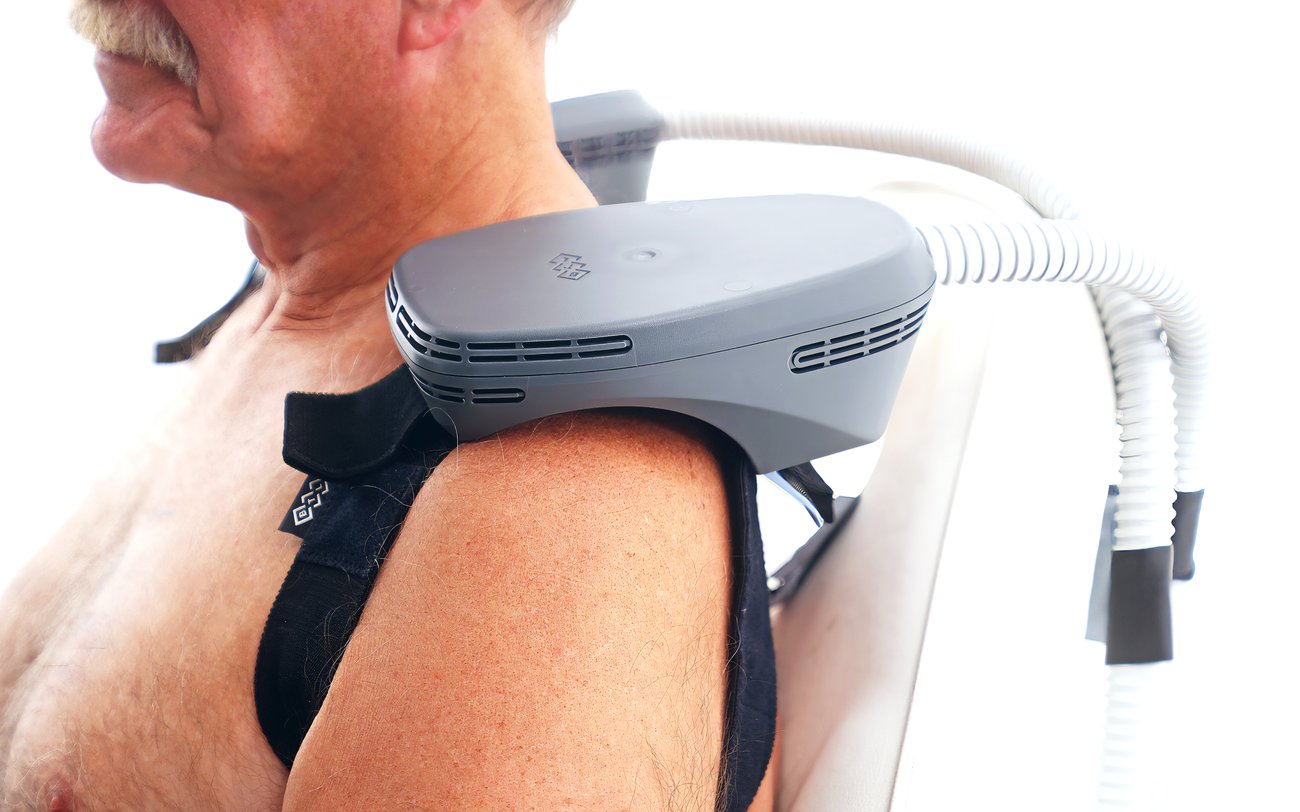
Secured over the target muscle group with the intensity set low to begin, following the protocol set for your case.
The muscle contracts and releases in cycles while you lie still. Intensity increases as you adapt, and you can ask us to reduce it at any point. It should feel intense but never painful — if it hurts, we stop.
You go straight back to your day. Mild soreness the following day is common, similar to post-training. Tell us how you responded before the next session so we can adjust.
Who it suits
One has been told to sit out and wait. The other has been told this is just what getting older looks like. Both need the same thing: muscle around a joint that isn’t getting any.
You know what six weeks off does. You’ve done it before, and you remember how long it took to get back. Passive contraction lets you keep working the muscle through the layoff — or, if you’re training normally, load a specific muscle without adding to what you’re already asking your body to recover from.
Which leaves you waiting for something to get worse. Weak quadriceps are one of the most common reasons a knee hurts on stairs; a weak rotator cuff, one of the most common reasons a shoulder complains overhead. The standard advice is to strengthen the muscle — a difficult instruction when the movement that would do it is the movement that hurts. This is a way in.
On lower back pain specifically: we’re asked about it constantly, and we have to be straight with you. Neuromuscular treatment is cleared for the arms and legs, not the trunk, and general back pain isn’t among the named pain indications. Some people find that stronger legs and hips change how their back feels — but that’s a knock-on effect we can’t promise, not a treatment we can offer. See a physician about your back.
If you’re under the care of a physician, physical therapist, or surgeon, tell them you’re considering this and bring us what they say. Post-surgical clients need written clearance. We’ll happily coordinate — and we’ll tell you if we think you should see someone before you see us.
Functional protocols here are physician-supervised, which means the treatment plan is signed off clinically rather than chosen at the front desk.
The device delivers a strong electromagnetic field. These are firm contraindications, not cautions — we will not proceed without clearance.
A joint replacement is common and it rules that limb out — ask us before booking rather than on the day.
What the manufacturer reports
HIFEM has been studied using MRI, ultrasound, histology and validated questionnaires. For the functional indications specifically, BTL publishes the following from its own study data.
Worth knowing how these differ from the body sculpting figures. The 30% fat and 25% muscle numbers come from imaging — MRI and CT. Two of the three above are what patients reported, which is standard for comfort and mobility outcomes but is a softer kind of evidence. Manufacturer data on file. We’d rather you knew that than found out later.
The space
The pain indication is real but specific: chronic intractable pain, post-traumatic pain, post-surgical pain, and chronic painful diabetic peripheral neuropathy in the lower extremities. It is not a general clearance to treat back pain, arthritis or sciatica, and we won’t describe it that way however much easier that would be to sell.
It is adjunctive therapy — it sits alongside your medical care rather than replacing it, and the protocols are physician-supervised. It is not physical therapy, not a diagnosis, and not a reason to delay seeing someone about a problem that isn’t resolving. If your physician or physical therapist thinks this could support what they’ve got you doing, we’ll gladly work alongside them.
Getting started
Functional sessions need more screening than a cosmetic treatment does, and whether this is appropriate depends on what you’re dealing with and what your clinician thinks. So the first step is a consultation rather than a session.
It’s free, takes about twenty minutes, and covers what you can expect, how many sessions we’d suggest, and what it costs. If we don’t think it’s right for you — or if we think you should see someone else first — we’ll tell you.
Any guidance from your physician or physical therapist. A list of implants, hardware, or implanted devices anywhere in your body. And a clear sense of which limb and which muscle group you’re concerned about.
Common questions
The pain clearance covers specific named types — chronic intractable, post-traumatic, post-surgical, and diabetic peripheral neuropathy in the lower extremities. General back pain isn’t on that list, and neuromuscular treatment is cleared for the arms and legs rather than the trunk. Persistent back pain needs a physician first.
Mixed, and we’d rather be straight with you. The body sculpting figures come from seven studies with MRI and CT imaging. The functional figures come from one small study of thirty-two people reporting how they felt. Promising, but not the same weight of evidence — judge it accordingly.
Load on a specific muscle without adding to your overall training load — useful when the muscle that needs work is one your sport doesn’t train, or when you’re already at the limit of what you can recover from. Golfers and racquet players tend to come for forearm and hip work; runners for quads and calves.
No. Physical therapy assesses, diagnoses, and treats, with a licensed clinician directing it. This is a device that contracts a muscle passively. It can support a rehab programme; it can’t replace one.
Your session is run by our team, trained and certified on the device by the manufacturer. Because the functional indications are medical rather than cosmetic, the protocols sit under a supervising physician who holds clinical responsibility for them — that doesn’t mean a doctor is in the room during your session, and it does mean the treatment you get was signed off by one. We don’t diagnose; if what you need is a diagnosis, we’ll point you to someone who can give you one.
It shouldn’t. Intense — a strong, involuntary contraction — but not painful. We start low, build gradually, and stop if anything hurts.
Not in that limb. Metal hardware in or near the treatment area is a firm contraindication. We may be able to treat the other side — tell us before booking so we don’t waste your visit.
Four is the protocol used in the study, and the usual starting point. We’ll reassess as we go rather than selling you a block up front.