Pelvic-floor care after prostatectomy is not an either-or decision. For men considering Emsella after prostatectomy in Norwalk, treatment may be an option after the surgeon or urologist confirms healing is sufficient. It can complement, but does not replace, urology care or pelvic-floor physical therapy.
Persistent leakage can affect daily routines and confidence, so it is reasonable to want a clear picture of what comes next. Emsella uses electromagnetic stimulation to prompt pelvic-floor contractions while the patient remains clothed. Whether it is suitable depends on recovery and individual clinical circumstances.
This guide explains who may be a candidate, what treatment involves, and how to think about coverage and costs. It also describes how Emsella may fit alongside urology follow-up or a physical therapist’s rehabilitation plan, helping you discuss a coordinated approach with your care team.
Key Takeaways
- Whether Emsella may fit after prostatectomy depends on recovery status and clearance from the surgeon or urologist.
- Pelvic-floor rehabilitation can support bladder-control recovery, while Emsella may be considered as a complementary approach.
- Learn what a treatment session involves and which parts of the schedule may shape the experience.
- Understand how insurance coverage and individual treatment factors affect the cost discussion.
- See how coordinated care with urology or physical therapy can help keep recovery focused and consistent.
Does it help erections recover too?
Pelvic-floor physical therapy and electromagnetic stimulation are different approaches to bladder control. A therapist assesses and trains voluntary muscle coordination, while stimulation prompts contractions externally. Neither replaces urology care for erectile function. After prostatectomy, erection changes can involve factors beyond pelvic-floor strength, so progress with continence does not show whether erections will recover.
Pelvic-floor rehabilitation is an established approach to improving bladder control after prostatectomy. A physical therapist can assess muscle awareness and coordination, then tailor training to recovery needs. Kegel exercises are one type of pelvic-floor muscle training: they involve contracting and releasing the muscles used to control urine. Technique matters. A therapist can help distinguish the pelvic floor from nearby muscles and adjust the plan if a contraction is difficult to identify or sustain.
That training may support recovery from urinary leakage, but its role in erectile recovery is less direct. Around 50% of men may experience erectile dysfunction after prostate surgery. This figure describes a possible outcome, not an individual prognosis or a measure of pelvic-floor weakness. Erections involve more than the muscles that support urinary control. A urologist can assess erectile concerns separately and consider how surgery, healing, and other individual factors affect care.
Focused electromagnetic treatment is another way to stimulate pelvic-floor muscle contractions, without asking the patient to perform each contraction voluntarily. A cited reference, PubMed PMID 35527308, concerns HIFEM use during recovery from radical prostatectomy. That reference does not, by itself, establish that electromagnetic stimulation restores erections. The distinction matters: evidence or treatment goals related to urinary incontinence shouldn’t automatically be interpreted as evidence for erectile-function improvement.
Pelvic-floor therapy and electromagnetic stimulation may be considered alongside urology follow-up, with each serving a distinct role. A therapist can work on muscle control and coordination; a urologist can evaluate urinary and sexual symptoms; stimulation provides externally prompted contractions. Sharing recovery goals and symptom changes across these conversations helps keep the plan aligned. For example, discuss leakage separately from erection concerns rather than assuming one treatment addresses both.
Can I Have EMSELLA After Prostate Surgery?
EMSELLA has been FDA-cleared in the United States for urinary incontinence in men and women since 2018. That clearance concerns urinary incontinence; it doesn’t establish a separate indication for every cause, including leakage after prostate surgery. For men considering Emsella after prostatectomy in Norwalk, recovery status and the treatment’s intended purpose are central to the discussion. A surgeon or urologist should confirm that healing is sufficient before treatment begins.
Urinary leakage can follow radical prostatectomy, the surgical removal of the prostate. Up to 40% of men experience some level of leakage or incontinence after prostatectomy. Stress incontinence commonly involves leakage with exertion, coughing, or a change in position. Urge incontinence involves a sudden need to urinate, while mixed incontinence combines stress and urge symptoms. Identifying the pattern helps make a treatment discussion more specific for someone exploring Emsella after prostatectomy in Norwalk.
Study findings offer an early measure of how EMSELLA may affect post-prostatectomy incontinence. In a 2025 study of 27 men, the average urinary incontinence score decreased from 10.58 before EMSELLA treatment to 5.43 after the treatment course, according to Authors of the 2025 EMSELLA study. The study enrolled men whose radical prostatectomy had occurred at least six months earlier. Its results describe that group, not a guaranteed outcome for each person.
The study was single-centre and had no control group, which limits how confidently its results can be applied to everyone. A separate 2025 sham-controlled trial studied 40 men with urinary incontinence after radical prostatectomy. Active-treatment participants reported improvement more often than sham participants, and 45% achieved continence. These results concern urinary symptoms; they don’t show that EMSELLA restores erections or replaces prostate cancer follow-up.
A useful consultation starts with the operation and the symptoms that remain. Describe whether leakage occurs during activity, follows urgency, or involves both patterns. Pad use and the effect of symptoms on daily routines can help clarify the problem. Recovery timing matters: the direct study included men at least six months after surgery, and treatment should begin only after the surgeon or urologist confirms adequate healing.
EMSELLA may be considered for persistent urinary leakage after prostatectomy when the recovery stage and symptom pattern fit. It isn’t a substitute for evaluating new or changing urinary symptoms, and its research evidence remains limited. A focused discussion of post-surgical urinary treatment options can help clarify whether electromagnetic stimulation belongs alongside existing urology care.
Session experience and treatment schedule
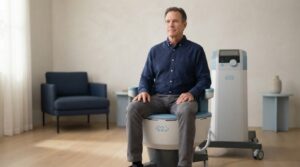
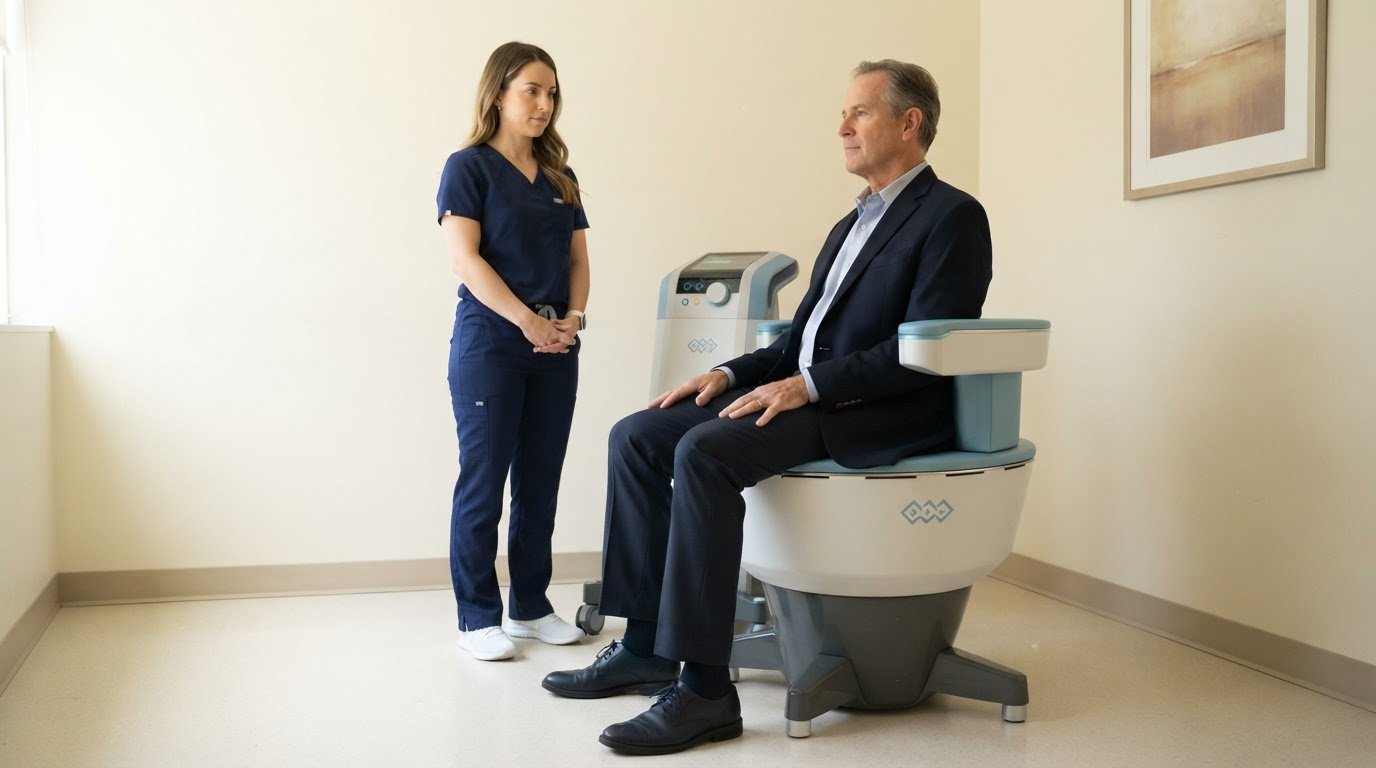
EMSELLA uses focused electromagnetic energy to prompt pelvic-floor contractions while the patient sits fully clothed. Treatment is delivered as a series, not a single visit, so the schedule matters.
Treatment Sessions and Protocol
A session uses electromagnetic stimulation to trigger repeated pelvic-floor muscle contractions without incisions or medication. In a 2025 post-prostatectomy study, the protocol involved six treatments, each lasting 28 minutes. The treatment series gives the pelvic floor repeated stimulation across multiple visits. Knowing the study protocol helps set a practical expectation, while the treatment plan in a clinic may differ according to the person’s recovery and care plan.
Session Duration and Schedule
A typical session lasts approximately 28 to 30 minutes. The described post-prostatectomy schedule places treatments twice a week, with at least 48 hours between sessions. That spacing helps define the commitment: appointments are distributed across several weeks rather than completed in a single block. In the study protocol, six 28-minute sessions were scheduled twice weekly, giving patients a concrete example of how a course can fit into a calendar.
Results and Maintenance Sessions
Response is assessed through changes in urinary incontinence, including leakage and pad use, rather than session length alone. Some patients begin noticing changes after the third or fourth treatment, and improvement may continue for up to three months after the final session. These are reported time points, not a promise of results. Some men may consider maintenance sessions every three to six months after the initial course.
Pad Use After Treatment
Pad use is a practical way to track leakage during recovery, including between EMSELLA sessions. A 2025 study of 27 men found that six treatments roughly halved daily pad use by the one-month follow-up. About a third of participants needed no pads after the sessions, and nearly half needed none by one month. These study results show why tracking daily use can add useful context to follow-up discussions.
Track the same measure over time. For example, record daily pad use and whether leakage occurs during activity or at rest. A change on one day may not reflect the broader pattern; comparing records across treatment and follow-up can make progress easier to assess. Pad use is one indicator, alongside urinary symptoms and daily function.

Insurance coverage and treatment costs
EMSELLA treatment is not covered by insurance, Medicare, or Medicaid, so plan for self-pay. The treatment price depends on the case and is provided after a quote request. Cost factors include the planned course, number of sessions, and follow-up needs. Reviewing the proposed plan is more useful for understanding total expense than considering a single session alone.
Safety comes first after prostate surgery. Men should begin EMSELLA only after their surgeon or urologist confirms they’re healed enough for treatment. The timing depends on recovery and surgical healing, not a universal calendar date. The 2025 post-prostatectomy study enrolled men whose radical prostatectomy had taken place at least six months earlier, but that study criterion isn’t a personal clearance rule.
EMSELLA is noninvasive and involves no incisions or medication. The patient sits fully clothed while electromagnetic energy stimulates pelvic-floor contractions. Repeated muscle contractions are part of the session. The treatment has no downtime, unlike surgery, which involves a recovery period. This distinction can help patients understand the practical demands of rehabilitation.
The available post-prostatectomy study reported no major adverse effects; mild, temporary muscle soreness was the reported side effect. However, BTL Australia’s safety information says EMSELLA should not be used for patients with electronic or metal implants. Discuss any surgical implant or electronic device during the treatment assessment, as it may affect suitability.
Both the chair’s intensity and the patient’s recovery status can affect the experience. EMSELLA prompts pelvic-floor muscles to contract, rather than requiring the patient to perform each contraction as an exercise. The sensation is muscular stimulation. Treatment is nonsurgical, and there is no need to change into special clothing. Implant history and postoperative healing remain important safety considerations.
For a clear cost discussion, the treatment plan should set out the intended course and any follow-up. Insurance, Medicare, and Medicaid do not cover EMSELLA, so do not assume those benefits will help with payment. The surgeon or urologist’s clearance is a separate matter from cost: financial planning does not establish readiness after surgery. Keeping these questions separate supports an informed rehabilitation decision.
Combining Emsella with urology or physical therapy
Coordinated care gives each part of recovery a clear role. A urologist monitors medical recovery and urinary or erectile concerns, while pelvic-floor therapy addresses muscle control and strengthening. Emsella may be considered as an additional pelvic-floor treatment, not a substitute for either. The goal is a plan that keeps appointments, symptoms, and progress measures aligned.
Start with the urology plan. The surgeon or urologist oversees recovery after prostatectomy and determines when treatment can begin. Pelvic-floor stimulation should be appropriate to the patient’s healing, operation, and current symptoms. For example, discuss a new or changing bladder concern during medical follow-up, rather than treating it only as a rehabilitation issue.
Physical therapy offers a different kind of support. A pelvic-floor therapist can assess how a person coordinates and relaxes the relevant muscles, then tailor exercises to those findings. Emsella prompts contractions through electromagnetic stimulation, while therapy develops skills and control the patient practices. The approaches address the pelvic floor in distinct ways. A shared plan helps avoid disconnected appointments.
Recovery can remain complex even with consistent therapy. One participant reported completing six months of physical therapy before and after prostatectomy while still experiencing incontinence. This illustrates why ongoing symptoms call for reassessment, not an assumption that one rehabilitation approach has failed or another treatment will resolve every concern. The urologist and therapist can review the symptom pattern and clarify what each part of care is intended to address.
Keep goals distinct and trackable. Discuss bladder control in terms of leakage patterns and pad use, and raise erectile concerns directly with the urologist. Therapy can focus on pelvic-floor function, while Emsella can be evaluated for its role in urinary rehabilitation. Reviewing these goals together helps clarify whether the plan needs adjustment and which professional should guide each decision.
Coordination also depends on clear communication between the clinic and the existing care team. A useful care summary includes the prostatectomy, recovery stage, current urinary symptoms, physical therapy focus, and relevant implant history. These details help the treatment professional understand the context rather than address pelvic-floor strengthening in isolation. The key is to integrate treatment with urology-led recovery, specific rehabilitation goals, and separate plans for bladder and erectile function.
For a coordinated discussion of pelvic-floor treatment after prostatectomy, schedule an Emsella consultation.
NAWRA: Emsella
NAWRA offers Emsella for men exploring pelvic-floor treatment after prostatectomy. For men in Norwalk, Emsella after prostatectomy may be worth discussing once the surgeon or urologist has cleared treatment. It can complement an existing urology or physical therapy plan, with a focused discussion of recovery goals and urinary symptoms.
Bring your recovery stage, current symptoms, and relevant implant history into the conversation. These details can help frame whether Emsella after prostatectomy in Norwalk fits your broader care plan. To discuss treatment, contact NAWRA.
Make your next step a coordinated one
Recovery is easier to navigate when the next decision has a clear purpose. Before adding treatment, identify the outcome you want to address, such as managing leakage during daily activities or supporting ongoing pelvic-floor rehabilitation. Keep urinary symptoms and erectile concerns distinct so each receives focused attention.
For men considering Emsella after prostatectomy in Norwalk, the next step is to connect treatment goals with the broader recovery plan. Ask how sessions may fit alongside existing care, and discuss the intended role of treatment with the professionals involved in recovery. A considered plan allows for progress checks and adjustments without treating one intervention as the whole solution.
NAWRA can help you discuss whether Emsella aligns with your goals and care plan. Contact NAWRA to discuss your options. Move forward with clarity, coordination, and a plan shaped around your recovery.
Frequently Asked Questions
Is EMSELLA painful?
EMSELLA involves a series of pelvic-floor contractions, not an incision or injection. One participant described sessions as painless and simple; the post-prostatectomy study reported mild, temporary muscle soreness as an adverse effect. Discuss sensation during the appointment, especially if stimulation feels uncomfortable. Tell the treating professional about soreness or other symptoms so they can be considered in the treatment plan.
What does a session feel like, and how many?
During a session, you sit fully clothed while electromagnetic stimulation triggers pelvic-floor contractions. A post-prostatectomy study used six sessions, each lasting 28 minutes, twice weekly. That protocol is a research example, not a personal prescription. Before starting, clarify the planned session length and course with the treating professional, and consider how appointments will fit around your urology follow-ups and other rehabilitation commitments.
What is the Emsella Chair (Kegel Chair)?
The Emsella Chair uses high-intensity focused electromagnetic energy to stimulate pelvic-floor muscle contractions while a person sits fully clothed. “Kegel Chair” is an informal label for this focus on the pelvic floor. It does not mean the chair teaches voluntary Kegel technique or replaces a physical therapist’s assessment. For example, a therapist can address muscle coordination while the chair delivers externally prompted contractions.
Will EMSELLA fix incontinence completely?
No treatment should be presented as a guaranteed cure. In the 2025 study of 27 men, six had an ICIQ-SF score of zero after the sixth session, and nine had a score of zero at the one-month review. Those results describe study participants, not a prediction for an individual. A useful measure is whether leakage and its effect on daily activities change over time.
But aren’t pelvic floor exercises started much earlier?
Pelvic-floor rehabilitation can be part of recovery after prostatectomy, but timing and exercise technique should fit surgical healing. A person’s surgeon or urologist guides when recovery permits treatment, while a pelvic-floor physical therapist can assess how the muscles contract and relax. For example, difficulty identifying the correct muscles is a reason to seek individualized instruction rather than assuming every Kegel exercise is being performed effectively.
Did any of the men become continent?
Yes. In the 2025 study of 27 men, six had an ICIQ-SF score of zero after the sixth session, and nine had a score of zero at the one-month review, according to Authors of the 2025 EMSELLA study. A score of zero is the study’s reported measure; it doesn’t establish that every participant became continent or that the same outcome will occur for someone else.
Does EMSELLA replace my urologist?
No. EMSELLA does not replace urology follow-up, which remains important for prostate cancer care, postoperative recovery, and urinary or erectile concerns. For example, discuss changes in urinary symptoms as part of medical care, rather than treating them only as a pelvic-floor issue. Consider treatment within a plan that keeps the urologist informed and gives each therapy a clear purpose.
Emsella for Men: Does It Work for Male Pelvic Floor and Bladder Issues?
EMSELLA is FDA-cleared in the United States for urinary incontinence in men and women, a clearance that dates to 2018. A 2025 study also examined its use for persistent urinary incontinence after radical prostatectomy. These facts support considering it for male bladder-control concerns, but they don’t establish that it treats every pelvic-floor problem or restores erectile function. Keep those goals separate in treatment discussions.