
The most popular recovery modality isn’t automatically the right one for you. The best fit depends on what you want to address, the type of session you prefer, and how it fits into your routine. If you’re searching for recovery therapy Orange County, start by clarifying what kind of recovery you mean: physical wellness and behavioral health involve different services and needs.
If you’re comparing physical recovery approaches, it helps to understand how they differ and what each service involves before choosing. No single modality suits everyone, and experiences can vary. A useful comparison starts with your goal, then considers the session format, your comfort, and whether it fits your routine.
NAWRA offers ExoPod full-body therapy, BOA lymphatic drainage, and ExoFreeze cryo treatments. This guide explains how to compare these options, what to consider when choosing, and how to set realistic expectations without relying on broad promises.
Key Takeaways
- Recovery can refer to physical wellness or addiction treatment. This guide focuses on physical recovery approaches.
- ExoPod, BOA lymphatic drainage, and ExoFreeze are different modalities. Compare them by your goal and preferred session format.
- Use a four-step framework to narrow your recovery therapy Orange County options: define your goal, compare approaches, assess practical fit, and set realistic expectations.
- Separate general wellness preferences from symptoms that may need medical evaluation before a session.
- Prepare to share your goals and relevant concerns so you can explore a modality that fits your recovery routine.
What Does Recovery Therapy Mean in Orange County?
This guide focuses on physical recovery and therapeutic wellness: services people may choose as part of a personal wellness routine, after physical activity, or for a restorative experience. It does not cover treatment for substance use or mental health conditions. The distinction matters because “recovery therapy” can refer to different kinds of support depending on what someone is searching for.
In Orange County, recovery-related searches may lead to addiction treatment programs and mental health support as well as physical wellness services. These are different needs. In this guide, recovery therapy Orange County refers to wellness modalities offered by NAWRA: ExoPod full-body therapy, BOA lymphatic drainage, and ExoFreeze cryo treatments. They are separate offerings, not interchangeable steps in a standardized treatment plan.
To narrow your options, begin with the experience you want rather than a treatment name or popularity. Consider your goal, how comfortable you are with each format, and how it could fit into your routine. Those criteria make the comparison more practical and help keep expectations realistic.
Physical recovery and addiction recovery are different search intents
Physical recovery and addiction recovery address different needs. Physical wellness services may be part of a personal routine, while substance-use recovery involves care and support for substance-related concerns. Both topics deserve clear, respectful information, but they are not the same kind of service. For a perspective on the mental health and substance-dependence context, see The Recovery Model in Therapy.
If you’re looking for support with substance use or mental health, this guide’s focus on physical wellness won’t address that need. If you’re comparing wellness modalities for a restorative experience or to complement your usual post-activity routine, the following sections can help you assess the options.
Which goals can lead someone to explore recovery therapy?
People may explore a wellness session to make relaxation part of a routine, complement their approach to recovery after activity, or pursue a general sense of rejuvenation. These are personal goals, not guaranteed results. Compare the format and intended experience, but don’t assume that a wellness service treats a condition or will produce a particular outcome.
Make your goal specific enough to guide your choice. For example, decide whether you’re seeking a restorative wellness experience or an option to complement your regular post-activity routine. Then consider which session format you’re comfortable with and whether it fits your schedule and broader wellness habits. This gives you a useful way to compare options without assuming that one approach is right for everyone.
Health concerns call for a different standard. If you have persistent pain, a new or worsening symptom, or a diagnosed condition, seek medical advice about appropriate care before treating a wellness modality as a solution. Suitability can vary with personal circumstances, and general wellness services shouldn’t replace clinical evaluation. A clear goal, realistic expectations, and appropriate medical guidance create a more informed starting point.
How ExoPod, BOA, and ExoFreeze Recovery Therapies Differ
ExoPod, BOA, and ExoFreeze are distinct modalities. ExoPod is full-body therapy, BOA is lymphatic drainage with a compression-based approach, and ExoFreeze is a cryo treatment. These descriptions help distinguish the services, but they don’t establish specific sensations, mechanisms, or outcomes. Compare the format, the experience you want, and any questions that matter for your circumstances.
| Modality | General approach | Intended experience to consider | Questions to consider |
|---|---|---|---|
| ExoPod full-body therapy | A full-body therapy offering. | Consider whether a full-body format fits the kind of wellness session you want. | What does the session involve, and does that format suit your preferences and goal? |
| BOA lymphatic drainage | A lymphatic drainage offering with a compression-based approach. | Consider your comfort with a compression-based session. | What should you expect during the session, and are there personal considerations to discuss? |
| ExoFreeze cryo | A cryo treatment. | Consider whether a cryo modality matches the experience you’re looking for. | What does the treatment involve, and what precautions or suitability factors apply to you? |
Full-body therapy and compression-based approaches
ExoPod and BOA differ in their basic formats. ExoPod is full-body therapy; BOA is lymphatic drainage with a compression-based approach. Those distinctions can help you decide what you’re interested in, but they don’t establish the details of a session or a medical effect. If you’re comparing the two, focus on the format you prefer and how it relates to your wellness goal. For more detail about BOA compression therapy near you, explore what the session involves and how it differs from other approaches.
For either option, ask practical questions: What will the session involve? What should you share beforehand? Are there personal factors that could affect suitability? Clear answers help you make an informed choice without relying on broad claims about detoxification, circulation, or recovery outcomes.
Cryo recovery and how to compare its role
ExoFreeze is NAWRA’s cryo treatment in Los Alamitos. Its format differs from ExoPod’s full-body therapy and BOA’s compression-based approach, but the service description doesn’t specify the treatment’s exact sensations or process. Don’t assume that cryo is more intensive, more effective, or a better fit just because it is different. Consider how its format aligns with your goal and preferences.
When comparing recovery therapy Orange County options, assess each by its format and how well it matches your goal, rather than ranking modalities or assuming they produce the same results. Suitability and precautions depend on the individual and the specific treatment. If you have a health concern, seek medical advice before treating a wellness service as an answer. Behavioral health needs are separate, with resources available through SAMHSA: Advancing Behavioral Health.
NAWRA offers these distinct approaches in one Orange County wellness setting. To explore the available recovery therapy modalities, identify the format that best matches your priorities and consider any questions or personal circumstances that may affect your choice.
How to Choose Recovery Therapy in Orange County
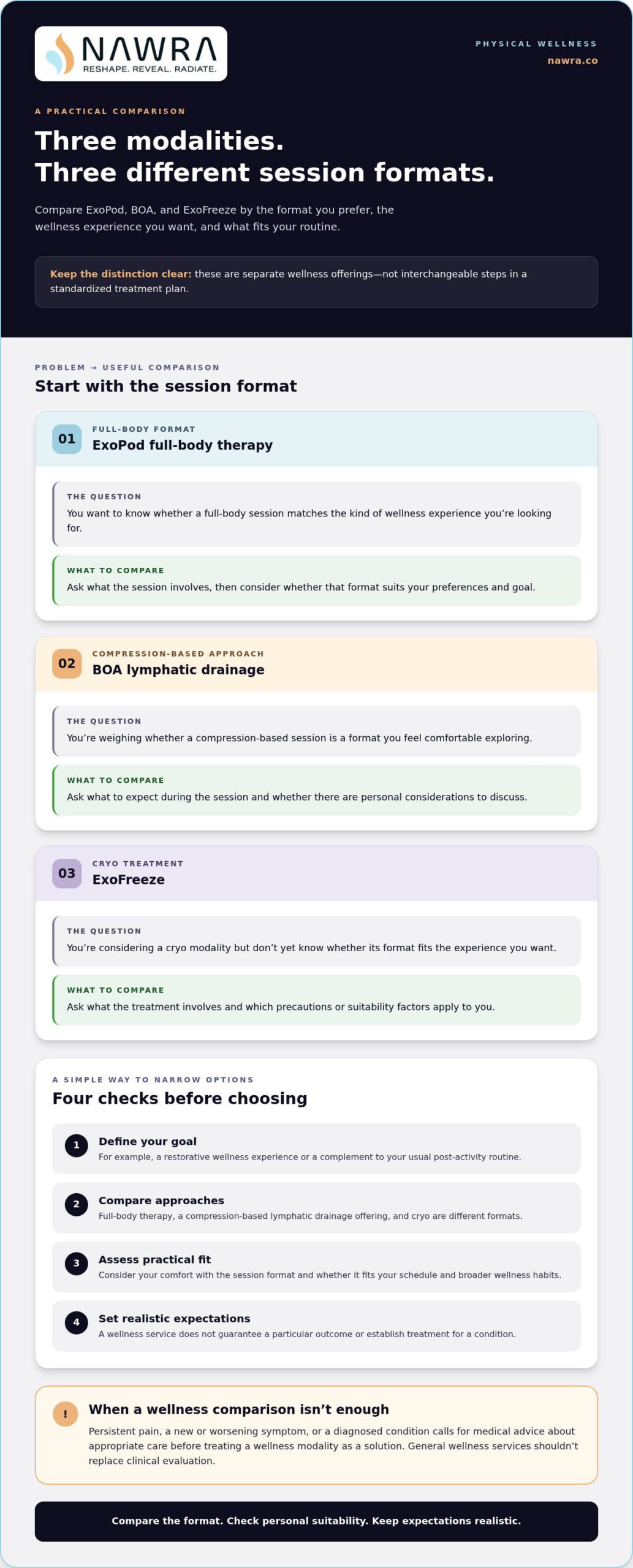
A straightforward selection process keeps a wellness decision grounded. Define what you want from the experience, compare the formats that relate to your goal, and assess whether the option fits your routine. In recovery therapy Orange County searches, a compelling treatment name or broad benefit claim isn’t enough to show that a modality is right for you.
Start with the recovery goal, not the treatment name
Describe your goal in your own words before comparing services. You might want a relaxing wellness experience, an option to complement your routine after activity, or a general sense of rejuvenation. Being specific makes it easier to judge whether a treatment’s format fits your preference without assuming it will produce a particular result.
Use the service descriptions to make an initial comparison: ExoPod is full-body therapy, BOA is lymphatic drainage with a compression-based approach, and ExoFreeze is a cryo treatment. These categories distinguish the options, but they don’t establish that one is more effective or suitable for every person. Match your general goal to a format you’re comfortable exploring, then consider your own circumstances.
Check practical fit and set realistic expectations
A wellness option needs to work in practice, not only sound appealing. Consider the session format, your comfort with it, and whether it can fit into your routine. Before deciding, clarify what the experience involves and what you can reasonably expect. Don’t infer a recommended schedule or timeline from general descriptions, and be cautious of promises that treat outcomes as guaranteed.
Use this four-step framework to make the choice more deliberate:
- Define the goal. Write down the experience you want in plain language. Separate a general wellness preference from a symptom you hope to resolve.
- Compare modalities. Review each option’s stated format and decide whether it fits your goal. Treat category descriptions as a guide to the experience, not proof of a health outcome.
- Review practical fit. Think about comfort, schedule, and whether the format feels sustainable as part of your routine. An appealing option may not be practical for you.
- Set expectations. Ask what the session involves, what claims are supported, and what individual factors could affect suitability. Share relevant health concerns before a wellness session.
The best-fit recovery option depends on your goal, preferences, and individual circumstances. That’s a more useful standard than chasing a promised result or choosing the modality with the strongest-sounding claim.
Keep wellness decisions separate from medical evaluation. If you have persistent, new, or worsening symptoms, or a diagnosed health condition, seek advice from a qualified medical professional about appropriate care. A wellness service shouldn’t be treated as a diagnosis or a substitute for medical guidance. Sharing relevant concerns before a session helps inform the conversation, but it doesn’t replace clinical assessment when symptoms call for one.
Once your priorities are clear, compare options using the same criteria: goal, format, comfort, and realistic expectations. This gives you a straightforward way to assess recovery therapy choices without assuming one approach works the same way for everyone.
What to Expect When Exploring Recovery Therapy Near Orange County
Exploring a wellness service starts with clear information, not assumptions about what a session will involve or deliver. Before choosing a modality, prepare to describe your goal, understand the format, and share relevant health concerns. This helps you assess whether an option fits your preferences and keeps expectations realistic. Experiences differ, and no particular outcome should be treated as guaranteed.
Questions to consider before a wellness session
A short preparation checklist can make it easier to explain what you’re looking for and what would help you feel comfortable. Consider these points before a wellness session:
- What’s my goal? Describe the experience you’re seeking, such as relaxation or support for your personal wellness routine.
- What format feels comfortable? Consider your preferences about the treatment approach and any concerns about the experience.
- What health information is relevant? Identify conditions, symptoms, or other concerns that may affect your decision, and communicate them clearly.
- What do I need to understand? Ask what the service involves, what to expect, and what claims are supported.
Clear expectations help you make an informed decision and distinguish a wellness experience you’re choosing by preference from a health concern that needs clinical attention. Direct questions about symptoms, diagnoses, risks, or whether a treatment is medically appropriate to a licensed healthcare professional. A wellness service isn’t a substitute for diagnosis or medical care.
Tracking progress without relying on promises
If you decide to explore a modality, record your goal and personal experience consistently. A brief note after each visit can capture how the session felt, whether it fit your routine, and whether your wellness priorities changed. Keep observations descriptive. This tracking reflects your perspective, not a clinical measurement or diagnosis, and it can’t prove that a treatment caused a particular change.
Use objective measures only when they match the question you’re trying to answer. For example, subjective impressions of wellness differ from body-composition data. NAWRA’s DEXA body composition guide explains an objective measurement option. A DEXA scan shouldn’t be treated as a measure of how a recovery session felt or as a diagnosis.
For people in nearby Orange County communities, location is one practical factor among several. Consider how a visit fits your routine, then weigh the modality, comfort, and realistic expectations together. These criteria can help you compare recovery therapy Orange County options without relying on guarantees.
To explore a service that aligns with your priorities, review NAWRA’s recovery therapy options and consider which format best fits your wellness goals.
Explore NAWRA Recovery Therapy in Orange County
NAWRA offers three distinct options for physical recovery and therapeutic wellness: ExoPod Full-Body Therapy, BOA Lymphatic Drainage, and ExoFreeze Cryo. They’re separate services, not stages in a required program. Choose what to explore by starting with your priority, whether that’s a particular type of wellness experience or a format that fits your existing routine.
A goal-first approach matters because a service name alone can’t tell you whether a modality matches your preferences, what a session involves, or what to expect. Review the information for each offering, note the details that matter to you, and consider any health concerns that could affect your decision. The aim is an informed choice, not a promised result.
A focused set of recovery and therapeutic wellness options
NAWRA’s offerings give Orange County clients a choice among different formats. ExoPod is full-body therapy, BOA is lymphatic drainage, and ExoFreeze is a cryo treatment. Use those distinctions to organize your comparison. If a full-body wellness format interests you, begin with ExoPod; if you’re interested in lymphatic drainage or a cryo treatment, review BOA or ExoFreeze. These distinctions help you explore the services without suggesting that a modality treats a condition or guarantees an outcome.
NAWRA serves Orange County communities, including Los Alamitos, Cypress, Cerritos, Long Beach, Seal Beach, La Palma, Buena Park, Lakewood, Anaheim, Norwalk, Irvine, Laguna Niguel, Newport Beach, Huntington Beach, Bellflower, Tustin, Fullerton, and Yorba Linda. Whether you’re coming from one of these communities or elsewhere in Orange County, location can be one factor in your decision alongside your goals, comfort, and the service format.
Take the next step with a goal-first approach
Before exploring a service, write down what you want from the experience in your own words. Then review the relevant service information with that goal in mind. Focus on what the modality is, what the session involves, and which questions you want answered before making a decision. If you have a medical concern or symptoms that need assessment, consult a licensed healthcare professional rather than relying on a wellness service for diagnosis or treatment.
For people searching recovery therapy Orange County, NAWRA offers distinct physical wellness options rather than a one-size-fits-all protocol. Your preferences and circumstances help determine what may be worth considering. Review the offerings, clarify your goal, and keep expectations realistic.
Explore NAWRA’s recovery services and identify which offering best aligns with your wellness priorities. It’s a straightforward next step, with your goals guiding the decision.
Make Your Next Recovery Choice With Clarity
Your next step doesn’t need to be a commitment to a particular treatment. Start by choosing what you want to explore, then review the service details with your goal and comfort in mind. That keeps recovery therapy Orange County decisions focused on fit, not broad promises or pressure to follow a one-size-fits-all routine.
At NAWRA, physical recovery services sit alongside data-driven diagnostic offerings, so different wellness priorities can be considered with intention. ExoPod full-body therapy, BOA lymphatic drainage, and ExoFreeze cryo each represent a distinct option to explore. Begin with a practical question: which format feels most relevant to what you’re seeking?
Explore NAWRA’s recovery therapy options and review the services with your personal goals in mind.
Frequently Asked Questions
Is recovery therapy in Orange County the same as addiction treatment?
No. Here, recovery therapy refers to physical wellness services, while addiction treatment addresses substance-use needs through a different type of support. Orange County search results use “recovery” for both, so identify the kind of help a page describes. This guide is relevant to recovery therapy Orange County searches about physical wellness; wellness modalities aren’t a substitute for addiction care.
Can recovery therapy help with soreness after exercise?
People may explore wellness services as one part of a post-exercise routine, but that doesn’t establish that a service treats soreness or speeds healing. Experiences and suitability vary. If you’re deciding what to do after a workout, note the activity, when discomfort began, and whether it changes with rest. Don’t use a wellness session to manage an injury. Seek medical advice for persistent, severe, or concerning symptoms.
How do I choose between ExoPod, BOA lymphatic drainage, and ExoFreeze?
Start with the experience you want, then compare each service’s format: ExoPod is full-body therapy, BOA is lymphatic drainage, and ExoFreeze is cryo. Consider which format you feel comfortable exploring, and don’t assume a service name predicts a particular result. If you have a medical condition or safety concern, discuss it with a qualified healthcare professional before selecting a wellness service.
Are recovery therapies appropriate for everyone?
Not necessarily. Whether a wellness service is appropriate depends on personal health circumstances and precautions relevant to the treatment. A general wellness session doesn’t assess or diagnose symptoms. If you have a medical condition, new or persistent symptoms, or uncertainty about safety, consult a licensed healthcare professional before participating. Share relevant concerns rather than relying on general descriptions to determine whether a modality is suitable for you.
How many recovery therapy sessions will I need?
There isn’t a single session count that applies to everyone. Planning depends on your goal, personal circumstances, and the specific service you’re considering. NAWRA’s service descriptions aren’t a universal schedule or promised timeline. Before setting expectations, clarify what you hope to evaluate and how you’ll judge your own experience. Treat guaranteed-result claims cautiously, and don’t assume more sessions automatically mean better results.
Where can I explore physical recovery therapy near Orange County?
NAWRA is an Orange County wellness clinic offering ExoPod full-body therapy, BOA lymphatic drainage, and ExoFreeze cryo treatments. Its service area includes Los Alamitos, Cypress, Cerritos, Long Beach, Seal Beach, La Palma, Buena Park, Lakewood, Anaheim, Norwalk, Irvine, Laguna Niguel, Newport Beach, Huntington Beach, Bellflower, Tustin, Fullerton, and Yorba Linda.