
A refreshed look doesn’t have to mean an operating room. A non-surgical facelift in Cypress, CA, uses nonoperative treatments to address facial aging without the incisions and recovery associated with surgery. Results generally last between six months and two years, depending on the procedure, physical condition, and lifestyle.
It’s reasonable to want visible improvement without signing up for a major recovery. But “non-surgical facelift” describes a range of approaches, not one standard treatment, and the right option depends on what you want to address. This guide explains how these treatments work, how they compare with a surgical facelift, and what to expect from discomfort, possible side effects, recovery, and results. You’ll also learn which factors shape the treatment plan, so you can assess the trade-offs with clear expectations.
Key Takeaways
- “Non-surgical facelift” covers different treatments, so match the method to the concern you want to address.
- Results may emerge on different timelines: some changes appear earlier, while others take months to peak.
- Plan around the treatment’s likely side effects and recovery needs, not just the procedure itself.
- Compare the trade-offs with surgery, including treatment time and the potential for a longer surgical recovery.
- Learn which options are available in Cypress and how to decide when a non-surgical approach fits your goals.
Recovery and duration of results
At a consultation, expect to discuss your facial concerns, medical history, and desired appearance. The provider should explain the recommended treatment plan, its expected recovery, and how results develop. During treatment, the steps and sensation depend on the selected method, such as energy-based treatment or fillers.
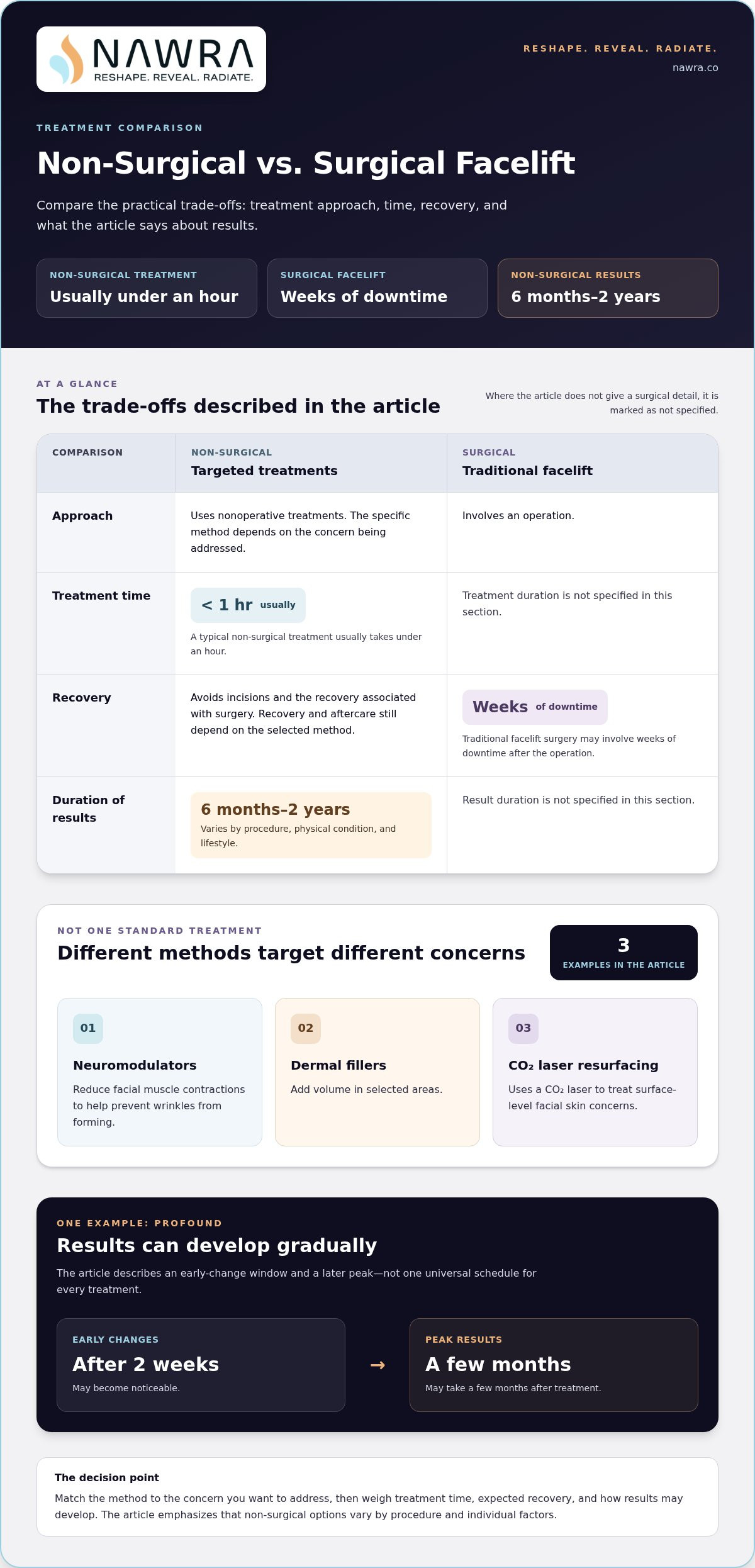
Results don’t appear on one universal schedule. With Profound, early changes may become noticeable after two weeks, while peak results may take a few months after treatment. That gradual progression matters when you’re planning for an event or assessing facial rejuvenation. A change that looks subtle at first may continue to develop, so compare your appearance at consistent stages rather than judging the outcome immediately.
Duration also varies by treatment and personal factors. Non-surgical facelift results generally last between six months and two years, depending on the procedure, your physical condition, and lifestyle. This range isn’t a fixed expiration date. The treatment selected, the concern addressed, and how your body responds all shape how long the aesthetic change remains visible. Ask how the recommended method typically evolves over time.
Think in terms of the concern being treated. A treatment aimed at surface-level skin concerns works differently from fillers used to address volume. Laser resurfacing uses a CO₂ laser to treat surface-level facial skin concerns; results and recovery therefore relate to that specific approach. A treatment plan should name the method, explain what change it targets, and distinguish an early effect from the result expected after full development.
To track progress, use a simple three-step record:
- Before treatment, note the specific concern, such as uneven texture or reduced volume.
- After treatment, follow the provider’s care instructions and record any changes in comfort or appearance.
- At follow-up, compare consistent photographs and discuss whether the result matches the treatment plan.
For a Cypress provider’s credentials and experience, ask for the treating professional’s full name, professional license type, and experience with the exact modality proposed. Verify the credentials through the appropriate California licensing authority, then ask how the professional assesses facial anatomy, sets realistic goals, and manages recovery for that treatment. Experience with one method doesn’t automatically establish experience with another.
Bring specific questions to the consultation: when changes should begin, when they may peak, and what factors could affect duration. If a plan includes more than one method, ask how each step contributes to the target result. Clear answers help you distinguish temporary smoothness from longer-term rejuvenation and set expectations around both recovery and maintenance.
Side effects and recovery
The experience and aftercare depend on the method, treatment area, and your individual response. A CO₂ laser targets surface-level concerns, while fillers address volume and neuromodulators affect muscle activity. These approaches work differently, so they don’t share one side-effect profile or aftercare routine. Ask which effects are expected for the specific treatment, how long they may last, and what changes call for follow-up.
Some non-surgical procedures can cause temporary redness, swelling, tenderness, or bruising. These effects may be more noticeable around treated areas such as the cheeks, especially after injectable treatments. Laser resurfacing can involve a different skin recovery process because it treats the surface. The method, skin sensitivity, and treatment intensity shape the experience. Ask for instructions tailored to the procedure, rather than applying aftercare advice from another treatment.
Use a simple recovery checklist:
- Before treatment, disclose medications, skin sensitivities, and relevant health history.
- After treatment, follow the written care instructions for cleansing, products, and activity.
- Track changes with notes or photographs, including when an effect appears and how it changes.
- Contact the treating professional if a reaction differs from the expected recovery guidance.
Daily choices can affect comfort while skin settles. Avoid adding new active skincare products after a procedure unless your instructions allow them. For example, someone receiving CO₂ laser resurfacing should follow guidance for that laser treatment, not a routine written for fillers. Keep the product list simple and follow the specific directions provided. This makes it easier to identify irritation and respond consistently.
Some treatments may lead to gradual changes in collagen production and visible rejuvenation, so an early appearance isn’t always the final result. Track wrinkles, texture, and volume separately, since one method may improve one concern without changing another. A clear plan defines the target effect and when progress will be reviewed. It should distinguish expected healing from the outcome you’re seeking.
Plan procedures around your schedule, not just the appointment itself. A meeting or event soon after treatment may leave little room for visible redness or swelling to settle. Ask how the specific method affects work, exercise, and skincare, and get the aftercare plan in writing. If recovery questions involve general wellness rather than treatment-specific instructions, explore recovery-focused wellness support.
Benefits compared with surgical facelifts
A non-surgical approach can suit people seeking targeted change without an operation. A typical non-surgical facelift treatment usually takes under an hour. Traditional facelift surgery may involve weeks of downtime after the operation. Those differences matter when weighing appointment time, recovery, and the scale of change you want.
Methods also address different concerns. Neuromodulator injections reduce facial muscle contractions to help prevent wrinkles from forming. Dermal fillers add volume in selected areas, such as the cheeks; some use hyaluronic acid. Ultherapy uses focused ultrasound energy, while thread lifts use inserted threads to reposition tissue. These approaches aren’t interchangeable, so compare the concern each one targets.
In Cypress, clinics offering non-surgical facial rejuvenation may provide neuromodulators, fillers, energy-based treatments, or thread lifts. The available options depend on the clinic and the treatment plan.
A surgical facelift and non-surgical treatments differ in how they address facial aging. Surgery is an invasive procedure intended to reposition facial tissue. Non-surgical methods focus on specific concerns, such as expression lines, skin appearance, or lost volume. They may provide a more targeted change than the degree of lift someone expects from surgery. That distinction helps set a realistic goal before choosing a method.
Consider the trade-offs with a simple comparison:
- Appointment: A typical non-surgical treatment takes under an hour. Surgery includes an operation and its associated recovery.
- Downtime: Surgical recovery may involve weeks. Non-surgical recovery depends on the chosen method and treated area.
- Target: Injections, fillers, ultrasound, and threads address different features. Identify the concern before comparing techniques.
A suitable candidate has a defined concern, such as expression lines or reduced cheek volume, and wants a non-surgical option. The best fit depends on facial anatomy, skin condition, health history, and expectations. More pronounced sagging may call for a different level of correction than a treatment targeting wrinkles or texture. The goal is to match the method to the change sought.
Ask what the procedure targets, how it works, and what kind of change it may produce. Also ask how collagen production relates to the proposed treatment, if relevant, and whether it aims to restore volume, soften lines, or address skin laxity. Clear distinctions help prevent choosing a method based on its name alone.
Discomfort and anesthesia
Comfort during facial rejuvenation depends on the method and treatment area. A needle-based procedure, such as dermal filler injections, feels different from a device moving across the skin. “Non-surgical” means there’s no operation, not that a treatment involves no sensation. Ask for a treatment-specific explanation before scheduling.
Anesthetic isn’t a standard part of every non-surgical approach. The method, treatment area, and planned intensity shape whether numbing is discussed. Ask whether the plan uses a topical numbing product, local anesthetic, or no anesthetic. Also clarify when it is applied, how long it remains in place, and what sensations may continue during treatment.
Make the consultation practical by describing your concerns clearly. Mention past reactions to numbing products, sensitivity to touch, and any facial areas that feel especially tender. Someone concerned about sagging along the jaw may have a different treatment area from someone focused on fine lines around the mouth. Ask how that distinction affects the procedure and comfort plan.
Use these questions to prepare:
- Which device or injectable method will be used, and where?
- What sensation should I expect during each step?
- Will topical or local numbing be used, and what does it involve?
- What should I do if discomfort changes during treatment?
Radio-frequency treatments deliver energy through a device, while dermal fillers are placed with a needle or cannula. These procedures differ, so don’t assume one comfort description applies to both. Ask the practitioner to explain the steps in order, including how the area is prepared and when you can speak up. Clear instructions give you a defined role throughout the appointment.
Recovery and discomfort are related, but they aren’t identical. A procedure can involve little interruption to your schedule and still cause temporary tenderness or sensitivity. Ask what activities, skincare products, or facial pressure to avoid afterward. Get the instructions in writing, especially if your routine includes vigorous exercise, exfoliating products, or facial treatments soon after the appointment.
Before treatment, confirm the plan and your comfort preferences. During treatment, report sharp or unexpected discomfort rather than silently tolerating it. Afterward, follow the specific care instructions and note any change that concerns you. Discuss, communicate, and follow through to support a more controlled experience without assuming every method feels the same.
What non-surgical facelift treatments are available in Cypress, CA?
Options to ask about in Cypress include neuromodulator injections, dermal fillers, energy-based treatments, thread lifts, and laser resurfacing. These methods target different concerns, so “facelift” doesn’t identify one standard procedure. If you’re considering a non-surgical facelift in Cypress, CA, start by naming the change you want, such as softening expression lines, restoring facial volume, or treating surface-level skin concerns.
Neuromodulator injections inhibit facial muscle contractions to help prevent wrinkles from forming. Dermal fillers address volume, with placement guided by the area and desired change. Someone concerned about cheek volume has a different treatment goal from someone focused on lines created by repeated muscle movement. Compare options by target, method, and recovery, not as interchangeable injections.
Energy-based treatments use devices rather than injectable products. Ultherapy and radio-frequency are names you may encounter while researching facial rejuvenation. Ask what technology the treatment uses, what concern it targets, and how the plan addresses skin laxity. Laser resurfacing is another distinct category: a CO₂ laser treats surface-level facial skin concerns. It’s not the same approach as a treatment intended to address deeper structural changes.
Thread lifts are another non-surgical option discussed for facial rejuvenation. Their technique and goals differ from injections and skin resurfacing. Ask which areas are treated, what change the method is intended to create, and how the provider will assess the result. A clear explanation should connect the treatment to your specific concern, rather than relying on a broad “lift” label.
Use this comparison to narrow your questions:
- Expression wrinkles: Ask whether a neuromodulator approach matches the movement-related concern.
- Volume: Discuss whether fillers address the specific area, such as the cheeks.
- Surface concerns: Ask whether CO₂ laser resurfacing is relevant to the skin issue.
- Skin laxity: Clarify how an energy-based method or thread lift differs from injectable options.
Availability and treatment menus vary among Cypress-area practices. For a non-surgical facelift in Cypress, CA, compare the exact method and the professional’s explanation, not just the name used in advertising. Ask how the plan addresses your primary concern, what recovery involves, and how results will be evaluated. If the proposed method doesn’t match your goal, clarify the mismatch before proceeding.
For a structured starting point, explore facial wellness options and identify which concern you want to address before discussing treatment approaches.
NAWRA: EMSCULPT NEO
EMSCULPT NEO is a non-invasive sculpting and muscle-stimulation treatment, not a facial facelift. If your goals also include body contouring or muscle stimulation, it may be relevant as a separate part of your wellness plan. It doesn’t replace facial treatments for wrinkles, volume changes, or sagging skin.
For a data-informed view of body composition, NAWRA also offers DEXA Body Composition. This assessment measures body composition, not facial appearance, so it serves a different purpose. Keeping those goals distinct helps you choose the right next step without confusing facial rejuvenation with body-focused services.
Contact NAWRA to discuss whether EMSCULPT NEO aligns with your goals.
Choose a Next Step That Fits Your Goals
If you’re considering a non-surgical facelift in Cypress, CA, first define the change you want. A smoother appearance, restored volume, and improved skin texture are distinct goals. Keep that distinction clear when discussing options, and consider how much change and recovery time fit your priorities. Your goals and individual circumstances shape which approach is appropriate.
NAWRA’s offerings address wellness goals beyond facial rejuvenation. EMSCULPT NEO focuses on non-invasive sculpting and muscle stimulation, while DEXA Body Composition assesses body composition. ExoPod Full-Body Therapy is another option for full-body wellness. Knowing what each offering addresses helps you keep facial rejuvenation decisions separate from body-focused care.
Take the time to clarify your priorities, then choose a next step that aligns with them. Contact NAWRA to discuss your wellness options. A clear goal is a strong place to begin.
Frequently Asked Questions
What is a Non-Surgical Facelift?
A non-surgical facelift is an umbrella term for treatments that address selected signs of facial aging without facelift surgery. Depending on the method, the goal may involve expression lines, skin texture, or facial volume. It doesn’t describe one standard procedure. For people in Cypress and nearby communities, NAWRA serves Los Alamitos, Cerritos, Long Beach, Seal Beach, La Palma, Buena Park, Lakewood, Anaheim, Norwalk, Irvine, Laguna Niguel, Newport Beach, Huntington Beach, Bellflower, Tustin, Fullerton, and Yorba Linda.
How long do non-surgical facelift results last?
Results generally last between six months and two years. The duration depends on the procedure, physical condition, and lifestyle. To make that range useful, identify the exact method and outcome you’re tracking. For example, a change in facial volume and a change in skin texture are different measures. Keep notes or consistent photographs so you can discuss how the specific result changes over time.
What are the risks and side effects of non-surgical facelift procedures?
Risks and side effects depend on the treatment method and area. Before proceeding, ask which effects are expected, what aftercare applies, and what symptoms require prompt follow-up. Share relevant health history and medications during the consultation. Don’t assume advice for injections applies to lasers or energy-based treatments. These services have not been evaluated by the FDA and are not intended to diagnose, treat, cure, or prevent any disease.
How should I prepare for a non-surgical facelift and recover afterward?
Prepare by writing down your goals, current medications, skin sensitivities, and questions about the procedure. Ask for treatment-specific instructions before the appointment, including guidance on skincare and activities afterward. Follow those directions rather than relying on advice for a different method. Laser resurfacing and fillers involve different approaches, so their preparation and aftercare instructions aren’t interchangeable. Record changes and follow the provider’s guidance if concerns arise.
Which clinics near Cypress, CA offer non-surgical facelift treatments?
Aesthetic MdR is mentioned as offering non-surgical facelift treatments.