
A defined jawline isn’t a one-shape outcome. Non-surgical jawline and neck contouring can use different approaches to refine facial definition, and dermal-filler treatments typically take about 30 minutes to an hour. The right contour depends on facial structure, the area being addressed, and the look you want to achieve.
It’s understandable to want clearer definition without surgery and still have questions about treatment, cost, and how long results last. For jawline contouring that is non-invasive in Lakewood, prices depend on the procedure and individual case. Aftercare and longevity vary by treatment, so the method matters as much as the goal.
This guide covers non-surgical contouring options, how facial structure and personal preference shape jawline goals, and what to consider about pricing, aftercare, and results. You’ll also learn how to assess whether an approach fits your priorities, since no single treatment suits every face.
Key Takeaways
- Compare contouring approaches by the area they address and the type of definition you want, rather than assuming one method fits every face.
- Pricing depends on the selected procedure and individual case details; understanding the treatment plan helps clarify what shapes the quote.
- Dermal-filler appointments typically take about 30 minutes to an hour, while recovery and visible results vary by method.
- Filler results may last from 6 months to 2 years, and aftercare and touch-up needs depend on the treatment and individual factors.
- Learn how feminine and masculine contour goals can guide a more personalized approach to jawline and neck definition.
Treatment pricing
Jawline contouring cost depends on the procedure and individual case. For jawline contouring that is non-invasive in Lakewood, a dermal-filler plan differs from other methods. The price is provided after a quote request and depends on factors such as the treatment area, method, and whether the plan addresses the jawline alone or the neck as well.
Ask for an itemized explanation of the quote. It should name the proposed method, treated areas, appointment plan, and any included follow-up. A plan for jawline definition alone, for example, differs from one that also addresses under-chin fullness or the neck. These details show what the fee covers and help you compare plans fairly.
Suitability shapes the plan before pricing is settled. During consultation, describe your goal, such as a sharper lower-face outline or a smoother transition from chin to neck. The provider can assess your facial structure and discuss whether the concern is definition, skin appearance, or fullness. The method should match the concern, rather than applying the same injectable approach to every goal.
Choose a provider with credentials relevant to the procedure and training in facial anatomy and injectable technique. Ask who evaluates your face and who performs any injection, and request a clear explanation of placement, risks, and follow-up. The provider’s qualifications and training should fit the specific method being considered.
Session count varies by method. A treatment plan should clarify whether it involves one procedure, staged visits, or later maintenance. For dermal fillers, the amount and placement planned for the jawline help determine the appointment approach.
Consultations are the planning stage for discussing goals and possible treatments. Financing terms vary by clinic. Before your consultation, note your priorities and the areas you want assessed. Ask about the quote, appointment sequence, and aftercare. For jawline contouring that is non-invasive in Lakewood, this preparation keeps the discussion focused on decisions that affect the plan and cost.
Complementary facial or neck care should serve a defined purpose, not simply be added to a quote. Facial rejuvenation may address a different concern from injectable jawline definition. Ask how each proposed step relates to your goal, which area it treats, and whether it changes the overall plan. Clear distinctions help you decide which options support your desired contour and which are separate treatments.
Non-surgical jawline and neck contouring
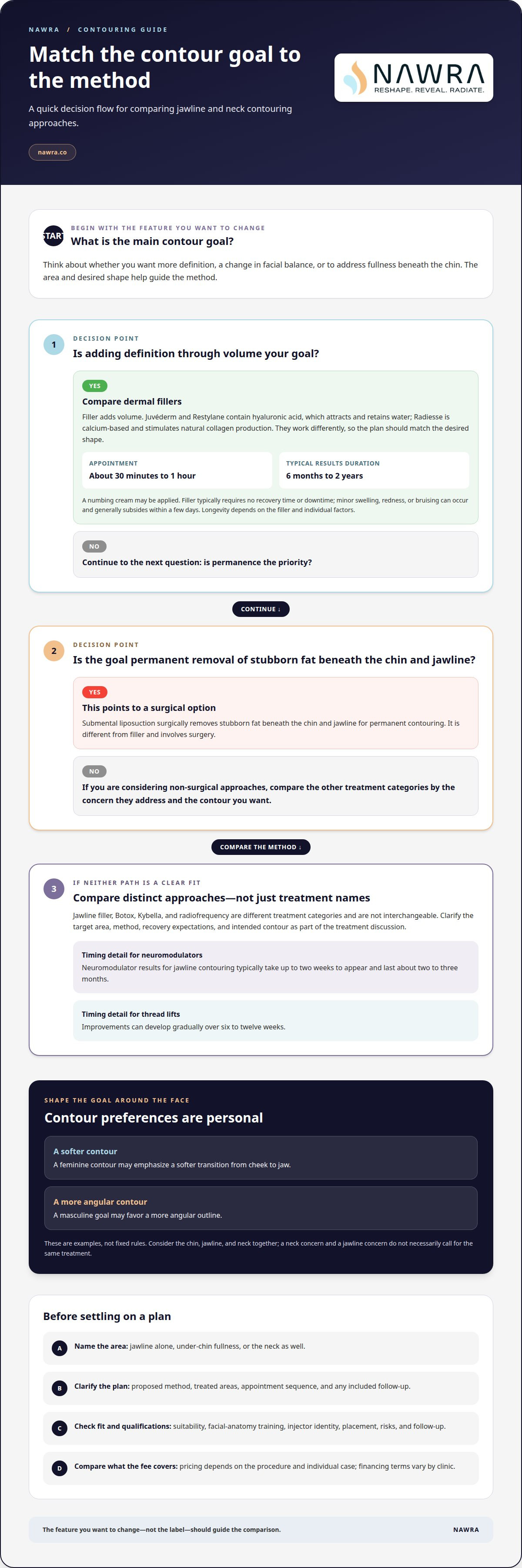
Non-surgical contouring can refine the lower face without an operation. The right method depends on the goal, whether that is adding definition, adjusting facial balance, or addressing fullness beneath the chin. Dermal fillers are one injectable option. Juvéderm and Restylane contain hyaluronic acid, which attracts and retains water to add volume. Radiesse is calcium-based and stimulates natural collagen production. Each works differently, so the plan should match the desired shape.
A dermal-filler appointment usually takes about 30 minutes to an hour. A numbing cream may be applied for comfort. Jawline filler typically requires no recovery time or downtime, though minor swelling, redness, or bruising can occur and generally subsides within a few days. Results from fillers typically last from 6 months to 2 years, depending on the filler and individual factors. These details help patients weigh appointment time, recovery, and maintenance together.
Jawline filler adds volume; Botox is a neuromodulator, while Kybella and radiofrequency are distinct treatment categories. They are not interchangeable. Compare the concern addressed, the method, and the intended contour. Neuromodulator results for jawline contouring typically take up to two weeks to appear and last about two to three months.
Non-surgical and surgical jawline contouring differ in method and permanence. Submental liposuction surgically removes stubborn fat beneath the chin and jawline for permanent contouring. Unlike filler, it involves surgery. If your priority is facial definition rather than removing under-chin fat, distinguish those goals before choosing an approach. Let the feature you want to change, not simply the label “jawline contouring,” guide the method.
Contour goals vary with facial structure and personal preference. A feminine contour may emphasize a softer transition from cheek to jaw, while a masculine goal may favor a more angular outline. These are examples, not fixed rules. A balanced plan considers the chin, jawline, and neck together, then identifies which area needs definition. A neck concern and a jawline concern do not necessarily call for the same treatment.
Consider surgical alternatives when your goal involves fat removal or a more permanent contour. Non-surgical options use different methods, including injectable volume and approaches that work gradually. Thread-lift improvements can develop over six to twelve weeks. Compare the target area, method, recovery expectations, and likely longevity to find a procedure that matches the change you want.
A numbing cream may be applied for comfort during jawline contouring. Discuss comfort measures as part of the procedure and treatment plan.
Aftercare and long-term results
After dermal filler treatment, minor swelling, redness, or bruising may affect the treated area. These effects generally subside within a few days and can temporarily change the appearance of the jawline. Assess the contour after these early effects have settled, and follow the aftercare instructions for the specific technique rather than applying one routine to every treatment.
Filler longevity varies with the product and individual factors. Jawline contouring results from dermal fillers typically last from 6 months to 2 years. Juvéderm and Restylane fillers used for jawline contouring typically last 12-24 months. These are ranges, not a personal forecast. Product selection, placement, and the treated area all help explain why two people may see different timelines.
Other methods follow different timelines. Neuromodulator results for jawline contouring typically take up to two weeks to appear and last about two to three months. Thread-lift improvements can develop gradually over six to twelve weeks. Because the appearance changes at different points after each procedure, record the treatment date and when the contour begins to look settled. This gives you a useful reference for discussing progress.
Risks and side effects depend on the treatment. Minor swelling, redness, or bruising can occur after jawline filler and generally subsides within a few days. Aesthetic changes also develop on different schedules, so the immediate appearance is not the only useful measure of the result.
For a consistent comparison, use the same mirror, lighting, and head position when observing your jawline. A front view shows overall facial balance; a side view highlights the transition from chin to neck. Compare these views over time instead of relying on one impression. This simple tracking step can help distinguish a settled contour from temporary post-treatment changes.
Maintenance is part of long-term planning. Periodic touch-ups are recommended to maintain the desired jawline contour. Timing depends on the method and how the result changes, so use your treatment plan as a reference rather than assuming every technique follows the same schedule. A credential alone doesn’t explain the technique or aftercare; the plan should specify what was treated and what changes to monitor.
When comparing filler and thread-lift results, account for gradual development as well as longevity. One method may show changes sooner, while another develops over weeks. Keep the product or procedure name, appointment date, and follow-up notes together. This record makes it easier to track your appearance and discuss whether the contour still matches your goal.
Benefits and expected longevity
A defined jawline can change how the lower face looks from the front and in profile. Dermal fillers add volume in selected areas, which can improve visual balance between the chin, jaw, and surrounding features. Your goal may be a sharper outline or a softer, more youthful appearance. Treatment planning should focus on proportion, not simply making the jaw look larger.
Hyaluronic acid fillers such as Juvéderm and Restylane attract and retain water, adding volume where placed. These fillers used for jawline contouring typically last 12-24 months. That range helps with planning, but it isn’t a guaranteed timeline for every patient. Product choice and individual factors influence how long the contour remains visible.
Radiesse works differently: it is calcium-based and stimulates natural collagen production. This distinction matters when comparing fillers because their materials and effects are not identical. A treatment discussion can clarify whether your priority is added volume, collagen stimulation, or a particular contour. Connect each objective to a defined area, such as the chin-jaw transition.
Non-surgical contouring can suit people who want to avoid an operation. Jawline filler typically requires no recovery time or downtime, so patients can plan around it differently from surgical contouring. Still, a low-downtime method does not mean every approach works the same way. The technique, treatment area, and intended result shape the experience and maintenance plan.
Use a simple comparison process before choosing:
- Define the goal: Decide whether you want more visible jaw definition, improved facial balance, or a softer transition toward the neck.
- Match the method: Compare the intended effect of hyaluronic acid fillers with Radiesse’s collagen-stimulating approach.
- Plan for longevity: Consider the filler’s expected duration alongside your preference for future maintenance.
Someone seeking a subtle chin-to-jaw transition, for example, may prioritize proportion over a strongly angular appearance. Someone seeking a more sculpted outline may discuss where added volume could support that shape. These examples show why facial structure and aesthetic goals matter as much as product duration. A measured plan can help keep the result balanced with the rest of the face.
Long-term value involves more than how long a filler lasts. Consider your desired contour, the method’s expected duration, and whether periodic maintenance suits you. Juvéderm and Restylane have a stated longevity range, while Radiesse is distinguished by collagen stimulation. Comparing these mechanisms gives you a clearer basis for discussing a youthful, defined appearance without treating every filler as interchangeable.
Which Lakewood clinics offer non-surgical jawline contouring?
Lakewood clinic options depend on the treatment offered, because jawline contouring is not a single procedure. Dermal fillers add volume; submental liposuction surgically removes fat beneath the chin and jawline. A clinic offering one approach may not provide the other. Match the service description to your goal, such as added jawline definition or reduced under-chin fullness.
For injectable contouring, look for a service description that identifies dermal fillers and the areas treated. Juvéderm and Restylane are hyaluronic acid-based fillers; Radiesse is calcium-based and stimulates natural collagen production. Those names describe different filler materials, not a guarantee that every clinic offers them. A precise treatment description should clarify the proposed product and whether the plan addresses the chin, jawline, or both.
Compare the consultation process, not just the treatment label. Bring a clear example of your preferred contour, such as a softer chin-to-neck transition or a more angular jaw. Ask how the proposed technique supports that goal and what changes it is intended to create. A useful discussion distinguishes facial definition from under-chin fat reduction, since those concerns point toward different procedures.
Use these details to organize a Lakewood clinic comparison:
- Procedure: Identify whether the option is an injectable, another non-surgical technique, or surgery.
- Target area: Note whether the plan addresses the jawline, chin, neck, or under-chin fullness.
- Product or method: Record named fillers, such as Juvéderm, Restylane, or Radiesse, when stated.
- Expected course: Compare appointment length, aftercare, and how results develop for the stated technique.
These distinctions help prevent a mismatch. Someone seeking a defined jawline may not want surgical fat removal. Someone mainly concerned about fullness beneath the chin should understand that filler adds volume rather than surgically removing fat. Clear language about the treatment target makes clinic descriptions easier to assess.
Bring your notes and preferred outcome to the consultation. Discuss whether your priority is a feminine, softer contour or a more angular, masculine shape. The plan should address your goal and explain the selected method, treated areas, and aftercare. These details provide a practical basis for comparing options without assuming every Lakewood clinic offers the same procedures.
If your priority is a broader non-invasive wellness goal rather than injectable jawline definition, explore non-invasive wellness options as a separate path.
NAWRA: EMSCULPT NEO
NAWRA offers EMSCULPT NEO for non-invasive body sculpting and muscle stimulation, a different focus from injectable jawline contouring. If your goals also include body composition or broader wellness, targeted assessments can help track your physical progress. ExoPod Full-Body Therapy and BOA Lymphatic Drainage are other options for those exploring wellness services beyond facial contouring.
Choose a service according to the outcome you want. EMSCULPT NEO may be relevant to body sculpting goals, while it isn’t a substitute for a facial jawline treatment. For a clearer view of your overall wellness, consider pairing your treatments with complementary physical evaluations. To discuss NAWRA’s offerings, contact NAWRA through its website.
Make your next step specific
For non-invasive jawline contouring in Lakewood, define the change you want before choosing a direction. Decide whether your priority is facial definition, a softer transition, or a broader wellness goal. This distinction makes the next conversation more focused and keeps the treatment discussion aligned with your priorities.
NAWRA offers EMSCULPT NEO, DEXA Body Composition, and ExoPod Full-Body Therapy. These address body sculpting, body composition assessment, and full-body therapy, respectively. They are separate from injectable jawline contouring, so consider them when those broader goals are relevant.
If you’d like to explore whether NAWRA’s offerings fit your wellness priorities, contact NAWRA to discuss your options. A clear goal is a practical starting point. From there, you can choose a path with greater confidence and clarity.
Frequently Asked Questions
What is jawline contouring, and why is it popular?
Jawline contouring uses aesthetic treatments to refine the lower face’s outline. It appeals to people seeking more definition without surgery. Start by identifying the specific concern: jawline definition, the chin-to-neck transition, or fullness beneath the chin. Adding volume can shape facial contours, for example, while surgical fat removal addresses a different concern. Defining your goal first makes treatment discussions more focused.
How to achieve a slimmer, contoured chin without surgery?
First, distinguish a desire for sharper definition from concern about under-chin fullness. Dermal fillers add volume, shaping contours rather than removing fat. A treatment discussion can clarify whether you want a more defined chin-jaw outline or a smoother transition toward the neck. Bring a front-view and profile reference of your preferred look, then discuss which approach fits that goal.
What non-invasive jawline contouring treatments are available in Lakewood?
Options used for non-invasive jawline contouring in Lakewood include hyaluronic acid fillers such as Juvéderm and Restylane, calcium-based Radiesse, neuromodulators, and thread lifts. Each works differently and follows its own timeline. Clinic offerings vary, so compare the named method and target area. Ask whether a proposed plan focuses on jaw definition, chin shape, or the transition to the neck.
How much does non-invasive jawline contouring cost in Lakewood?
Pricing depends on the procedure and individual case. The price is provided after a quote request, with factors including the method, areas addressed, and treatment details. A quote for jawline definition alone may differ from one covering both the jaw and neck. Compare what each plan includes rather than relying on a broad estimate that may describe a different approach.
How long do results from non-invasive jawline contouring last?
Longevity depends on the method. Dermal-filler results typically last from 6 months to 2 years. Neuromodulator results can take up to two weeks to appear and last about two to three months. Use the expected timeline to plan when you’ll review your contour, not as a promise of a personal result. Keeping dated photos in consistent lighting can help you track changes between appointments.
Who is a good candidate for non-invasive jawline contouring?
A good candidate starts with a specific aesthetic goal, such as a more defined jawline or a softer chin-to-neck transition. They also understand that fillers add volume and that methods differ in effect and longevity. Someone seeking permanent fat removal is considering a different path from someone seeking non-surgical definition. Clear priorities help focus the discussion on the desired contour and method.