Postpartum pelvic floor recovery can take longer than the initial recovery period. Emsella for postpartum recovery in Laguna Niguel uses high-intensity focused electromagnetic (HIFEM) technology to stimulate pelvic floor muscles, and a typical treatment plan includes six sessions. It may help address pelvic floor weakness associated with bladder leakage after childbirth.
Bladder leakage can persist after delivery, and treatment timing depends on your recovery and medical clearance. During an Emsella session, you sit fully clothed while HIFEM energy stimulates the pelvic floor. The treatment has zero downtime, so you can return to daily activities immediately afterward.
If you’re weighing Emsella, the practical questions matter: what happens during a session, how the treatment may relate to leakage, when to consider starting, and what affects the cost. This guide explains each point clearly, including how a treatment plan’s session count and structure shape the cost discussion. It also sets realistic expectations about recovery timing, so you can make an informed decision about whether Emsella fits your postpartum care.
Key Takeaways
- Understand which parts of a treatment plan can shape the overall cost, without relying on a one-size-fits-all estimate.
- Use postpartum recovery timing and medical clearance to guide when treatment may be appropriate.
- Learn how pelvic floor weakness can relate to bladder leakage and what Emsella is intended to address.
- Set realistic expectations by considering reported outcomes alongside the role of individualized care.
- See how Emsella fits into NAWRA’s Pain Relief & Recovery offering and when it may be relevant to your postpartum goals.
Emsella Cost for Postpartum Women: Is It Worth It?
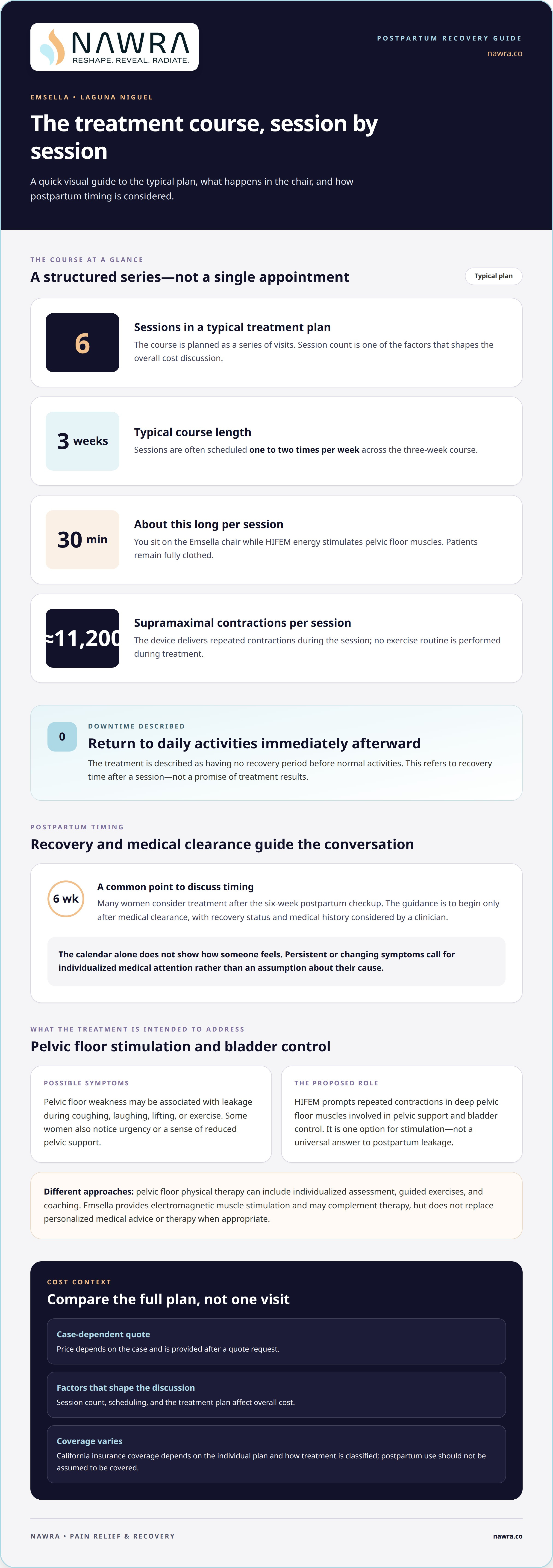
Postpartum pelvic floor changes can affect bladder control well beyond the initial six-week recovery period. Emsella uses high-intensity focused electromagnetic (HIFEM) technology to stimulate pelvic floor muscles, and a typical plan includes six sessions over three weeks.
Postpartum Pelvic Floor Changes and Symptoms
Pregnancy and childbirth can stretch or weaken pelvic floor muscles, which support the bladder and help control urine flow. If these muscles do not coordinate or contract effectively, symptoms may include leakage when coughing, laughing, lifting, or exercising. Some women also notice urgency or a sense of reduced pelvic support. Symptoms can continue after the initial postpartum recovery period, and the timing alone does not show how someone feels.
Look at the pattern, not just whether leakage occurs. Note whether it happens during a workout, while hurrying to the bathroom, or during everyday movement. These details can help explain your concern during a medical consultation, though they cannot establish its cause. Persistent or changing symptoms warrant individualized medical attention rather than an assumption that every postpartum concern has the same cause.
Proposed Pelvic Floor Muscle Stimulation
Emsella uses HIFEM energy to prompt repeated contractions in deep pelvic floor muscles while the patient sits on the treatment chair. The proposed role is to stimulate muscles involved in pelvic support and bladder control. A typical plan is six sessions, often scheduled one to two times per week across three weeks. That schedule describes a treatment course, not a guaranteed result or a substitute for clinical assessment.
Pelvic floor physical therapy and Emsella take different approaches. Physical therapy can include an individualized assessment, guided exercises, and coaching; Kegels are voluntary pelvic floor contractions. Emsella provides electromagnetic muscle stimulation during a session. It may complement pelvic floor therapy, but does not replace personalized medical advice or therapy when those are appropriate.
Insurance coverage for Emsella in California depends on the individual plan and how the treatment is classified. Ask your insurer about coverage and out-of-pocket responsibility before making a decision; do not assume postpartum use is covered.
For cost, the practical comparison is the full plan, not a single appointment. The price depends on the case and is given after a quote request; session count, scheduling, and the treatment plan affect the overall cost. When weighing value, consider the treatment’s intended focus, the time commitment of six sessions, and whether its approach fits your symptoms and care goals. Emsella for postpartum recovery in Laguna Niguel is best considered as one option for pelvic floor stimulation, not a universal answer to postpartum bladder leakage.
Emsella session duration and patient experience
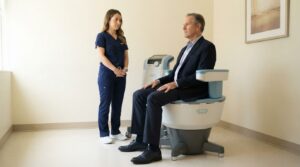
An Emsella treatment is designed around repeated pelvic floor muscle contractions, delivered while patients remain seated and fully clothed. A session takes about 30 minutes, with no recovery period needed before returning to normal activities.
Session Duration and Contractions
A typical Emsella session lasts about 30 minutes and delivers approximately 11,200 supramaximal contractions. The treatment uses high-intensity focused electromagnetic (HIFEM) energy to stimulate pelvic floor muscles. Unlike a set of voluntary exercises, the chair produces repeated contractions during the session. The duration is compact, but the treatment is structured as a course rather than a single appointment.
A typical protocol includes six sessions over a three-week period, often scheduled one to two times per week. This gives patients a clear sequence to plan around work, childcare, and other appointments. During a consultation, the provider can explain how the proposed schedule relates to postpartum recovery and the patient’s goals.
What a Session Feels Like
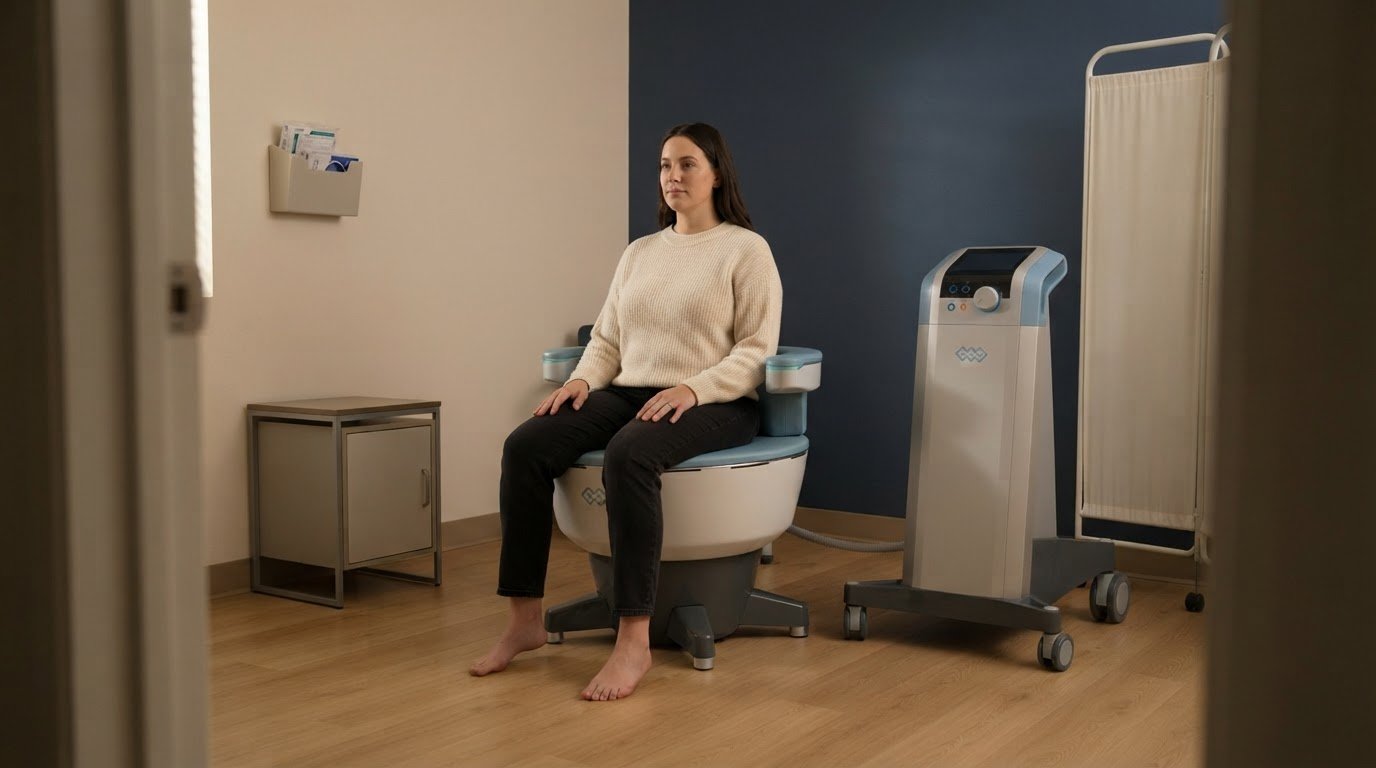
Patients sit on the Emsella chair while HIFEM stimulation prompts the pelvic floor muscles to contract. The repeated contractions are the central physical sensation of treatment. Their number, approximately 11,200 per session, helps explain why the experience differs from performing a few voluntary Kegels. Patients remain clothed throughout the session.
The experience takes place while seated, without exercise movements or changing into treatment clothing. Since individual sensations aren’t detailed in the available treatment facts, no single description should be treated as universal. A useful step is to discuss comfort and any concerns during the consultation, before treatment begins. This keeps expectations focused on the actual process: sitting, receiving muscle stimulation, and completing the session.
What the Session Involves
The appointment centers on the Emsella chair and its electromagnetic stimulation. Patients sit fully clothed while the device delivers contractions to pelvic floor muscles. The session lasts about 30 minutes, and patients can return to normal activities immediately afterward. No exercise routine is performed during the treatment itself.
After childbirth, timing matters. The supplied postpartum guidance says treatment may begin after medical clearance, with many women considering it after their six-week postpartum checkup. A clinician should consider recovery status and medical history when discussing suitability. Emsella is described as non-invasive, but patients should raise questions about individual risks, side effects, and contraindications before starting. Immediate return to activities describes recovery time, not a guarantee that treatment is appropriate for everyone.
For a clearer picture of the process, review the Emsella treatment details alongside your postpartum care plan. The practical points to understand are the session length, the repeated contractions, and the schedule across the full course.
Bladder leakage and urinary incontinence
Postpartum bladder leakage can affect exercise, daily routines, and comfort. Noting when leakage happens can help describe the symptom pattern and prepare for a focused discussion with a healthcare professional.
Postpartum Urinary Incontinence
Urinary incontinence means losing urine unintentionally. After childbirth, pelvic floor weakness can contribute to leakage, but symptoms differ from person to person. Leakage during a cough and a sudden urge to urinate, for example, may lead to different questions during a clinical assessment. Note the activity, sensation, and circumstances associated with each episode. This gives a clearer starting point than describing leakage only as occasional or frequent.
Some women continue to experience symptoms after the initial postpartum recovery period. The timeline alone cannot identify the cause or show whether pelvic floor weakness is the only factor. Persistent leakage, changing symptoms, or interference with daily activities are useful details to raise with a healthcare professional. A careful discussion can help determine whether pelvic floor care, medical evaluation, or both may be appropriate.
Bladder Leakage and Urinary Symptoms
Bladder symptoms can include leakage with physical effort or difficulty reaching a bathroom in time. These are different experiences, so a single label may not capture the full pattern. Consider how leakage relates to lifting a child, walking, or exercising. Specific examples help explain what bladder control concerns look like in daily life.
Pay attention to related changes, too. Urgency, disrupted routines, or avoiding certain activities can help describe the impact of incontinence. Record the circumstances in plain language, such as “leakage during a walk” or “urgency on the way to the bathroom.” This is not a diagnosis, but it can make a consultation more specific.
Emsella uses high-intensity focused electromagnetic energy to stimulate pelvic floor muscle contractions. It is used for urinary incontinence or pelvic floor weakness. The treatment is non-invasive, and you remain fully clothed during the session. This format may be relevant if you are considering an option without an invasive procedure, but it does not establish the cause of leakage.
How can Emsella help? It provides targeted pelvic floor muscle stimulation and is used for urinary incontinence or pelvic floor weakness. It does not replace personalized medical advice or address every possible cause of urinary symptoms. A treatment directed at pelvic floor muscles is not a complete explanation for all bladder concerns.
For a focused discussion, bring three details to the consultation: when leakage occurs, what activities it affects, and whether symptoms are changing. These examples help connect the treatment’s intended focus with the concern being addressed. Emsella may be considered for postpartum pelvic floor weakness, while persistent or unusual bladder symptoms warrant individualized medical guidance.
Potential benefits and reported outcomes
Emsella is used to stimulate pelvic floor muscles and may be relevant to postpartum concerns about leakage and bladder control. Consider it in relation to specific goals and symptoms, not as an assumed result or a replacement for medical advice.
For someone in Laguna Niguel considering Emsella, the key questions are whether pelvic floor stimulation aligns with the symptoms and whether the timing is appropriate for postpartum recovery. Discuss both with a healthcare professional before deciding.
Potential Benefits for New Mothers
For a new mother experiencing leakage, Emsella offers targeted stimulation of muscles involved in pelvic support and bladder control. The treatment stimulates pelvic floor muscles while you sit, without exercise movements. It is one option to discuss alongside appropriate medical guidance, especially when symptoms affect activities such as lifting a child, walking, or returning to exercise.
Comfort and scheduling also matter. You sit fully clothed during treatment, and the session has zero downtime, so you can return to daily activities immediately afterward. This may help with planning around childcare or other responsibilities. It does not mean every symptom has the same cause or that muscle stimulation addresses every postpartum concern. Consider whether the treatment’s focus matches your goal, such as addressing leakage during activity.
Urinary symptoms can affect confidence. For example, a mother who avoids a walk because she fears leakage can note that limitation as part of her symptom history. Tracking the activity, symptom, and effect on routine gives a more useful comparison than relying on a broad impression alone.
Reported Postpartum Recovery Outcomes
Reported outcomes include a postpartum patient who described less leakage by her third Emsella visit. That account offers a concrete example, not a prediction for every patient. It shows why symptom tracking across treatment can matter: note when leakage occurs, which activities are affected, and whether the pattern changes over time.
Some patients report changes within the first few sessions, while improvements may last for several months and sometimes up to a year. These reported timeframes vary, so they should not be treated as a schedule or guarantee. A patient’s starting symptoms and treatment response are central to interpreting progress.
To discuss symptoms clearly, track leakage episodes, affected activities, and changes in comfort or confidence. For instance, note whether coughing, lifting, or walking triggers symptoms. These details offer a grounded way to discuss changes during a consultation, rather than judging progress by one isolated day.
Emsella may complement pelvic floor therapy, but it does not replace personalized medical advice. A focused treatment discussion should connect a goal, such as improving bladder control, with the postpartum symptoms being addressed. Keep expectations specific and centered on daily function.
Emsella for recovery months or years after childbirth
Postpartum pelvic floor concerns can continue beyond the initial recovery period. Whether Emsella is appropriate later on depends on current symptoms, recovery, and medical guidance.
The treatment is described for pelvic floor weakness whether childbirth occurred six weeks or six years earlier. That makes the time since delivery only one part of the decision. Persistent bladder control symptoms, such as leakage during activity, also help define the concern. A consultation can connect those symptoms with the treatment’s purpose: electromagnetic stimulation of pelvic floor muscles.
Starting soon after delivery requires attention to recovery status. Many women consider treatment after the six-week postpartum checkup, once cleared by a healthcare provider. Guidance also describes waiting at least six to eight weeks after childbirth, while some providers recommend waiting several months. These timelines differ, so the relevant step is medical clearance based on delivery and postpartum recovery, not choosing a date from a general schedule.
Delivery type matters to the timing discussion, but vaginal and C-section births are both described as possible contexts for Emsella following medical clearance. After vaginal delivery, some guidance places a potential start around six weeks, subject to clearance. Following a C-section, recovery and clearance remain central considerations. The calendar alone doesn’t establish readiness; the provider’s assessment should account for the individual’s postpartum status.
Months or years later, the discussion shifts from early recovery timing to current symptoms and goals. For example, someone experiencing leakage during walks long after childbirth can describe that activity during consultation. The treatment’s focus remains pelvic floor muscle stimulation, while symptoms and care needs inform whether it fits. A sensation of improvement can differ between patients, so track practical changes such as leakage during exercise or lifting rather than relying on a fixed timeline.
A typical course involves six sessions over three weeks, which can help frame scheduling once treatment is considered appropriate. Emsella does not replace personalized medical advice or pelvic floor therapy. Instead, it can be discussed as one approach to postpartum pelvic floor weakness, whether symptoms began recently or continued over time.
For a postpartum-focused discussion of timing and treatment goals, schedule an Emsella consultation.
NAWRA: Pain Relief & Recovery
NAWRA offers Emsella as part of its Pain Relief & Recovery services for people addressing postpartum pelvic floor concerns. If bladder leakage or pelvic floor weakness remains a concern after childbirth, Emsella provides targeted pelvic floor muscle stimulation to discuss alongside appropriate medical guidance.
The right next step is a focused conversation about your symptoms, recovery timing, and treatment goals. That helps clarify whether Emsella’s purpose aligns with the concerns you want to address. NAWRA also offers EMSCULPT NEO and DEXA Body Composition, which address different wellness goals and aren’t substitutes for postpartum pelvic floor care.
Contact NAWRA to discuss Emsella and your postpartum recovery goals.
Choose a Clear Next Step for Your Recovery
Choosing Emsella for postpartum recovery in Laguna Niguel starts with identifying the change you want in daily life. Consider which symptoms matter most, which activities they affect, and what questions you want answered before deciding on treatment. This focus can make a conversation about care more useful and specific.
Postpartum recovery is personal. Discuss your symptoms and recovery with a healthcare professional, then consider whether pelvic floor stimulation fits your needs. Emsella is one option to explore, not a substitute for personalized medical advice. Clear goals and an informed discussion can help you decide on a next step.
Contact NAWRA about Emsella to discuss your postpartum recovery goals and next steps.
Frequently Asked Questions
What Is Emsella?
Emsella is a non-invasive treatment that uses high-intensity focused electromagnetic energy to stimulate pelvic floor muscles. You sit fully clothed while the device stimulates the muscles. Emsella is used for urinary incontinence or pelvic floor weakness. If you experience leakage during everyday activities, discuss whether this approach fits your concerns and recovery goals.
How Many Sessions Are Needed?
A typical Emsella treatment plan includes six sessions, commonly arranged over three weeks. The schedule may involve one or two visits each week. That course gives patients a practical framework for planning around work, childcare, or other appointments. The number of sessions describes a typical protocol, not a guarantee of results or a substitute for a plan based on individual needs.
What is Emsella and how may it help with postpartum pelvic floor recovery?
Emsella may be relevant to postpartum pelvic floor concerns because it stimulates muscles involved in pelvic support and bladder control. Its role is targeted muscle stimulation, not a complete postpartum care plan. If leakage affects walking or lifting, share those specific symptoms during an assessment. Emsella may complement pelvic floor therapy, but it does not replace personalized medical advice.
Is Emsella safe and effective for postpartum urinary incontinence or pelvic floor weakness?
Emsella is a non-invasive treatment used for urinary incontinence and pelvic floor weakness, but individual suitability and results vary. The device category isn’t evaluated by the FDA to diagnose or treat disease. Before starting, discuss postpartum recovery, symptoms, medical history, and any concerns about treatment. This helps place Emsella’s intended muscle-stimulation role in context without treating it as a guaranteed outcome.
How long after childbirth can someone start Emsella treatment?
Timing depends on postpartum recovery and medical clearance. Guidance commonly places consideration after the six-week postpartum checkup, while other recommendations advise waiting six to eight weeks or several months. Vaginal or C-section delivery can both be considered following medical clearance. For example, a patient still recovering from delivery should discuss readiness with a healthcare provider before scheduling pelvic floor treatment.
How many Emsella sessions are recommended for postpartum recovery, and how long is each session?
A typical postpartum course is six sessions over three weeks, with visits often scheduled one to two times per week. Each session takes about 30 minutes. Patients can use those details to estimate the time commitment and plan childcare or transportation. The appointment schedule describes a common protocol; the provider’s treatment plan should reflect the patient’s recovery status and goals.
What does Emsella cost in Laguna Niguel, California, and are packages or financing available?
NAWRA does not publish treatment prices, and costs can depend on the proposed plan. Do not assume package pricing, financing, or insurance coverage. Before deciding, review the treatment and payment terms presented to you. Insurance coverage is separate, so ask your insurer about your individual plan’s rules for Emsella.
What qualifications should an Emsella provider have, and what questions should patients ask?
Look for a provider who can explain Emsella’s intended use, review your postpartum history, and discuss whether medical guidance is appropriate. NAWRA’s services are physician-supervised. Useful questions include how the treatment relates to your symptoms, what a session involves, and how you can discuss changes. For Emsella for postpartum recovery in Laguna Niguel, share specific examples, such as leakage during exercise or lifting.