
Botox isn’t the only option for softening the appearance of facial lines. Alternatives to Botox in Norwalk include topical skincare, laser treatments and facial acupuncture, which work differently and suit different goals. People may consider them to avoid injections or recurring appointments. Botox effects typically wear off after three to four months, as movement gradually returns.
Stopping Botox doesn’t stop skin from aging, but it doesn’t make aging suddenly accelerate either. Skin continues to age as it otherwise would. This guide compares non-injectable treatments, explains factors that can influence cost, and outlines what to expect as Botox wears off. The key is matching the approach to your concern: treatments that target muscle movement work differently from options focused on skin texture or appearance, and their results and upkeep differ too.
Key Takeaways
- Match a treatment to the concern it targets: skin texture, visible lines, and facial muscle movement call for different approaches.
- Compare alternatives by how they work, how long results may last, and the maintenance they involve.
- When stopping Botox, expect movement to gradually return; stopping treatment doesn’t change the skin’s natural aging process.
- Consider the trade-offs between temporary options and procedures intended to create longer-lasting changes.
- NAWRA offers data-driven wellness services, including Emface and DEXA Body Composition, for goals that extend beyond wrinkle treatment.
Non-injectable alternatives, including peptides, laser treatments, and facial acupuncture
Non-injectable options focus on skin quality rather than directly limiting muscle movement. Peptide skincare, laser treatments and facial acupuncture each work differently: topical peptides fit into a home routine, lasers use focused energy, and facial acupuncture uses fine needles at selected points. Start by identifying your concern: surface texture, lines visible at rest, or expression lines caused by muscle activity.
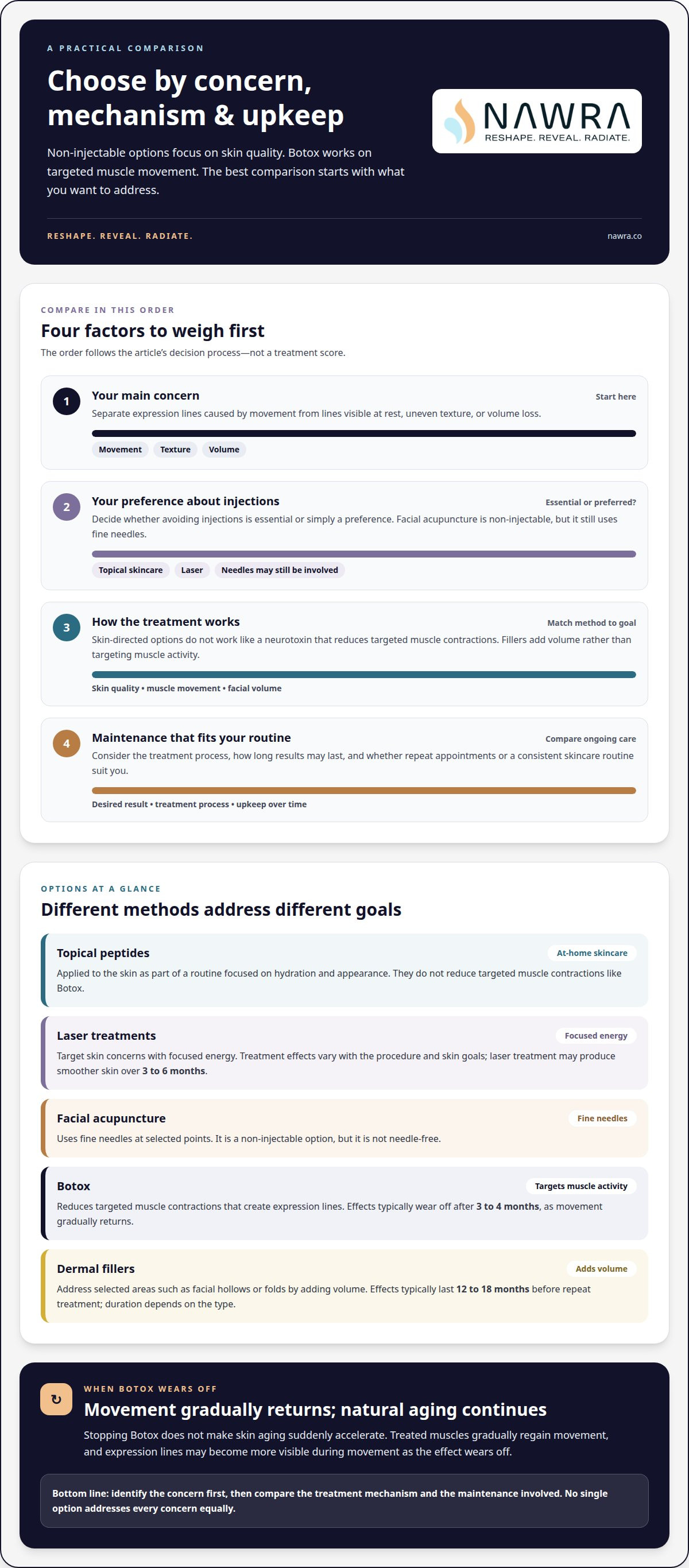
Peptides are skincare ingredients used in topical formulas. They can complement a routine focused on hydration and skin appearance, but they don’t work like a neurotoxin. Botox injections reduce targeted muscle contractions; a peptide product is applied to the skin instead. Laser treatments target skin concerns with focused energy, and their effects vary with the treatment and skin goals. They may produce smoother skin over 3 to 6 months. Facial acupuncture is another non-injectable option, but it still involves needles and should not be confused with topical skincare.
Matching treatment to the aging concern helps narrow the options. Dynamic lines appear with facial movement, while lines visible at rest and uneven texture raise different considerations. Laser treatment may suit a texture-focused goal; topical peptides may fit a consistent skincare routine. For movement-related lines, an injectable neurotoxin works on muscle activity. The expected duration also matters: Botox effects typically last 3 to 4 months, while dermal fillers may last 6 to 24 months, depending on type.
Dermal fillers and Botox address different features. Botox injections target muscle contractions that create expression lines; fillers add volume to selected areas, such as facial hollows or folds. Filler effects typically last 12 to 18 months before repeat treatment, while Botox effects generally wear off sooner. The best fit depends on whether the priority is movement-related lines or volume loss, and how long a result is desired.
For cosmetic injectables in Norwalk, choose a qualified provider who discusses facial anatomy, the target area, the product’s purpose, and the aftercare plan before treatment. A clear consultation should cover the intended result and relevant health history. Botox preparation can include avoiding alcohol for 24 hours before treatment; consult a physician before stopping aspirin or anti-inflammatory medication, which may be avoided for two weeks beforehand. During treatment, the provider selects injection sites based on the agreed facial plan.
Recovery after non-Botox wrinkle treatments varies by method and treatment intensity. A topical peptide routine doesn’t involve a procedure, while laser treatment and facial acupuncture have different aftercare needs. Follow the treatment-specific instructions and plan around the area treated. After Botox injections, keep the head upright and avoid rubbing the area for at least 4 hours; avoid vigorous exercise for 24 hours.
Reasons to consider alternatives to Botox
Botox requires repeat treatments rather than creating a permanent change. Its effects typically last three to four months, with movement gradually returning as they wear off. Some people prefer to avoid recurring appointments or injections. Others want to focus on fine lines, skin texture or a refreshed appearance without targeting facial muscle activity. Your reason for exploring alternatives helps determine which type of treatment to consider.
Maintenance matters when comparing options. Cosmetic Botox treatments are commonly scheduled approximately every three to four months. If you want fewer recurring appointments, you might explore approaches with a different schedule, such as consistent skincare or treatments that build results gradually. That doesn’t make one option universally better. Compare the desired result, treatment process and upkeep over time.
Some people simply prefer to avoid injections. That preference may lead them to consider topical skincare, laser treatments or other non-injectable procedures. These options don’t work like a neurotoxin that reduces targeted muscle movement. For example, someone concerned about skin texture may prioritize a skin-directed treatment, while someone bothered by forehead lines during expression may be looking for a different mechanism.
Your main concern may also change over time. You might first focus on expression lines, then notice fine lines at rest or changes in skin texture. No single treatment addresses every concern equally. Clarify your priority: do you want to reduce movement-related wrinkles, improve the appearance of your skin, or avoid repeat injections? That distinction makes it easier to compare relevant options.
Think about the look you want, too. Some people want to soften a specific facial line while keeping their usual expressions. Others prefer a broader, skin-focused plan that doesn’t target muscle movement. These are different goals. Before choosing a procedure, note the area of concern, whether the line appears during movement or at rest, and how much maintenance fits your routine.
A simple decision process can make the trade-offs clearer. First, identify the concern, such as forehead lines or uneven texture. Next, decide whether avoiding injections is essential or simply a preference. Then compare how each option works and what ongoing care it involves. For people considering alternatives to Botox in Norwalk, the most useful choice is one that matches their concern, treatment preferences and maintenance plan, not a general promise to look younger.
Stopping Botox
Stopping Botox doesn’t stop skin from aging; it continues to age as it otherwise would. As the effect wears off, the treated muscle gradually regains movement, so forehead lines may become more visible during expression. This is a return toward your untreated appearance, not evidence that stopping injections accelerates aging. Botox effects typically last three to four months, though visible changes vary in timing.
Expect a gradual change, not an overnight reversal. For example, after using Botox for forehead lines, you may notice them more clearly when raising your eyebrows. Your face doesn’t suddenly become older because you stop injections. The change reflects returning muscle movement alongside the skin’s ongoing aging process. Neither stopping nor continuing Botox prevents all age-related changes.
You don’t need to replace Botox automatically with another procedure. First identify what you want to address now: movement-related lines, lines visible at rest, or skin texture. Each concern calls for a different approach. A skincare routine may suit someone focused on surface appearance, while a treatment targeting muscle movement serves a different purpose. Stopping injections does not mean surgery is the necessary next step.
Review your face in ordinary expressions rather than reacting to one moment. Compare the area at rest and during movement, such as when smiling or raising your forehead. Note which change matters most, then decide whether treatment still fits your goals. If you choose not to resume injections, you don’t need a tapering plan to prevent aging; your skin continues its natural course.
Not every change after stopping Botox is an expected effect of stopping. The gradual return of facial movement differs from new or persistent symptoms. If symptoms concern you, seek a clinical assessment rather than assuming they result from stopping treatment. Expression lines may become visible again as the muscle moves, while other symptoms warrant their own evaluation.
Some people stop because they want fewer repeat procedures; others pause to reconsider their goals. Either way, don’t rush into an invasive option because of a temporary change in appearance. Take time to observe the area during everyday expressions and compare it with your original concern. If forehead lines were your priority, for example, consider whether they bother you at rest or mainly during movement.
When comparing alternatives to Botox in Norwalk, focus on your concern, the treatment mechanism and the ongoing commitment. You don’t automatically need another treatment after stopping. A clear plan starts with what has changed, what you want to address and whether a procedure fits that goal.
Temporary versus permanent Botox alternatives
“Permanent” can be misleading when planning cosmetic treatments. Non-invasive Botox alternatives generally offer temporary or gradually cumulative results, not permanent changes. Botox results typically last three to four months before movement gradually returns. Other treatments have different timelines, so compare expected duration with the concern being treated, such as frown lines, volume loss or skin texture.
Botox results may last three to 12 months, depending on the treatment. For injections, the typical effect lasts three to four months before wearing off. That makes the approach time-limited: the targeted muscle gradually moves again, and expression lines can reappear. A person considering a Botox treatment should factor in repeat appointments, the desired effect, and whether maintaining reduced movement fits their routine.
Dermal fillers have a different purpose and duration. They address volume in selected areas rather than limiting muscle movement. Their effects may last 6 to 24 months, depending on the type; filler effects typically last 12 to 18 months before treatment needs repeating. For example, a person concerned about facial volume may compare fillers with Botox, while someone focused on movement-related frown lines may weigh a neurotoxin instead. These options aren’t interchangeable.
Laser treatments and other non-invasive approaches are usually not permanent either. Some results can develop gradually, so a smoother appearance may depend on the treatment plan and ongoing care. Laser treatments may produce smoother skin over 3 to 6 months. That timeline differs from an injectable’s muscle-focused effect. Consider whether you prefer gradual skin-focused change or a temporary effect tied to a particular facial movement.
A facelift occupies a different category. Its results are described as lasting 10 or more years, substantially longer than the typical duration of Botox or fillers. It is surgery, not a non-invasive alternative, and the longer duration doesn’t make it the right choice for every concern. The decision depends on the extent of change sought and whether a surgical procedure matches your goals.
Compare options by asking three practical questions: what concern is being treated, how long might the result last, and what does the treatment involve? Someone seeking reduced muscle movement might compare Botox’s three-to-four-month effect with a skin-directed laser approach. Someone concerned about volume might consider how filler duration varies by type. Those seeking a longer-lasting change can evaluate surgery separately from non-invasive procedures.
No treatment permanently stops aging. A longer-lasting result isn’t the same as a permanent one, and “temporary” doesn’t mean ineffective. In Norwalk, choosing among alternatives means matching the method and expected duration to your desired outcome, rather than treating every cosmetic option as a substitute for Botox.
What are the risks and side effects of Botox alternatives?
“Non-injectable” doesn’t mean “risk-free.” Treatments differ in their process, exposure and recovery. A peptide cream is applied to the skin, while laser treatment uses focused energy. Facial acupuncture uses needles, dermal fillers involve injections, and a facelift is surgery. Possible side effects and precautions depend on the method, treatment area and individual health history.
Start by understanding how the treatment works. For topical peptides, review the ingredients and how they fit with your existing skincare routine. Pay attention to how your skin responds, especially when adding a product to other skincare. Introduce products deliberately rather than changing several steps at once. That makes it easier to identify the cause if irritation develops.
Laser treatment requires a separate discussion because it directs energy at the skin. The treatment plan should explain the targeted concern, expected skin response, and aftercare. For example, someone seeking a smoother texture should understand how the selected laser approach relates to that goal. Results may develop over 3 to 6 months, so immediate appearance alone doesn’t describe the full treatment course.
Facial acupuncture uses needles, even though it isn’t Botox. Before proceeding, discuss needle placement, the areas being treated and aftercare. Dermal fillers also require careful planning because they involve injections and address volume, not muscle movement. The considerations differ: acupuncture involves needle placement, while filler planning involves the intended area and the product’s purpose.
Surgery calls for a separate risk discussion. A facelift is invasive, unlike topical skincare or laser treatment. Its longer-lasting results don’t make it equivalent to non-surgical methods. Before considering surgery, weigh the degree of change you want, the procedure itself and the recovery involved. Choose a treatment to match your concern, not simply because it promises a longer-lasting result.
Use a structured review before choosing any option:
- Define the target: Identify whether the concern is texture, volume, or movement-related lines.
- Review the method: Clarify whether it involves topical ingredients, energy, needles, injections, or surgery.
- Discuss personal factors: Share relevant health history, current skincare, and previous treatment reactions.
- Understand aftercare: Establish what to expect during recovery and which changes need prompt clinical attention.
This process helps distinguish expected treatment effects from symptoms that call for follow-up. A clear plan describes the method, the treated area, and recovery expectations before treatment begins. For a broader wellness perspective while considering aesthetic goals, explore NAWRA’s wellness services.
NAWRA
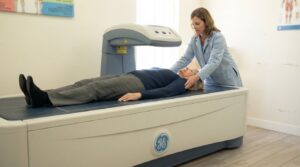
NAWRA may be relevant if your goals extend beyond expression lines or wrinkle-focused treatments. Botox alternatives address different concerns, so distinguish facial goals from body composition or contouring goals. EMSCULPT NEO may suit body-contouring goals, while DEXA Body Composition measures body composition. Neither replaces a treatment that targets facial muscle movement. These services may be relevant if you want to understand your body composition or explore non-surgical body contouring.
If those goals fit your next step, contact NAWRA to discuss your options.
Choose a next step that fits your goals
Your next step doesn’t have to be another procedure. Start with the outcome you want, then decide whether it concerns facial appearance or a broader wellness goal. This distinction keeps your plan focused and helps you avoid choosing a treatment just because it’s familiar. If you’re weighing alternatives to Botox in Norwalk, let your priorities, treatment preferences and desired level of maintenance guide the conversation.
For goals beyond facial lines, NAWRA offers EMSCULPT NEO, DEXA Body Composition and ExoPod Full-Body Therapy. These services address body composition and wellness goals rather than replacing treatments that target facial movement. NAWRA’s measurement-first approach begins every protocol with a clinical scan before treatment, followed by measurement again to track change.
Contact NAWRA to discuss your options and take a thoughtful next step toward a plan that fits your goals.
Frequently Asked Questions
Why Consider a Botox Alternative?
People consider alternatives when injections don’t suit their preferences, target concern or maintenance routine. Someone uncomfortable with needles, for example, may prefer topical skincare, while someone focused on skin texture may explore laser treatment. First identify the specific change you want, such as a line visible at rest. Then compare options by method, treatment area and upkeep, rather than popularity.
How Long Do Effects Last?
Duration depends on the treatment. Botox effects typically last three to four months, while dermal filler effects vary by type and may last 6 to 24 months. Laser treatments may produce smoother skin over 3 to 6 months, and results can develop gradually. These timelines describe different treatments and goals, so they aren’t a direct measure of which option works best for a particular concern.
What are the best alternatives to Botox for wrinkles and facial lines?
There isn’t one best option for every wrinkle. Topical peptides may suit a skincare-focused routine, while laser treatments target skin concerns. Dermal fillers address volume rather than muscle movement, and facial acupuncture uses needles without injecting Botox. Choose according to how the line appears, the area involved and whether you prefer a topical, device-based or needle-based method. These options work differently and aren’t interchangeable.
How do Botox alternatives compare in effectiveness and duration?
Compare what each treatment targets before comparing timelines. Botox reduces movement in targeted muscles, with effects typically lasting three to four months. Fillers address volume and may last 6 to 24 months, depending on type. Laser treatments focus on skin and may produce smoother results over 3 to 6 months. A longer timeline doesn’t mean a treatment addresses the same concern or provides a better fit.
What non-injectable treatments can reduce wrinkles in Norwalk, California?
Options to consider in Norwalk, California, include topical peptides and laser treatments; facial acupuncture uses needles but isn’t an injection. NAWRA also offers needle-free EMFACE and Cryo Facial, which targets puffiness, redness and firmness. Every NAWRA protocol begins with a clinical scan before treatment, followed by measurement again. These services have not been evaluated by the FDA and are not intended to diagnose, treat, cure, or prevent any disease.