
Your bathroom scale is lying to you. It measures weight, not health; mass, not metabolic risk. Even if your BMI is considered normal, you may be harboring a hidden endocrine organ that actively undermines your longevity. This is the biological reality of visceral fat. It wraps around vital organs, drains into the portal circulation, and triggers systemic inflammation. It doesn’t just sit there. It secretes cytokines, drives insulin resistance, and fuels chronic disease.
You’ve likely felt the frustration of stagnant weight loss and the anxiety of invisible health markers. You deserve clinical clarity, objective data, and a structured plan. We’ll provide the roadmap you need. This article explores the science of hidden metabolic risk and the precision protocols required for reduction. We’ll analyze why DEXA scans are the clinical gold standard and how EMSCULPT NEO offers a validated path to improvement. You’ll discover how to measure, analyze, and transform your body with absolute certainty.
Key Takeaways
- Identify the biological distinction between subcutaneous deposits and deep visceral fat to prioritize your metabolic health.
- Uncover the mechanism of the Portal Vein theory and how it drives hepatic inflammation, insulin resistance, and systemic risk.
- Move beyond the limitations of home scales; adopt DEXA diagnostics to verify, quantify, and track internal fat mass with clinical precision.
- Discover the specific training and nutritional strategies required to mobilize deep lipids while you protect, shield, and preserve lean muscle.
- Analyze the clinical evidence for EMSCULPT NEO and its ability to reduce deep-seated fat through synchronized thermal and electromagnetic energy.
The Hidden Threat: Defining Visceral Fat vs. Subcutaneous Fat
Not all fat is created equal. Most people focus on the fat they can see in the mirror. This is the subcutaneous layer that sits directly beneath the skin. While this adipose tissue affects aesthetics, it’s largely passive. In contrast, visceral fat, also known as visceral adipose tissue, is hidden deep within the abdominal cavity. It wraps around your liver, kidneys, and intestines. This proximity isn’t accidental; it’s dangerous. Research into abdominal obesity and visceral fat highlights that this deep-seated tissue is a distinct organ with its own metabolic agenda.
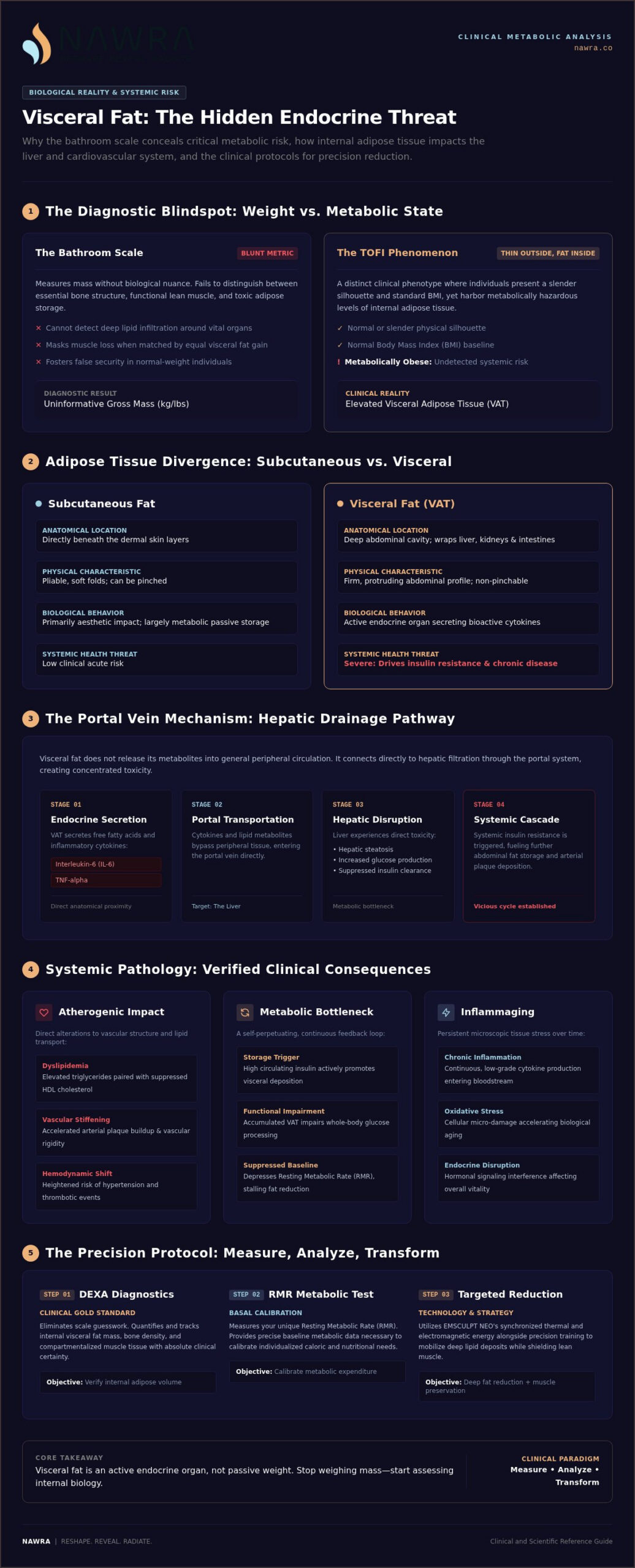
You can’t pinch visceral fat. It creates a firm, protruding abdomen rather than soft, pliable folds. This leads to the “skinny fat” phenomenon, clinically known as TOFI: Thin Outside, Fat Inside. Many individuals maintain a slender silhouette while harboring toxic levels of internal adipose. They’re metabolically obese despite a normal BMI. They’re at risk. They’re uninformed. They’re vulnerable. Without precision diagnostics, this hidden threat remains undetected until chronic symptoms emerge.
The Endocrine Function of Deep Adipose
Visceral fat isn’t just stored energy. It’s an active endocrine powerhouse. It secretes a cocktail of inflammatory chemicals known as cytokines, including interleukin-6 and tumor necrosis factor-alpha. These substances don’t stay in the abdomen. They enter the bloodstream, trigger systemic inflammation, and disrupt hormonal signaling. This process directly impairs insulin sensitivity. When your organs are bathed in these inflammatory signals, your risk for metabolic dysfunction skyrockets. It’s a silent, internal, and pervasive assault on your longevity.
Why Your Scale is Lying About Your Health
Your bathroom scale offers a single, blunt number. It can’t distinguish between bone, muscle, and fat. This lack of nuance is dangerous. You can lose five pounds of muscle through poor dieting while gaining five pounds of visceral fat through stress or hormonal shifts. Your weight remains identical. Your health, however, has plummeted. Relying on total body weight is guesswork. You need compartmentalized data to understand your true metabolic state. Precision health requires you to measure, analyze, and transform based on tissue-specific insights. Stop weighing yourself. Start assessing your internal state.
Metabolic Consequences: Why Visceral Fat is a Medical Priority
Visceral adipose tissue is a metabolic toxin. It represents a significant medical priority because of its unique anatomical position. Unlike subcutaneous fat, VAT is directly connected to the liver through the portal vein. This “Portal Vein” theory explains why this fat is so dangerous. It releases free fatty acids and pro-inflammatory cytokines directly into the liver, which triggers hepatic steatosis and drives systemic insulin resistance. The liver responds by increasing glucose production and decreasing insulin clearance. This creates a metabolic bottleneck. It’s a medical priority. It’s a longevity threat. It’s a systemic burden.
The cardiovascular implications are equally severe. High levels of internal fat storage are strongly associated with atherogenic dyslipidemia. This condition accelerates arterial plaque buildup and increases the risk of hypertension. According to Harvard Health’s analysis of visceral fat reduction, this deep-seated fat is exceptionally active, producing hormones that influence blood pressure and clotting. Key cardiovascular risks include:
- Elevated triglycerides and suppressed HDL cholesterol levels.
- Increased formation of arterial plaque and vascular stiffening.
- Heightened risk of hypertension and thrombotic events.
Visceral Fat and Insulin Resistance
VAT is both a cause and a consequence of metabolic dysfunction. High circulating insulin promotes fat storage in the abdominal cavity, yet once stored, this fat impairs the body’s ability to process glucose. It creates a self-perpetuating cycle where fat accumulation drives resistance, and resistance promotes further storage. Your Resting Metabolic Rate (RMR) is central to this process. A suppressed RMR makes fat accumulation effortless and reduction difficult. To break this cycle, you must first understand your unique metabolic baseline. An RMR Metabolic Test provides the data necessary to calibrate your caloric needs. Measure. Analyze. Transform.
The Inflammatory Cascade
The damage extends beyond blood sugar regulation. Visceral fat generates chronic oxidative stress, fueling a state of “inflammaging.” This low-grade, persistent inflammation accelerates the aging process across all biological systems. It doesn’t just affect the abdomen. It impacts brain health, degrades joint integrity, and slows post-exertion recovery. It’s a silent driver of neurodegeneration and arterial stiffening. By prioritizing the reduction of visceral fat, you shield your cognitive function and maintain long-term mobility. Precision diagnostics allow you to identify the risk, quantify the damage, and execute a data-driven plan for recovery.
Precision Diagnostics: Measuring Visceral Fat with DEXA Scans
Traditional metrics like BMI and waist-to-hip ratios are fundamentally flawed. They provide a generalized estimate rather than a diagnostic reality. A tape measure cannot distinguish between the fat you can pinch and the visceral fat encasing your organs. It ignores bone density and muscle mass entirely. For high-performance wellness, these proxies are insufficient. Relying on them is a form of metabolic guesswork that often masks underlying risks.
At NAWRA in Los Alamitos, we utilize a “Measure. Analyze. Transform.” methodology to replace assumptions with empirical evidence. This precision health approach relies on DEXA (Dual-Energy X-ray Absorptiometry) to map your internal landscape. According to Cleveland Clinic’s clinical overview of visceral fat, this tissue acts as an active endocrine organ that contributes to systemic metabolic disorders. By quantifying exactly where your body stores mass, we provide a structured roadmap for metabolic recovery.
DEXA vs. The Competition: Accuracy Comparison
Most consumers rely on Bioelectrical Impedance (BIA) home scales or skinfold calipers. These tools are notoriously unreliable. BIA results fluctuate based on hydration, salt intake, and skin temperature. Calipers only measure subcutaneous tissue, leaving the hidden metabolic risk of visceral fat completely invisible. Clinical data confirms that DEXA provides gram-specific VAT measurements with a margin of error of only 1% to 2%. It is the only way to see what the scale hides.
What to Expect During a Body Composition Scan
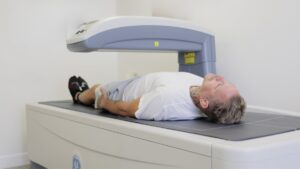
A clinical DEXA Body Composition scan is a non-invasive, 10-minute procedure. You lie flat on a padded table while a low-dose X-ray arm passes over your body. The radiation exposure is negligible, comparable to the background radiation of a short flight. You’ll receive a detailed report that stratifies your fat mass by compartment, providing the transparency needed to make informed health decisions.
Interpreting your VAT score is critical for risk assessment. Clinical thresholds typically classify a VAT area below 100 cm² as low risk. Scores exceeding 160 cm² indicate a high risk for insulin resistance and cardiovascular events. By establishing this baseline, you can track systematic progress and verify the efficacy of your treatment protocols. You don’t need a better guess; you need better data. Stop weighing yourself and start measuring your composition.
The Elimination Protocol: Lifestyle and Advanced Technology
Eliminating visceral fat requires more than general activity. It demands a protocol rooted in metabolic intensity and hormonal regulation. Traditional steady-state cardio is often insufficient; it can even lead to lean mass wasting if not balanced correctly. High-Intensity Interval Training (HIIT) is the superior alternative for mobilizing deep adipose tissue. HIIT triggers a systemic catecholamine response that specifically targets the mobilization of internal lipids. It isn’t just about the session; it’s about the metabolic shift that follows.
Lifestyle factors act as the primary regulators of fat oxidation. Chronic stress drives elevated cortisol, a hormone that signals the body to deposit fat directly into the visceral compartment. Without adequate sleep hygiene, your body cannot effectively regulate insulin or growth hormone, leading to stagnant progress. You must manage stress, optimize recovery, and shield your metabolism from hormonal disruption. Identify the triggers. Calibrate your habits. Execute the plan.
Nutrition Strategies for Metabolic Flexibility
Nutrition is the foundation of metabolic recovery. To lower systemic insulin levels, you must aggressively reduce processed sugars and refined carbohydrates. These substances spike insulin, which halts fat oxidation and promotes storage. A protein-forward approach is essential to protect lean tissue during fat loss, while high fiber intake helps mitigate the accumulation of new VAT. However, generic diets fail because they ignore your unique biology. You need to know exactly how much energy your body requires at rest. An RMR Metabolic Test removes the guesswork by providing your precise caloric baseline. Measure. Calibrate. Succeed.
Functional Movement and Muscle Preservation
Resistance training is the most effective tool for long-term fat management. While HIIT mobilizes fat, building lean muscle creates a permanent metabolic engine. Muscle tissue is metabolically expensive; the more you have, the higher your daily energy expenditure. Strength training also induces the “Afterburn Effect,” clinically known as Excess Post-exercise Oxygen Consumption (EPOC). This process keeps your metabolic rate elevated for hours after your workout ends, facilitating continuous fat oxidation. Focus on compound movements. Build functional strength. Preserve your metabolic health. By prioritizing lean tissue growth, you ensure that weight loss comes from the right compartments.
Accelerated Reduction: The Role of EMSCULPT NEO
Technology has finally caught up with biological necessity. While lifestyle interventions form the foundation of metabolic health, advanced technology now provides a mechanism for accelerated progress. EMSCULPT NEO represents a paradigm shift in body composition management. It is the first platform to utilize a dual-modality approach, combining synchronized Radiofrequency (RF) and High-Intensity Focused Electromagnetic (HIFEM+) energy. This synergy allows for the simultaneous treatment of muscle and fat, creating a high-intensity metabolic environment that traditional exercise cannot replicate. NAWRA is the Los Alamitos leader in this non-invasive sculpting technology.
The relationship between muscle growth and fat loss is known as “Muscle-Fat Cross-Talk.” By inducing 20,000 supramaximal contractions in a single 30-minute session, EMSCULPT NEO creates a massive local metabolic demand. This process doesn’t just strengthen the abdominal wall; it forces the body to mobilize energy from surrounding stores. Because the device induces intense metabolic stress within the abdominal compartment, it offers a unique advantage for those focused on internal health. It targets, triggers, and transforms your metabolic profile from the inside out.
The Science of Radiofrequency (RF) and Adipose Tissue
The RF component of EMSCULPT NEO utilizes thermal energy to induce adipocyte apoptosis, or programmed cell death. By maintaining a therapeutic temperature of 42°C to 45°C, the device permanently eliminates fat cells without damaging surrounding tissue. While surface toning is a primary benefit, clinical imaging published in the Journal of Cosmetic Dermatology has documented the impact on deeper tissue layers. Retrospective MRI evaluations demonstrated an average reduction in visceral fat ranging from 14.3% to 17.8%, representing a volumetric cross-sectional reduction of 15.8 cm². This data-driven evidence confirms that synchronized RF energy is a potent adjunct for metabolic recovery.
Creating a Targeted Transformation Plan
Precision health requires a structured, multi-session protocol rather than a one-size-fits-all approach. At NAWRA, we integrate DEXA diagnostics with EMSCULPT NEO to ensure every session is backed by objective data. We don’t guess. We verify. Your transformation begins with a baseline assessment to quantify your current visceral fat levels and muscle distribution. From there, we execute a systematic plan designed for your specific metabolic needs. If you’re ready to move beyond aesthetic guesswork and embrace a clinical standard of care in Orange County, your next step is a precision assessment. Measure. Analyze. Transform.
Master Your Metabolic Future
Guesswork is the enemy of longevity. Relying on a standard scale leaves you blind to the biological reality of visceral fat and the systemic risks it presents. True transformation requires three distinct phases: precise measurement, expert analysis, and targeted action. By replacing generalized advice with clinical data, you shift from passive hope to active management.
We provide the tools for this transition. Our clinical-grade DEXA technology identifies hidden risks with gram-specific accuracy. We utilize FDA-cleared EMSCULPT NEO protocols to accelerate muscle growth and fat reduction. Our wellness specialists provide the expert data interpretation necessary to turn raw numbers into a structured roadmap for metabolic recovery. It’s time to stop wondering and start knowing.
Take control of your health with a strategy rooted in empirical evidence and systematic improvement. Book Your Precision DEXA Scan at NAWRA Los Alamitos today. You have the data. You have the technology. Now, you have the clear path forward to a higher standard of care.
Frequently Asked Questions
What is a dangerous level of visceral fat?
A dangerous level of visceral fat is typically defined by a cross-sectional area exceeding 160 cm² on a DEXA report. Clinical data correlates this threshold with a significantly higher risk of insulin resistance and cardiovascular events. A normal or low-risk measurement is generally below 100 cm². At our Los Alamitos facility, we use these metrics to move beyond the limitations of BMI, providing you with a clear, objective baseline for your metabolic health.
Can you have visceral fat if you look thin?
Yes, you can harbor dangerous levels of internal fat regardless of your external silhouette. This condition is known as TOFI, or “Thin Outside, Fat Inside.” Many individuals in the Long Beach and Orange County areas possess a normal body weight but suffer from high visceral fat levels wrapped around their internal organs. This hidden metabolic risk is often invisible to the naked eye and can only be accurately identified through precision diagnostics like a DEXA scan.
How long does it take to lose visceral fat with EMSCULPT NEO?
Clinical results for visceral fat reduction typically peak at three months following the completion of a standard four-session protocol. While some physiological shifts occur immediately, the body requires time to process adipocyte apoptosis and build new muscle thickness. Research published in the Journal of Cosmetic Dermatology indicates an average reduction of 14.3% to 17.8% in VAT. We recommend a structured follow-up assessment at our clinic to verify your specific physiological response and metabolic progress.
Does a DEXA scan show exactly where my fat is located?
A DEXA scan provides a comprehensive, compartmentalized map of your entire body composition. Unlike home scales that offer a single percentage, DEXA identifies exactly where fat is stored, distinguishing between subcutaneous tissue and the deep visceral fat located within the abdominal cavity. You’ll receive specific data on your android and gynoid fat distribution. This level of transparency allows our wellness specialists to create a targeted treatment plan that addresses your unique metabolic vulnerabilities with clinical precision.
Is visceral fat harder to lose than subcutaneous fat?
Visceral fat is actually more metabolically active than subcutaneous fat, meaning it often responds more quickly to high-intensity metabolic demand. However, it requires a specific approach that focuses on hormonal regulation and insulin sensitivity rather than just a caloric deficit. While subcutaneous fat is often resistant to change, the deep lipids surrounding your organs can be mobilized effectively through a combination of HIIT, protein-forward nutrition, and advanced technologies like EMSCULPT NEO.
What are the first signs of high visceral fat levels?
The most common physical sign of elevated visceral fat is a firm, protruding abdomen that doesn’t feel soft or “pinchable” like subcutaneous fat. Other clinical indicators include rising blood pressure, increased fasting glucose levels, or a waist circumference exceeding 40 inches for men and 35 inches for women. Because these signs are often subtle, residents in Cerritos and Seal Beach should rely on objective DEXA measurements rather than waiting for chronic symptoms to manifest.
How often should I get a DEXA scan to track progress?
We typically recommend a DEXA scan every three to six months to track your physiological transformation. This interval allows enough time for lifestyle changes and EMSCULPT NEO protocols to manifest as measurable shifts in your tissue compartments. Frequent testing ensures your plan remains calibrated to your actual progress. By maintaining a regular diagnostic schedule in Los Alamitos, you replace metabolic guesswork with a documented history of verified improvement and long-term health optimization.
Will diet alone get rid of visceral fat?
Diet is a critical component of metabolic health, but it is rarely enough to eliminate visceral fat while preserving lean muscle mass. Caloric restriction without resistance training often leads to muscle wasting, which lowers your metabolic rate and makes future fat gain more likely. A comprehensive protocol should combine nutritional flexibility with high-intensity movement and non-invasive technology. This multi-modality approach ensures you mobilize deep fat stores while building the metabolic engine necessary for permanent results.