Your bathroom scale is a liar. While it provides a daily number, it cannot distinguish between hydration shifts, muscle gain, or visceral fat. Most smart home scales carry a standard error margin of up to 10 percent; this leaves you guessing whether your hard work is actually paying off. You deserve a higher standard of truth. If you want to know how to measure body fat accurately, you must move beyond consumer-grade estimates and embrace clinical-grade diagnostics. Assess. Verify. Optimize.
We’re stripping away the noise of the wellness industry to focus on empirical evidence. This guide provides a data-driven breakdown of the most precise body fat testing methods available in 2026. You’ll learn why the DEXA scan remains the gold standard for body composition. We’ll explore the three-compartment model, compare clinical accuracy against common alternatives, and establish a reliable baseline for advanced treatments like EMSCULPT NEO. It’s time to stop guessing. Start measuring with precision. Build a strategy rooted in fact, not hope.
Key Takeaways
- Identify why traditional metrics like BMI and scale weight fail to distinguish between muscle mass, bone density, and visceral fat.
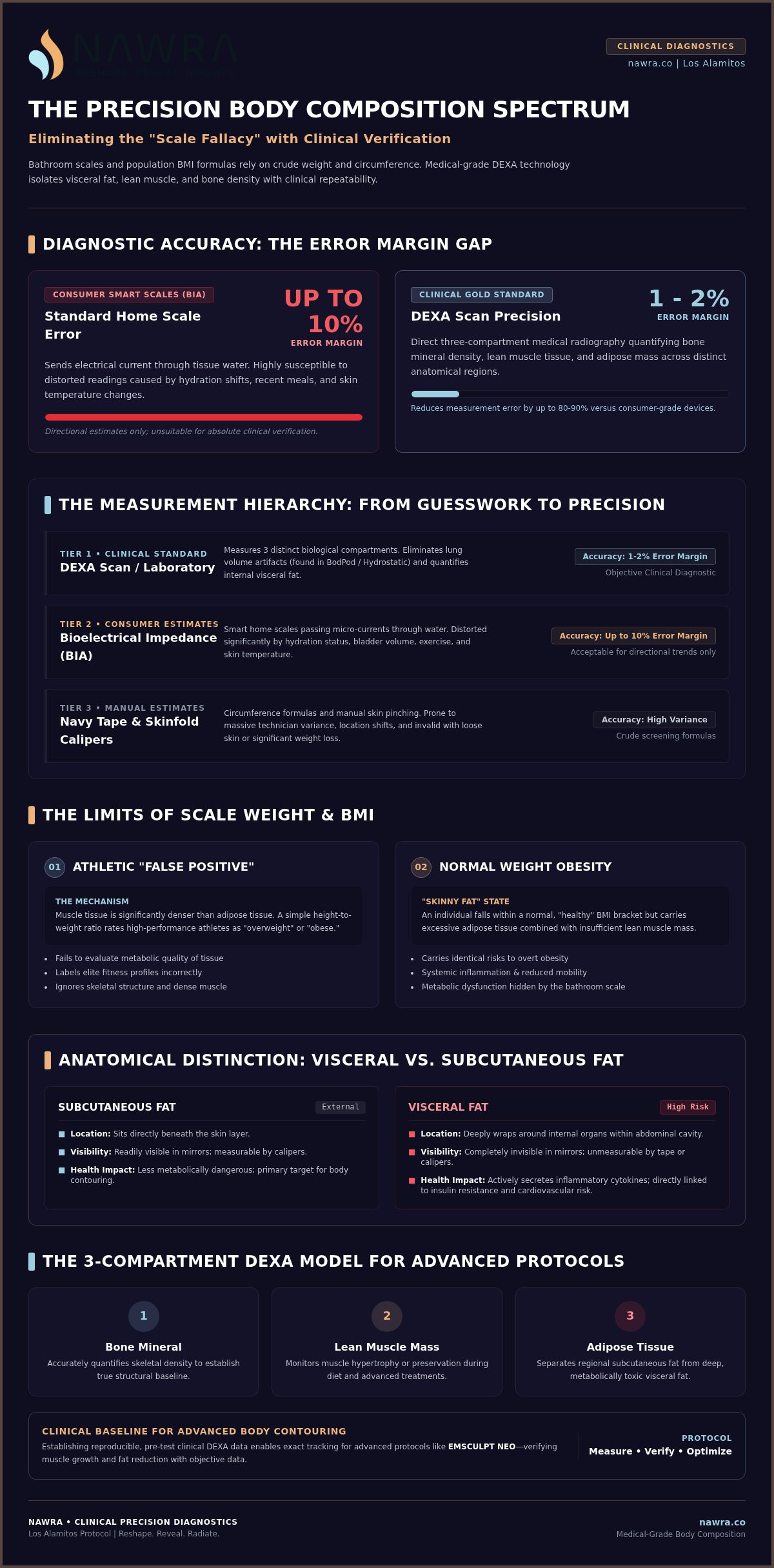
- Discover how to measure body fat accurately by utilizing the DEXA scan, a medical-grade assessment that reduces measurement error to within 1-2 percent.
- Master the clinical pre-test protocol, including specific fasting and hydration requirements, to ensure your data remains consistent and reproducible.
- Learn how to leverage precise composition data to design, track, and optimize advanced treatments like EMSCULPT NEO.
- Transition from subjective guesswork to objective verification by establishing a data-driven baseline for long-term health and performance tracking.
Beyond the Scale: Why Weight is a Flawed Metric
Weight is a measure of gravity. It’s a crude, one-dimensional metric that fails to account for the complexity of human biology. Your total mass includes skeletal structure, water, organ weight, and connective tissue. It’s not a proxy for vitality. Relying on a standard scale creates a “Scale Fallacy” where true progress is obscured by biological noise. A scale cannot tell you if your diet is preserving muscle or if your exercise routine is burning fat. If you want to know how to measure body fat accurately, you have to look deeper than a single number on a bathroom floor.
The BMI Limitation
Body Mass Index (BMI) is a population-level statistical tool. It wasn’t designed as an individual diagnostic. It uses a simple height-to-weight ratio that ignores the metabolic quality of the tissue. For athletes with high muscle density, BMI often yields “overweight” or “obese” ratings incorrectly. This is a false positive. Muscle is significantly denser than fat. At our Los Alamitos clinic, we frequently see high-performance individuals who are technically “obese” by BMI standards despite having elite levels of fitness. Measure. Analyze. Transform. Understanding your healthy body fat percentage is the only way to verify if your weight loss is actually fat loss or if you’re losing valuable lean muscle mass.
Total weight often masks “Normal Weight Obesity,” commonly known as being skinny fat. This occurs when an individual falls within a healthy BMI range but carries a high percentage of adipose tissue and insufficient muscle mass. This state is metabolically dangerous. It leads to the same risks as overt obesity: systemic inflammation, reduced mobility, and metabolic dysfunction. You can’t fix what you don’t measure. Relying on BMI alone leaves you vulnerable to these hidden health markers and prevents a truly systematic approach to wellness.
Visceral Fat: The Data Point You Can’t See
Subcutaneous fat sits directly under the skin. It’s visible, but often less dangerous. Visceral fat is the invisible threat. It wraps around your internal organs, secreting inflammatory cytokines. High visceral fat levels are directly linked to insulin resistance and cardiovascular risk. You can’t see it in a mirror. You can’t measure it with a tape. Accurate measurement is a prerequisite for long-term longevity. Clinical diagnostics provide the transparency needed to address these hidden risks before they become chronic conditions. Differentiating between these two fat types is critical for anyone considering body contouring treatments like EMSCULPT NEO or metabolic optimization. This is how to measure body fat accurately: by isolating the metrics that actually impact your lifespan.
The Hierarchy of Measurement: From Guesswork to Precision
Measurement is not a binary state. It’s a spectrum of accuracy ranging from rough estimates to clinical diagnostics. Most people seeking how to measure body fat accurately start with the most accessible tools: tape measures and calipers. These methods comprise Tier 3 of the measurement hierarchy. The U.S. Navy Tape Method relies on circumference, which cannot distinguish between muscle mass and bone density. It’s a guess disguised as a formula. While useful for population-level screening, it lacks the resolution required for a personalized wellness protocol. Identify. Measure. Refine.
Manual Error in Calipers
Skinfold calipers attempt to measure subcutaneous fat by pinching specific sites on the body. This method is notoriously prone to human error. Technician skill levels create massive variance in results. A slight shift in the pinch location or pressure can change your reading by several percentage points. For individuals with significant weight loss or loose skin, these readings become entirely unreliable. The tissue simply doesn’t respond to the calipers with the consistency needed for high-standard care. It’s a manual process in a digital world.
The Smart Scale Problem
Tier 2 includes Bioelectrical Impedance Analysis (BIA), the technology found in most smart home scales. BIA sends a low-level electrical current through the body, measuring how quickly it travels through water in your tissues. This is where the methodology fails. Factors like hydration levels, food intake, and skin temperature ruin BIA accuracy. If you’ve just worked out or drank a liter of water, your scale will provide a different result. These devices are acceptable for tracking directional trends over months, but they are useless for absolute accuracy. They provide an estimate, not a verification.
Tier 1 represents the clinical standard. Historically, hydrostatic weighing and BodPod assessments were the preferred laboratory methods. While accurate, they’re often inaccessible, uncomfortable, and sensitive to lung volume variables. This is why dual-energy X-ray absorptiometry (DEXA) has emerged as the definitive Gold Standard. It uses a three-compartment model to isolate fat, lean mass, and bone mineral content with a margin of error as low as 1 to 2 percent. Understanding how to measure body fat accurately requires acknowledging that home tools are directional, not diagnostic. If you want to stop guessing, we provide these clinical DEXA scans to give you the empirical data your transformation requires.
DEXA Scans: The Precision Gold Standard
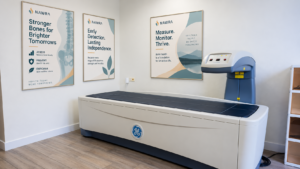
While consumer tools provide approximations, Dual-Energy X-ray Absorptiometry (DEXA) provides truth. It’s the clinical benchmark for anyone serious about how to measure body fat accurately. Unlike the two-compartment models used by skinfold calipers or hydrostatic weighing, DEXA utilizes a sophisticated three-compartment model. It segments your body into bone mineral content, lean soft tissue, and fat mass. This granular approach reduces the average measurement error to a staggering 1 to 2 percent. It’s not just a scan. It’s a physiological map. Bone. Fat. Lean mass. Isolate. Quantify. Transform.
The value of a DEXA scan extends beyond a simple percentage. It provides a regional analysis that identifies exactly where your body stores adipose tissue and where you’ve successfully built muscle. This data is essential for tracking the efficacy of targeted body contouring treatments. It also captures bone health, a critical metric for longevity that home scales completely ignore. Understanding your bone mineral density allows for a proactive approach to wellness that standard fitness tracking cannot offer. This level of detail explains why scale weight is misleading and why clinical imaging is the only way to verify true progress.
How the DEXA Process Works
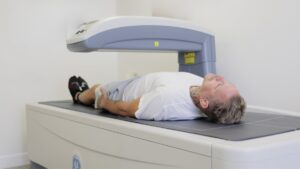
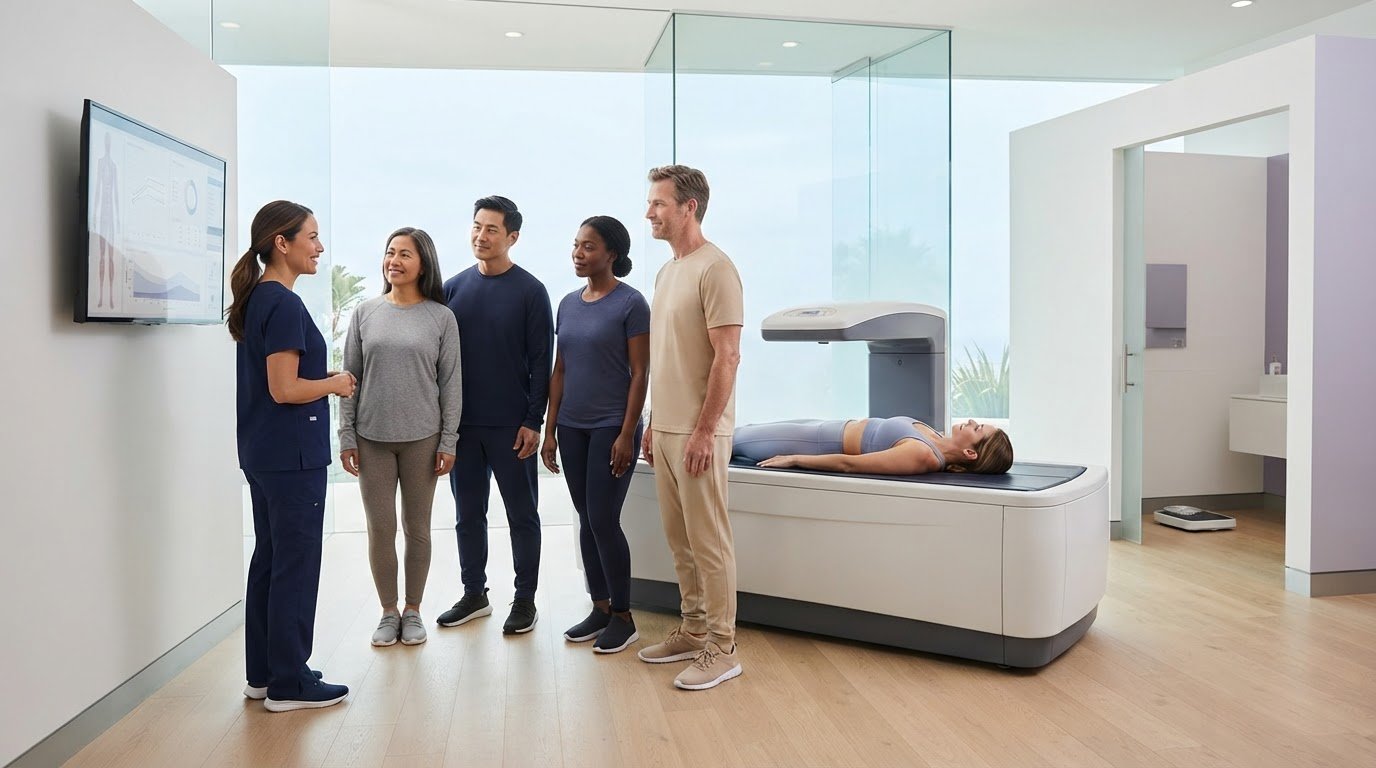
The procedure is non-invasive, painless, and fast. You simply lie flat on a padded table while a robotic arm passes over your body. At our Los Alamitos clinic, the entire scan takes only 6 to 10 minutes. Many clients worry about radiation, but the dose is remarkably low. A full-body DEXA scan delivers an effective dose of only 1 to 5 microsieverts (µSv). To put that in perspective, it’s less radiation than you’d absorb during a single transcontinental airline flight. It’s a high-efficiency assessment that fits into a modern professional schedule without the need for recovery or downtime.
Measuring Visceral Fat with Precision
DEXA is uniquely capable of isolating visceral adipose tissue (VAT), the dangerous fat stored deep within the abdominal cavity around your organs. This is the primary driver of metabolic syndrome and chronic inflammation. By tracking your “Android” (upper body) versus “Gynoid” (lower body) fat distribution patterns, we can identify specific health risks before they manifest as symptoms. This data is the foundation of the NAWRA protocol. We use these precise metrics to design your personal wellness plan, ensuring that every session of EMSCULPT NEO or metabolic adjustment is driven by objective reality. This is how to measure body fat accurately while prioritizing long-term metabolic health.
Maximizing Accuracy: Your Pre-Test Protocol
Precision is not an accident. It’s the result of a controlled methodology. Even the most advanced diagnostic equipment is subject to the biological variables of the human body. To understand how to measure body fat accurately, you must standardize your internal environment before you step onto the scanner. Consistency is the primary foundation of reliable data. Use the same machine. Test at the same time of day. Maintain the same physiological state. This approach eliminates the “noise” that often leads to confusing or inconsistent results found on consumer-grade equipment.
Hydration management is the most critical variable. Water weight can significantly skew lean mass readings, as the scanner identifies fluid within the muscle tissue as lean soft tissue. Similarly, recent exercise causes inflammation, muscle hyperemia, and transient glycogen shifts. These factors create an artificial “pump” that the scanner may misinterpret. By following a strict pre-test protocol, you ensure that the data reflects your true tissue composition rather than temporary metabolic fluctuations. Prepare. Standardize. Verify.
The 24-Hour Preparation Checklist
- Fast for 2 to 4 hours: Avoid large meals prior to your appointment to ensure optimal tissue clarity and gastrointestinal consistency.
- Refrain from strenuous exercise: Avoid high-intensity cardio or heavy resistance training for 12 to 24 hours. This eliminates fluid shifts and muscle swelling.
- Maintain normal hydration: Arrive normally hydrated. Avoid purposeful dehydration or excessive water loading immediately before the test.
- Wear metal-free attire: Opt for 100% metal-free athletic clothing. Zippers, underwires, and metallic snaps can create image artifacts that interfere with the diagnostic sensors.
- Avoid calcium supplements: Do not take calcium supplements or antacids for 24 hours before your scan, as undigested calcium can mimic bone density.
Frequency: When to Re-Scan
Data is most valuable when it’s used to track progress over time. However, testing too frequently can lead to data noise. We recommend the 8 to 12-week rule. This interval allows enough time for meaningful physiological changes to occur beyond the technical measurement variance of the machine. It’s the ideal window to track fat loss versus muscle gain during a body contouring cycle, such as an EMSCULPT NEO series. Align your scans with major nutritional shifts or training milestones to see the empirical impact of your efforts. When you’re ready for clinical-grade data, you can schedule your baseline DEXA scan at our Los Alamitos facility to begin your journey with total transparency.
Precision Wellness in Los Alamitos: The NAWRA Protocol
Data is the bedrock of high-performance living. At NAWRA, we move beyond the static snapshot of a single assessment to build a systematic, longitudinal strategy for your health. Understanding how to measure body fat accurately is the fundamental baseline, but the true value lies in the professional integration of that data into a customized wellness plan. We serve a discerning clientele in Los Alamitos, Long Beach, and Irvine who demand efficiency, transparency, and verified outcomes. Our methodology is rigorous. Our results are objective. Our approach is clinical. We don’t just provide a report; we provide a roadmap for total physiological optimization.
EMSCULPT NEO and Data-Driven Contouring
Traditional body contouring frequently relies on subjective visual assessment; we prioritize empirical evidence. By utilizing DEXA metrics, we pinpoint the exact anatomical regions requiring targeted muscle stimulation or adipose reduction. This data-driven approach allows us to design your EMSCULPT NEO protocol with exceptional precision. You don’t have to guess if the treatment is working. You can observe the skeletal muscle mass increase and the visceral fat decrease on your follow-up report. This quantification turns aesthetic goals into a structured engineering project. Identify. Target. Verify. By aligning your treatments with objective data, we ensure every session is optimized for your specific body composition.
Your Health Roadmap in Orange County
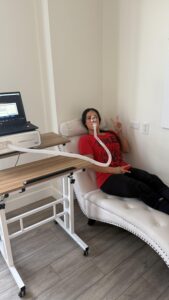
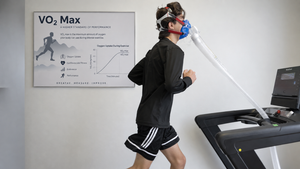
Our Los Alamitos facility provides more than just a scan; it offers a comprehensive physiological roadmap. To achieve total optimization, we recommend integrating the RMR Metabolic Test to understand your caloric floor and the VO2 Max Test to benchmark your cardiovascular endurance. This suite of diagnostics creates a 360-degree view of your metabolic health and physical structure. It’s a high-end, no-nonsense environment where clinical authority meets premium recovery and aesthetics. We utilize these data points to refine your nutrition, adjust your training, and calibrate your recovery sessions in the ExoPod. Stop settling for vague estimates and start your journey with a precision-focused partner. Book Your Precision DEXA Scan at NAWRA to establish your clinical baseline today.
Step Into the Era of Precision Health
Guesswork is the enemy of progress. You have seen why bathroom scales fail and why BMI remains a relic of outdated population statistics. True transformation begins with a commitment to evidence. Understanding how to measure body fat accurately is the first step toward reclaiming control over your physiological health. By utilizing gold-standard DEXA technology, you move beyond the scale to gain a transparent view of your lean mass, bone density, and visceral fat.
Our precision health experts in Los Alamitos integrate these metrics into data-driven body contouring protocols that ensure every session is optimized for your specific biology. Assess. Verify. Optimize. Your fitness journey deserves more than a rough estimate; it requires a clinical roadmap. Stop settling for approximations that stall your momentum and start building a strategy rooted in objective reality.
Schedule Your Precision DEXA Scan Today and replace hope with a high-standard strategy. Your goals are within reach when you lead with data. We are ready to help you define your new baseline.
Frequently Asked Questions
Is a DEXA scan more accurate than a smart scale?
Yes, a DEXA scan is significantly more accurate than any consumer smart scale. While home scales use Bioelectrical Impedance Analysis (BIA) to estimate tissue based on water conductivity, DEXA utilizes medical-grade imaging to measure bone, fat, and lean mass directly. This clinical approach reduces the margin of error to 1 to 2 percent. Identify. Measure. Verify. If you want to know how to measure body fat accurately, DEXA provides the empirical data that consumer-grade sensors cannot match.
How much radiation is in a DEXA body composition scan?
A full-body DEXA scan delivers a very low dose of radiation, typically between 1 and 5 microsieverts (µSv). This amount represents less than half a day of natural background radiation exposure. For context, it’s significantly less radiation than you would absorb during a single transcontinental airline flight. The technology is safe, non-invasive, and designed for regular monitoring of your physiological health without the risks associated with higher-dose medical imaging.
Can I use a DEXA scan to track visceral fat loss?
Yes, DEXA is the most effective tool for tracking visceral fat loss. Unlike other methods, it can isolate the “Android” fat stored deep within the abdominal cavity around your internal organs. This data is essential for managing metabolic health and reducing systemic inflammation. At our Los Alamitos facility, we use these precise metrics to verify the efficacy of your diet, exercise, and body contouring protocols over time. It’s the ultimate tool for visceral adipose tissue (VAT) tracking.
How long does a professional body fat test take?
A professional DEXA body composition scan is a fast, efficient, and professional process. The actual scan typically takes only 6 to 10 minutes while you lie comfortably on a padded table. Including the initial consultation and a detailed review of your physiological report, you should plan to spend approximately 20 to 30 minutes at our facility. It’s a high-efficiency diagnostic that fits seamlessly into a busy professional schedule without requiring any downtime.
What should I wear for my body composition scan in Los Alamitos?
We recommend wearing lightweight, 100% metal-free athletic clothing for your scan in Los Alamitos. Metals such as zippers, underwires, snaps, or metallic threads can create artifacts in the X-ray image, which may skew your results. Simple leggings, gym shorts, and t-shirts are ideal. If your clothing contains metal, we can provide a clinical gown to ensure your measurement remains precise, consistent, and accurate. Follow the protocol. Ensure the data. Trust the result.
Why does my body fat percentage vary between different methods?
Variation occurs because different methods use different biological models. Skinfold calipers and underwater weighing use a two-compartment model that assumes constant bone density across all populations. Smart scales are highly sensitive to your acute hydration levels. DEXA uses a three-compartment model to measure bone, fat, and muscle independently. This clinical resolution eliminates the assumptions that cause conflicting data. To understand how to measure body fat accurately, you must prioritize the most rigorous clinical methodology.
Does insurance cover body composition testing for fitness?
Routine body composition scans for fitness and wellness are typically not covered by commercial insurance. These are considered elective diagnostic procedures rather than diagnostic bone density tests for osteoporosis. However, most Health Savings Accounts (HSA) and Flexible Spending Accounts (FSA) are accepted for payment at our Los Alamitos clinic. We recommend checking with your specific provider to verify your plan’s reimbursement rules for precision health assessments. Our staff can provide the necessary documentation for your records.
How often should I measure my body fat to see real progress?
We recommend re-testing every 8 to 12 weeks to observe meaningful physiological changes. Measuring too frequently can result in “data noise” caused by minor daily fluctuations in hydration or glycogen levels. An 8 to 12-week interval provides enough time for your body to respond to nutritional shifts, resistance training, or body contouring treatments like EMSCULPT NEO. This schedule ensures your progress tracking is based on actual tissue changes. Plan. Execute. Re-scan.