Treatment: lymphatic drainage compression therapy · Medically reviewed by Rasiq Ahmed, MD · Updated August 2026
The short answer: Your lymphatic system clears fluid and waste from your tissues, but unlike blood it has no pump — it moves through muscle contraction and movement. Sitting, standing still, flying, or recovering from surgery lets fluid pool in the legs. Sequential pneumatic compression mechanically assists that flow using timed, directional pressure.
By late afternoon your legs feel heavy. Your ankles look thicker than they did that morning. Socks leave a mark. After a flight it’s worse, and it takes a day or two to settle.
That is fluid, and there’s a straightforward reason it accumulates.
Your lymphatic system has no pump
Your circulatory system has a heart. Every beat pushes blood through arteries and pulls it back through veins. It runs whether you move or not.
Your lymphatic system doesn’t have that. It’s a parallel network of vessels and nodes that collects fluid, protein, and cellular waste from the spaces between your tissues and returns it to the bloodstream. But it has no central pump.
Lymph moves through a combination of one-way valves, the rhythmic contraction of the vessel walls themselves, pressure changes from breathing — and, critically, the mechanical squeezing of surrounding skeletal muscle. Every step you take pumps lymph out of your legs.
Which means that when you don’t move, it doesn’t move much either. Fluid delivered into the tissue by capillary pressure keeps arriving. Return slows. The difference accumulates as swelling.
Why it happens to you specifically
Sitting all day. Eight hours at a desk means eight hours of minimal calf muscle activity while gravity keeps working. The calf muscles are the primary pump for the lower leg, and they’re idle.
Standing all day. The opposite problem, same result. Static standing produces high venous pressure in the legs with little of the alternating contraction that drives return.
Flying. Prolonged immobility combined with cabin pressure changes. This is why shoes feel tight on landing.
Heat. Warm weather causes vasodilation and increases fluid movement into tissue. Swelling is often noticeably worse in summer.
Hormonal shifts. Fluid retention changes across the menstrual cycle and during pregnancy, and is affected by hormonal contraceptives.
High training load. Intense exercise creates local inflammation and fluid shift into muscle tissue. Sore, heavy legs after a hard session are partly a fluid phenomenon.
Post-surgical recovery. Surgery disrupts local tissue and sometimes lymphatic pathways, and reduced mobility during recovery compounds it.
Sodium and hydration. Both matter, and the relationship isn’t intuitive — inadequate hydration can worsen retention rather than help it.
How sequential compression works
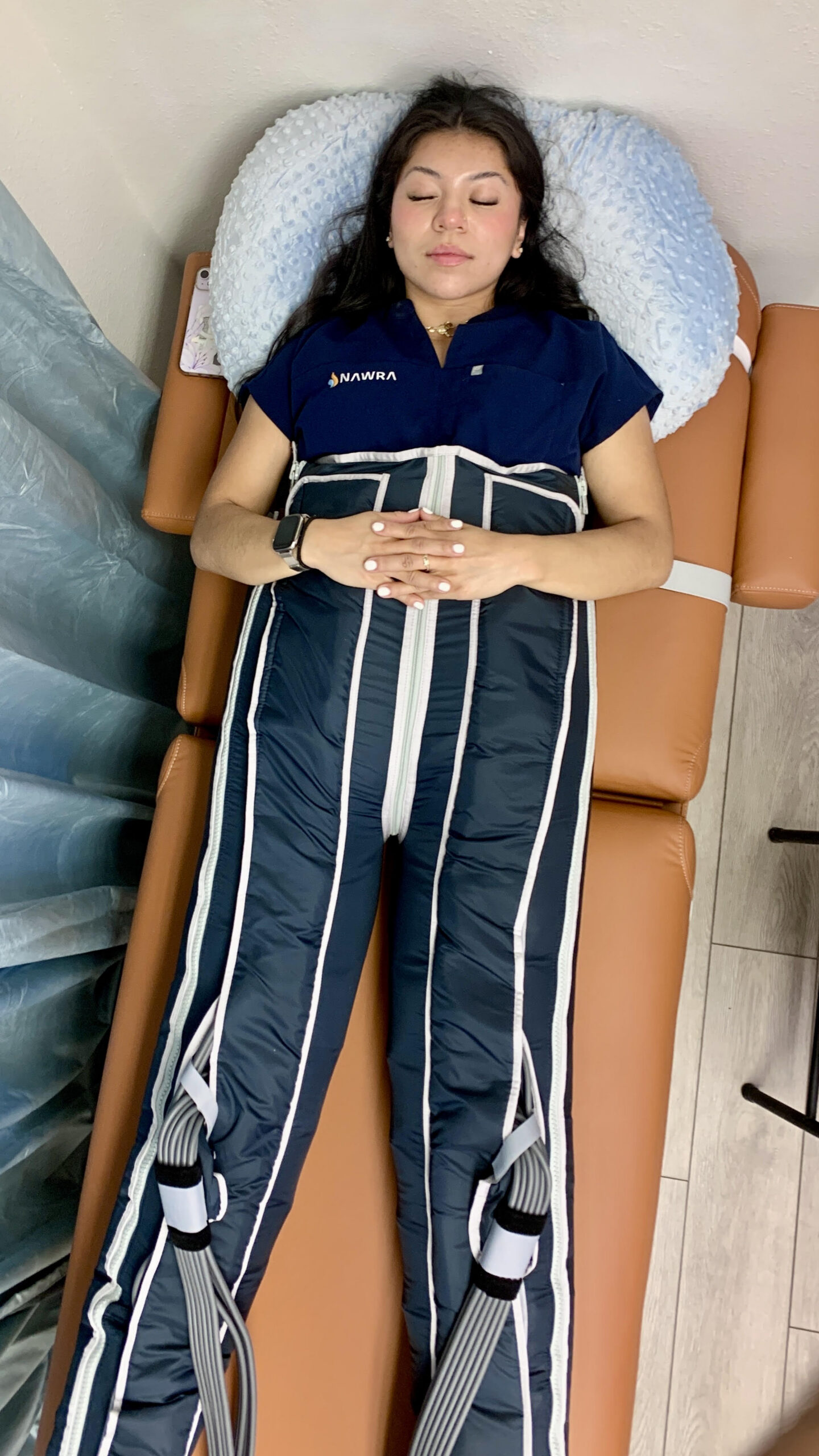
Sequential pneumatic compression uses a garment divided into overlapping chambers that inflate in a controlled sequence.
The pattern is distal to proximal — furthest from the heart to nearest. The chamber at the foot inflates first, then the calf, then the thigh, creating a directional wave that moves fluid toward the trunk and the central lymphatic vessels, where it re-enters circulation. One-way valves in the lymphatic and venous systems prevent backflow, so each wave makes net progress.
This is mechanically similar to what walking does, delivered more consistently and at controlled pressure.
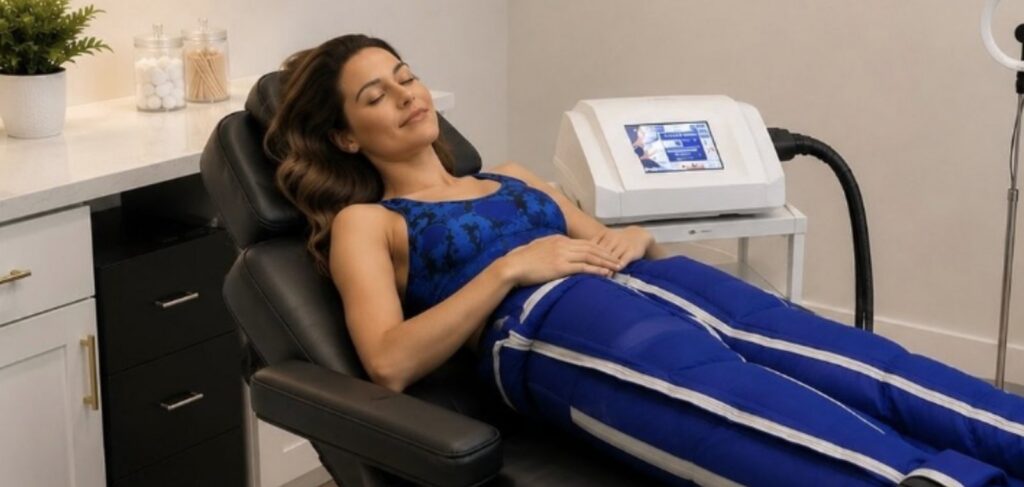
The BOA Max 2 system we use offers multiple chamber configurations and adjustable pressure and cycle patterns, allowing sessions to be set differently for athletic recovery, general circulation, or gentler post-procedure work.
Who this helps
Athletes and heavy trainers. Widely used for perceived recovery and reduced soreness after intense sessions. The subjective response is consistent; objective evidence for accelerating performance recovery specifically is more mixed. We present it as recovery support, because that’s what the evidence supports.
Desk workers and people who stand all day. Probably the most directly applicable group, and the one least likely to think of it. If your legs feel heavy by 4pm most days, this addresses the actual mechanism.
Frequent flyers. Effective for post-flight swelling and heaviness.
Post-surgical recovery — with clearance. Useful in appropriate cases, but only with explicit approval from your surgeon. Timing and pressure settings depend entirely on the procedure. We require surgical clearance before treating any post-operative client.
Post-cryolipolysis clients. Cryolipolysis relies on lymphatic clearance of affected fat cells, and compression is commonly used alongside it. Evidence that it accelerates the outcome specifically is limited; we offer it for comfort and circulation support rather than as a proven enhancement.
Pregnancy-related swelling. Only with obstetrician approval, and with settings adjusted appropriately. Do not assume; ask.
What a session is like
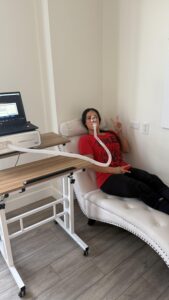
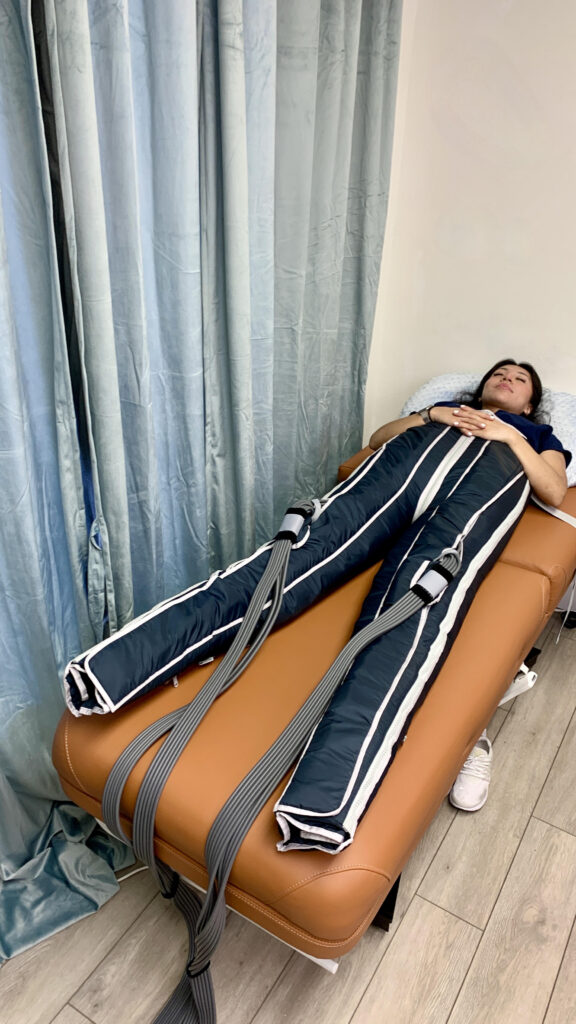
You’ll be fitted into the garment — typically legs, though other configurations are available — while seated or reclined. Fit matters: too loose reduces effectiveness, too tight is uncomfortable and counterproductive.
The session runs about 20 to 30 minutes. Pressure is set to a comfortable level and can be adjusted at any point. The sensation is a firm, rhythmic squeeze moving up the limb — most people describe it as pleasant, similar to a slow massage.
You can read, work, or rest. Many people find it noticeably relaxing.
Afterward, legs typically feel lighter and less heavy immediately. You may need the bathroom shortly after, which is a normal consequence of returning fluid to circulation.
Contraindications — please read this section
Sequential compression is not appropriate for everyone, and some of these are serious. Do not use compression therapy if you have or suspect:
- Deep vein thrombosis (DVT), or any symptoms suggesting it — new one-sided leg swelling, calf pain or tenderness, warmth, or redness. Compression applied over an existing clot can dislodge it. If you have these symptoms, seek medical evaluation immediately rather than booking a session.
- Pulmonary embolism, current or recent
- Active infection or cellulitis in the area
- Congestive heart failure, particularly decompensated — increasing venous return can overload a compromised heart
- Severe peripheral arterial disease or significant arterial insufficiency
- Acute fracture or unhealed injury in the area
- Active malignancy in the treatment region
- Open wounds, skin grafts, or dermatitis at the site
- Severe peripheral neuropathy, where you may not be able to feel excessive pressure
- Untreated or uncontrolled bleeding disorders
Consult your physician first if you have: any history of blood clots, kidney or liver disease causing edema, uncontrolled hypertension, pregnancy, diabetes with vascular complications, or any recent surgery.
Everyone completes a health screening before their first session. Please answer it fully — this is the part that keeps the service safe.
Machine compression versus manual lymphatic drainage
These get conflated. They are different things.
| Sequential pneumatic compression | Manual lymphatic drainage (MLD) | |
|---|---|---|
| Delivered by | Device with programmed chambers | Trained therapist, by hand |
| Pressure | Higher, adjustable, consistent | Very light, superficial |
| Targets | Deeper venous and lymphatic return | Superficial lymphatic capillaries |
| Session | 20–30 min | 45–90 min |
| Best for | Recovery, general circulation, heaviness | Clinical lymphedema, specific post-surgical protocols |
| Consistency | Identical every session | Varies with practitioner |
MLD is a specialized manual technique using very light pressure, and it is the standard of care within clinical lymphedema management. Machine compression is a different tool with different strengths — consistency, higher pressure, efficiency.
An important distinction: wellness versus clinical lymphedema
Lymphedema is a medical condition. It results from lymphatic system damage or dysfunction — often following lymph node removal or radiation during cancer treatment, or from a congenital cause. It requires diagnosis and a physician-directed treatment program, typically complete decongestive therapy delivered by a certified lymphedema therapist, with prescribed compression garments and specific pneumatic devices at prescribed settings.
What we offer is wellness and recovery support for the ordinary fluid accumulation that comes from sitting, standing, travel, training, and heat. That’s a different thing.
If you have diagnosed lymphedema, or persistent one-sided swelling that hasn’t been evaluated, please see a physician. We are glad to work alongside a clinical care plan when your physician approves it, but we do not substitute for one — and any provider offering to treat lymphedema without physician involvement should give you pause.
Frequency and stacking
For general heaviness and circulation, once or twice weekly is a reasonable starting point. For athletic recovery, use it after hard sessions. For post-flight, a session within a day or two.
Common pairings: infrared sauna followed by compression is our most requested combination — heat opens peripheral circulation, compression assists return. Compression also pairs well with post-cryolipolysis and post-EMSCULPT NEO recovery.
Booking in Los Alamitos
The BOA Max 2 system is available at Nawra Wellness Studio, 5122 Katella Ave., Suite 201, Los Alamitos, serving Orange County, Long Beach, and surrounding areas. Available as single sessions, packages, or within a recovery membership.
Frequently asked questions
What does compression therapy feel like?
A firm, rhythmic squeeze moving up the limb — similar to a slow massage. Pressure is adjustable and should never be painful.
How long is a session?
Typically 20 to 30 minutes.
How often should I do it?
Once or twice weekly for general circulation; after hard training sessions for athletic recovery. Frequency depends on your reason for using it.
Is it safe if I have varicose veins?
Often yes, but tell us — and if you have any history of blood clots, check with your physician first.
Can it help me lose weight?
No. It moves fluid, not fat. Any immediate change in measurement is fluid redistribution.
Can I use it if I’m pregnant?
Only with your obstetrician’s approval. Pregnancy-related swelling has multiple possible causes, some of which require medical evaluation.
What if I’ve had surgery recently?
You need written clearance from your surgeon before we treat you. Timing and settings depend on the specific procedure.
Does it help with cellulite?
There’s no good evidence that compression therapy meaningfully changes cellulite. It addresses fluid, not the structural tissue features that produce cellulite’s appearance.
Is this the same as lymphatic massage?
No. Manual lymphatic drainage is a hands-on technique using very light pressure and is used clinically for lymphedema. Machine compression is a different modality used for recovery and circulation support.
Why do I need the bathroom afterward?
Because the treatment returns fluid to circulation, where your kidneys process it. This is expected.
This article is educational and not medical advice. Sequential compression therapy is contraindicated in several medical conditions, including deep vein thrombosis and congestive heart failure. New, persistent, or one-sided swelling should be evaluated by a physician. This service does not treat clinical lymphedema.