Pelvic floor symptoms aren’t always caused by muscles that are simply weak. For people considering non-surgical pelvic floor strengthening in Irvine, pelvic floor physical therapy typically begins with an assessment of symptoms, muscle control, and related areas such as the hips and lower back. Treatment may include education and therapist-guided exercises to improve strength, flexibility, and coordination.
Bladder leakage, urgency, pelvic pressure, and pain can have different causes, so the right approach depends on what is contributing to the symptoms. It’s reasonable to want a clear explanation before choosing care. This article explains what pelvic floor physical therapy involves, which bladder and pressure symptoms it may address, and what non-surgical pelvic health services are available in Irvine.
Key Takeaways
- Learn what a pelvic floor physical therapy assessment may examine, from symptom history to muscle control and coordination.
- Recognize bladder changes, leakage, pain, and pelvic pressure as symptoms worth discussing with a qualified health professional.
- Understand why effective pelvic floor care may focus on relaxation and coordination as well as strengthening.
- Explore how pressure or a bulge sensation can relate to pelvic floor concerns and what an assessment may help clarify.
- See how NAWRA’s Emsella fits within its non-invasive wellness offerings and how it differs from pelvic floor physical therapy.
What is Pelvic Floor Physical Therapy?
Pelvic floor physical therapy assesses how pelvic muscles relax, contract, and coordinate with movement. A therapist uses the findings to shape exercises and treatment around symptoms such as leakage, pain, or prolapse.
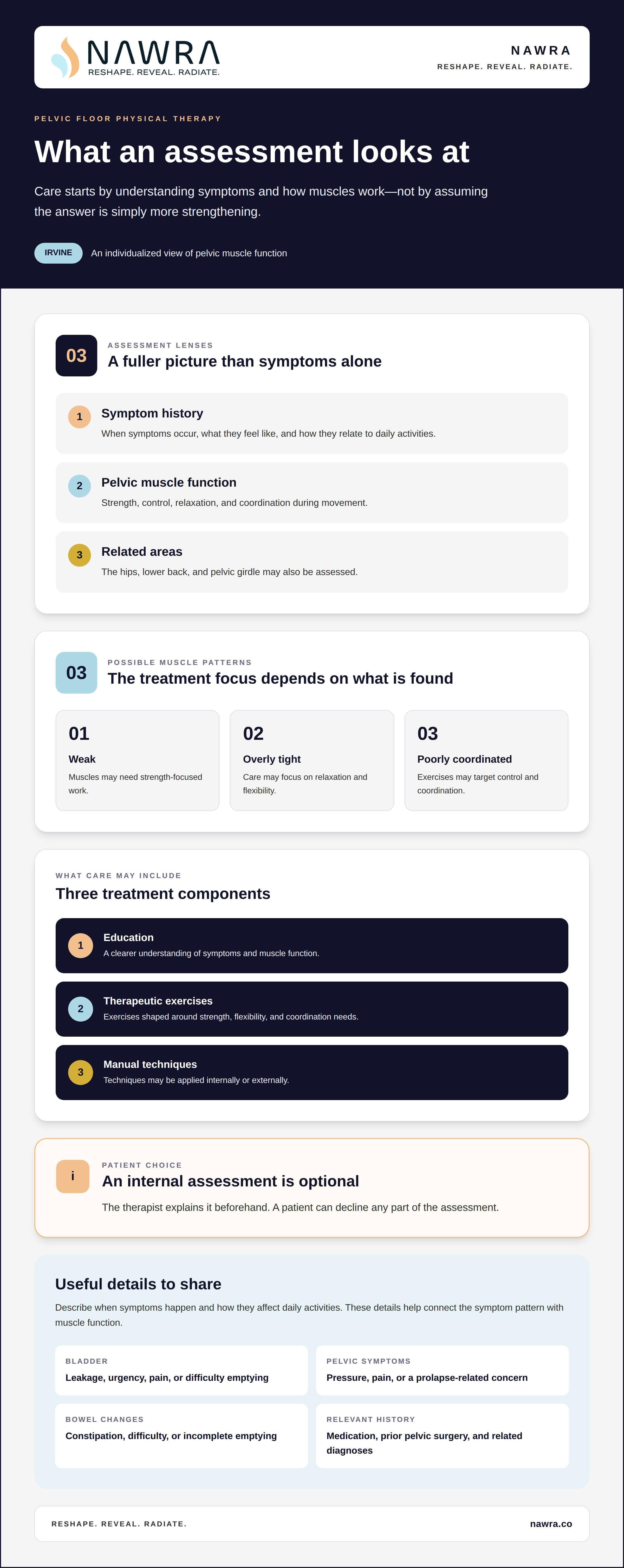
An evaluation typically begins with medical history and questions about symptoms. The therapist may assess pelvic floor strength and coordination, along with the hips, lower back, and pelvic girdle. Treatment can include education, therapeutic exercises, and manual techniques applied internally or externally. An internal assessment is optional; the therapist explains it first, and the patient can decline any part.
Pelvic Floor Therapy for Women and Men
Pelvic floor dysfunction can affect women and men. For women, an assessment may consider symptoms connected with pregnancy, childbirth, vaginal pain, or prolapse. For men, it can address concerns involving pelvic pain, urinary changes, or bowel function. The focus is not a standard exercise routine; it is identifying whether muscles are weak, overly tight, or poorly coordinated.
Clients can prepare by bringing a medication list and relevant medical history, then describing when symptoms occur. For example, note whether leakage happens with coughing, urgency, or exercise. Mention bowel changes, pelvic pain, previous pelvic surgery, and any diagnosis relevant to bladder or bowel function. These details help the therapist connect symptoms with daily activities.
Referral requirements depend on the patient’s insurance plan and access pathway. Before an appointment, clarify whether the plan requires a referral for coverage and what documentation it needs. In Irvine, therapy cost depends on the evaluation, treatment plan, and number of visits; insurance coverage depends on individual benefits. There is no reliable single price or coverage rule for every patient.
Pilates may support body awareness and controlled movement, while acupuncture is a separate integrative approach. These methods do not replace an assessment of pelvic floor muscle function. A physical therapist may consider how movement, breathing, and muscle coordination relate to the patient’s symptoms when planning exercises.
Physical therapy and in-office electromagnetic or radiofrequency treatments use different approaches. Therapy assesses muscle function and uses individualized exercises or hands-on techniques; device-based treatments use applied energy. Neither label alone establishes which approach fits a person’s symptoms.
A suitable candidate is someone seeking professional assessment for symptoms such as leakage, pelvic pain, or pressure. Treatment choice depends on whether muscles need strengthening, relaxation, or coordination work. Potential risks and side effects vary by technique; an internal exam is optional, and the patient may decline it. Discuss health conditions and concerns before treatment.
Expected Results and Duration
Therapy aims to improve pelvic floor strength, flexibility, coordination, and function, which may help reduce symptoms. The number of visits depends on the condition, symptoms, and goals; lasting results depend on the problem being addressed and the treatment plan. Progress is assessed against the patient’s functional changes, not a guaranteed timeline.
Bladder disorders and urinary incontinence
Urinary symptoms can reflect changes in bladder control, pelvic muscle coordination, or both. Pelvic floor assessment considers the pattern of symptoms, including leakage, urgency, pain, and difficulty emptying.
Urinary Incontinence and Bladder Control
Urinary incontinence means urine leaks when a person doesn’t intend it. The circumstances matter: leakage with coughing or movement differs from leakage after a sudden urge. A pelvic floor physical therapy evaluation can assess muscle strength and coordination, then guide care toward the pattern identified. Muscle function is not measured by leakage alone; control during contraction and relaxation also matters.
For an appointment, describe when leakage occurs, how often urgency appears, and whether emptying feels incomplete. Include related symptoms such as pelvic pressure, bladder pain, or waking to urinate more than once nightly. These details help distinguish different symptom patterns. Urinary retention, painful urination, and frequent urination are also relevant to a broader pelvic floor evaluation.
Urinary Urgency and Issues
Urinary urgency is a sudden need to urinate that can be difficult to defer. Track the situations in which it appears, such as during activity or alongside bladder pain, and share that pattern with the clinician. Urgency may occur with incontinence, but it can also occur without leakage. The distinction helps describe the problem accurately.
Pelvic floor dysfunction can also involve bowel symptoms. Fecal incontinence, constipation, difficulty having a bowel movement, or a feeling of incomplete emptying may occur alongside urinary concerns. Mentioning both bladder and bowel changes gives the clinician a fuller picture than reporting leakage alone. Lower back pain or persistent pain in the pelvic region, rectum, or genitals can also be relevant.
Assessment may include questions about urinary tract infection history, prior diagnoses such as interstitial cystitis or irritable bowel syndrome, and the ability to have bowel movements. Surface electrodes can test pelvic muscle control. Anorectal manometry assesses anal sphincter strength, pressure, and coordination, while a uroflow test evaluates how well the bladder empties.
When a person can’t actively contract pelvic floor muscles, biofeedback or electrical stimulation may be considered. MDPI describes these approaches for women who cannot actively contract those muscles. Biofeedback can help the patient and therapist observe muscle activity and work on coordination, rather than relying on effort alone.
Rehabilitation findings offer one measure of change. After 3 months of rehabilitation, the study found significant improvement in pelvic floor muscle strength and endurance, according to Springer Nature. Strength and endurance are not the only relevant outcomes; changes in leakage, urgency, and daily function also help describe progress.
What causes pelvic floor dysfunction?
Pelvic floor dysfunction can occur when a person can’t relax or coordinate pelvic floor muscles during urination or bowel movements. These muscles form a working group at the bottom of the pelvis, supporting pelvic organs and contributing to bladder, bowel, sphincter, and sexual function.
Several factors can affect that function. Pregnancy and childbirth, pelvic surgery, traumatic injury, aging, and carrying excess weight may contribute to dysfunction. Overuse can also disrupt coordination. For example, muscles that repeatedly tense without releasing may not respond smoothly when the body needs to urinate or pass stool.
Weakness is only one possible pattern. Pelvic floor muscles may be overly tight, weak, or poorly coordinated, and each pattern can contribute to different symptoms. A person with weakness may have difficulty supporting pelvic organs, while persistent tension may contribute to pelvic pain. Symptoms can include leakage, constipation, or a sense of pelvic pressure.
The pelvic floor also works with the hips, lower back, and abdominal muscles. During a bowel movement, pelvic muscles need to coordinate relaxation with the rectum and surrounding tissues. If they tighten instead, emptying may become difficult or incomplete. Assessment considers that movement pattern, not just how strongly a person can contract.
Muscle retraining starts with identifying the pattern behind the symptoms. A therapist may assess strength, flexibility, and coordination, then guide exercises to strengthen or stretch the pelvic floor and related muscles. When tension is the issue, repeatedly trying to squeeze harder may not address the cause. The plan instead targets controlled contraction, release, and coordination with movement.
Pelvic pain can also reflect muscles that remain tense or have difficulty relaxing. A physical therapy assessment may consider the pelvic floor alongside the hips, lower back, and pelvic girdle. This broader view helps identify whether movement restrictions or muscle tenderness accompany symptoms. Treatment may combine education, therapeutic exercise, and manual techniques tailored to the affected muscles and surrounding tissue.
Non-surgical approaches can include therapist-guided exercises, biofeedback, or electrical stimulation. Biofeedback and electrical stimulation may be used for women who cannot actively contract their pelvic floor muscles. Vaginal weights are a separate method sometimes raised in discussions of pelvic floor training; treatment selection depends on the assessed muscle pattern and the person’s symptoms.
In practice, retraining is not simply a series of stronger contractions. The therapist observes how pelvic floor muscles respond, adjusts the exercise focus, and considers whether the priority is strength, relaxation, or coordination. That distinction matters because pelvic pain and difficulty emptying may call for a different strategy than weakness-related leakage.
Pelvic pressure and organ prolapse sensations
Pelvic pressure can feel different from urinary urgency or pain, so describing the sensation helps guide an evaluation. UCI Health lists pelvic pressure and a vaginal or rectal bulge among possible pelvic floor dysfunction symptoms. These sensations warrant assessment rather than assuming one cause, including pelvic organ prolapse.
During an appointment, explain where the pressure occurs and when it appears. For example, note whether it accompanies a bowel movement, urinary changes, or a feeling of vaginal or rectal fullness. A clinician may also ask about constipation, incomplete bowel movements, and previous urinary tract infections. These details help place the pressure within a broader symptom pattern.
Pelvic organ prolapse concerns relate to the support and function of pelvic structures, including the uterus and vagina. Pelvic floor dysfunction may occur alongside reproductive health issues affecting those organs. A bulge sensation is useful to report, but symptoms alone do not establish prolapse. Evaluation helps distinguish the concern from other pelvic floor or musculoskeletal problems.
A pelvic health evaluation may begin with medical history and questions about symptoms, childbirth, and pain during sex. The clinician may assess the low back, hips, and pelvic girdle for musculoskeletal problems. Assessment can also consider perineal skin condition, tissue mobility, pelvic floor muscle strength, and coordination. Together, these steps provide more context than pressure alone.
Pressure symptoms can overlap with bowel changes, pelvic pain, or urinary complaints. For instance, constipation and difficulty emptying the bowel may be relevant when someone also reports rectal pressure. Describe each symptom separately, including what seems to trigger it and whether it affects daily activities. That account helps the clinician consider how pelvic floor muscles and surrounding tissues function together.
Care depends on the evaluation findings. Pelvic floor physical therapy may use education, therapeutic exercises, and manual techniques to address muscle function and coordination. Its aim is to improve strength, flexibility, and proper function, which may help reduce symptoms. A treatment plan should reflect whether the assessment identifies weakness, tension, coordination problems, or a combination.
For a prolapse concern, a clear next step is to share the bulge or pressure sensation during a clinical evaluation. Include related details such as pregnancy and childbirth history, constipation, and urinary changes. That information helps frame the issue accurately and supports a treatment discussion based on findings, rather than on the symptom label alone.
When seeking non-surgical pelvic floor strengthening Irvine residents can benefit from sharing complete medical details, including childbirth history, along with any bladder or bowel changes. UCI Health lists urinary incontinence, fecal incontinence, urinary urgency, bladder pain, pelvic pressure, musculoskeletal pain, vaginal or rectal pain, constipation, and urinary retention among possible pelvic floor dysfunction symptoms. Mentioning which of these are present can help keep the discussion focused on the full symptom pattern.
Pelvic health services in Irvine
Non-surgical pelvic floor care in Irvine may include physical therapy, guided exercises, manual techniques, and biofeedback. The right approach depends on the symptoms and the assessment findings, not simply on whether muscles feel weak.
Pelvic floor physical therapy can address muscle strength, flexibility, relaxation, and coordination. A therapist may begin with symptom history, then assess pelvic floor function and related areas such as the hips or lower back. Treatment may include education, therapeutic exercises, and internal or external manual therapy. An internal assessment is optional, and the therapist discusses it before proceeding.
Biofeedback uses sensors and video to monitor pelvic muscles during relaxation or clenching. The therapist can use that information to help the patient improve coordination. It may be relevant when someone has difficulty sensing or controlling muscle activity. Electrical stimulation may also be considered for women who cannot actively contract pelvic floor muscles.
To find a licensed pelvic floor therapist in Irvine, look for a physical therapist whose practice identifies pelvic health as a focus. Review the therapist’s credentials and ask how an evaluation addresses your specific symptoms, such as urinary urgency, pelvic pain, or pressure. A clear explanation of the assessment and proposed treatment helps you understand the care process.
Useful questions include whether treatment focuses on strengthening, relaxation, or coordination, and how progress will be assessed. For example, a person with painful muscle tension may need a different exercise focus than someone with weakness-related leakage. Ask how the plan accounts for related concerns, including bowel symptoms or discomfort involving the vagina.
During an evaluation, the therapist may ask about symptom timing, medical history, and daily activities. They may examine muscle function, tissue mobility, or movement in the pelvic girdle. Findings guide the treatment plan. If symptoms include constipation, urinary retention, or persistent pelvic pain, share them alongside pressure or leakage rather than treating each concern as unrelated.
Some care plans also incorporate relaxation approaches, such as yoga or light exercise, when appropriate to the person’s needs. These approaches complement, rather than replace, an assessment of pelvic muscle function. In Irvine, the practical first step is matching the care method to the problem: identify the symptoms, assess muscle behavior, and build treatment around the findings. For patients spending time in the area around treatment visits, unwinding with a nourishing meal at Nara Thai Kitchen can also fit into a broader focus on personal wellness.
e function with the therapist, then consider how the assessment relates to the concerns discussed. The physical therapist discusses evaluation findings with the patient and works with them to develop an appropriate treatment plan. This conversation can clarify which goals are relevant and whether the plan emphasizes strength, relaxation, or coordination. The patient can ask for explanations of the findings and how proposed care connects with reported symptoms.
When biofeedback is part of care, sensors and video can monitor the pelvic muscles during relaxation or clenching. A physical therapist provides feedback to help improve coordination. The information can help guide attention to muscle activity during the session, alongside the therapist’s assessment and the patient’s concerns. Discussing the findings and treatment plan together helps keep the care approach focused on the needs identified during evaluation.
NAWRA
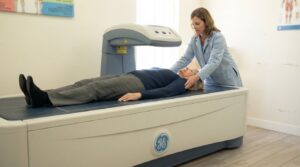
NAWRA is a precision wellness studio offering non-invasive services, including EMSCULPT NEO, ExoPod Full-Body Therapy, BOA Lymphatic Drainage, and DEXA Body Composition scans. These services support different wellness goals; they are not pelvic floor physical therapy and do not diagnose bladder, bowel, or prolapse symptoms.
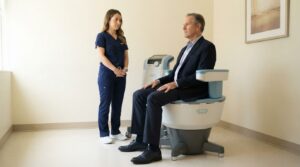
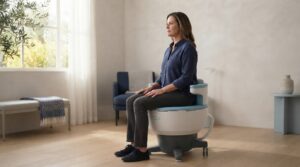
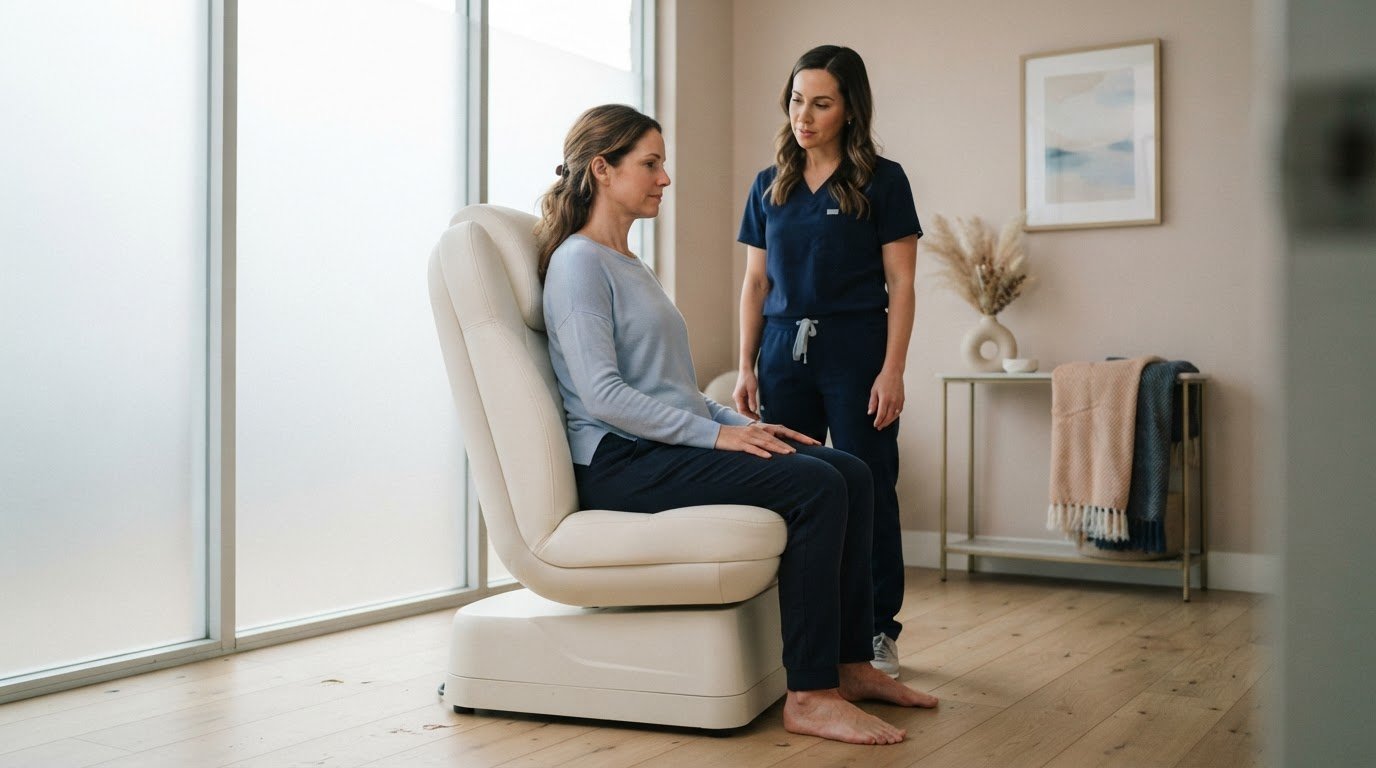
If pelvic pressure, leakage, or pain is your concern, seek an assessment focused on pelvic floor function. For broader wellness goals, NAWRA can explain how its services may fit. Its Emsella treatment uses HIFEM energy to stimulate pelvic floor muscles while you remain fully clothed, and is intended for urinary incontinence or pelvic floor weakness. It is distinct from therapist-led pelvic floor physical therapy.
Contact NAWRA to discuss its wellness services.
Choose a next step that fits your goals
For non-surgical pelvic floor strengthening in Irvine, match the next step to the symptoms you want addressed. If leakage, pressure, pain, or bowel changes are affecting daily life, a pelvic health evaluation can help clarify the appropriate care pathway. Describe your symptoms and goals clearly so the discussion starts with your needs, not assumptions.
Pelvic floor physical therapy and wellness services have different purposes. NAWRA’s offerings support broader wellness goals, so consider whether they align with what you’re seeking. If your priority is pelvic floor symptoms, focus first on care that assesses pelvic muscle function. If you’d like to discuss how NAWRA’s wellness services relate to your goals, contact NAWRA about pelvic health.
A precise next step is better than guesswork. Keep your goals clear, ask for an explanation of the approach, and move forward with confidence.
Frequently Asked Questions
What does treatment look like?
Treatment follows the findings of an assessment and may change as symptoms and function are reviewed. For example, a plan may prioritize coordination rather than stronger contractions if muscles struggle to relax. The therapist can use observed movement and the patient’s reported response to adjust the focus. This makes treatment a guided process, not a fixed set of exercises applied identically to every person.
Why concentrate on the ‘floor’ when the ‘house’ is unstable?
The “house” analogy points to how pelvic support works with the rest of the body. Pelvic floor muscles coordinate with the hips, back, and other muscle groups, so an evaluation may consider these areas together. If movement elsewhere affects symptoms, care can account for that relationship. The pelvic floor remains one part of a connected system, not an isolated structure expected to solve every issue alone.
Which Irvine clinics offer pelvic floor physical therapy and non-surgical strengthening?
Services differ by clinic and treatment type. NAWRA offers Emsella, a non-invasive treatment that stimulates pelvic floor muscles while you remain fully clothed; it is intended for urinary incontinence or pelvic floor weakness. This is distinct from therapist-led pelvic floor physical therapy. For non-surgical pelvic floor strengthening in Irvine, identify whether your priority is a physical therapy assessment or device-based muscle stimulation before choosing a care pathway.
What happens during pelvic floor physical therapy and how many sessions are typical?
A therapist reviews symptoms and history, assesses relevant muscle function, then discusses a treatment plan. The number of visits depends on the person’s condition, symptoms, and goals, so there isn’t one standard session count. For example, the plan may need a different focus if the main concern is pain rather than leakage. Progress and the patient’s response help guide how care continues.