A fitness diagnostic visit in Los Alamitos can include a health and fitness evaluation, VO2 max testing to assess aerobic capacity, and profile options such as body composition or resting metabolic rate testing. If you’re searching for fitness diagnostic testing near me, the right assessment depends on what you want to understand, from exercise capacity to body composition or energy use at rest.
It’s reasonable to want to know what will happen before booking. The type of test shapes the visit, and the results are most useful when you understand what they measure and how they relate to your goals. A VO2 max assessment, for example, focuses on aerobic capacity, while a resting metabolic rate test estimates the energy your body uses at rest.
If you’re searching for fitness diagnostic testing near me, start by deciding what you want to measure. This guide explains how aerobic capacity, resting metabolism, and body composition assessments differ, how to prepare, and how to use results as practical information for your wellness plan.
Key Takeaways
- Match the evaluation to your goal: movement, health markers, body composition, or metabolic and exercise data each answer different questions.
- A Functional Movement Screen includes seven movements; use its findings as one part of a broader view of fitness and function.
- VO2 max testing assesses aerobic capacity, while resting metabolic rate testing estimates energy use at rest. Choose the measurement that addresses the question you want answered.
- Prepare for your visit by reviewing the test instructions and bringing relevant health information, so the assessment can stay focused on your goals.
- Compare profile options by what each measures, then use the results to guide a more informed wellness plan.
Health and fitness evaluations
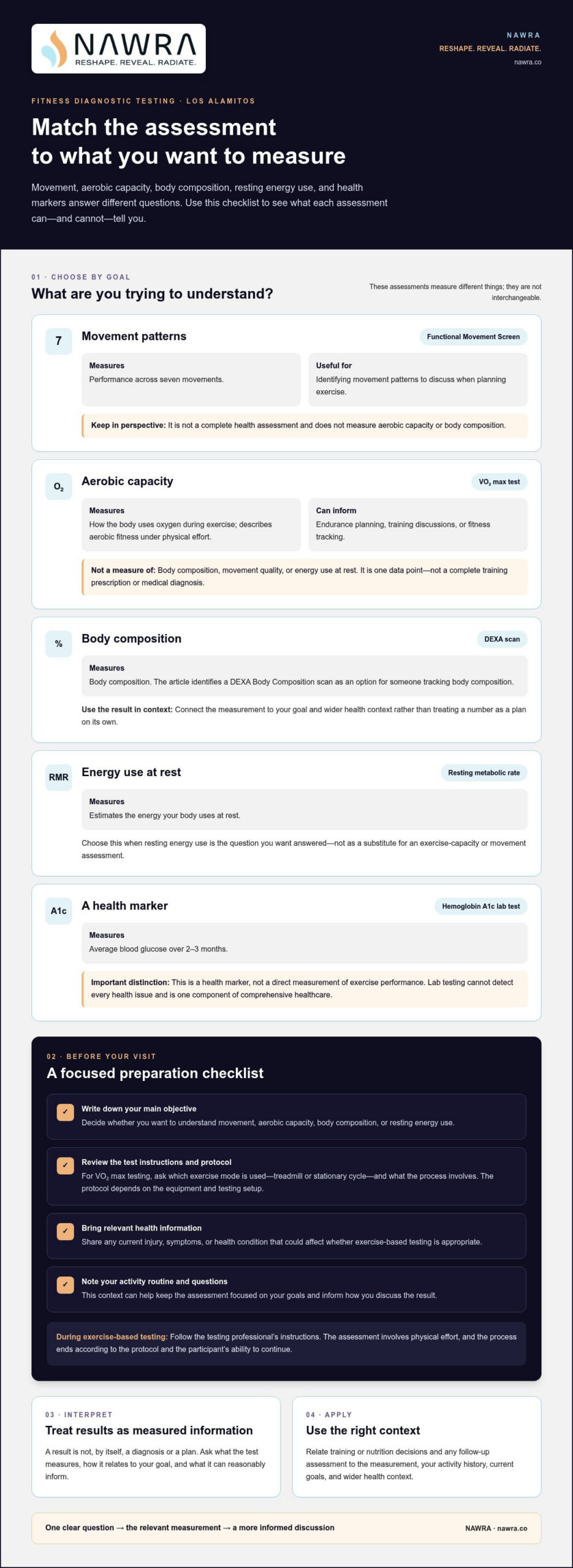
In Los Alamitos, fitness diagnostic testing may include movement screening, VO2 max testing, DEXA body composition, and resting metabolic rate testing. Each assessment measures a different part of health or physical performance. The useful first step is to match the test with your goal, such as understanding movement, aerobic capacity, body composition, or energy use at rest.
A Functional Movement Screen evaluates movement through seven movements. It can identify patterns to discuss when planning exercise, but it isn’t a complete health assessment. It focuses on how you perform specific tasks, not on aerobic capacity or body composition. Choose an assessment based on the question you want answered; these tests are not interchangeable.
Lab tests can add another kind of information. For example, a Hemoglobin A1c test measures average blood glucose over 2-3 months. That result relates to a health marker, not a direct measurement of exercise performance. Lab testing also cannot detect every health issue, so it remains one component of comprehensive healthcare. A fitness evaluation and medical care serve related but distinct purposes.
What fitness diagnostic tests are available near me? In Los Alamitos, options can include movement screening, VO2 max assessment, DEXA body composition, and resting metabolic rate testing. The right combination depends on whether you want information about movement, exercise capacity, body composition, or resting energy use.
Where can I get fitness testing near me, and what are the hours and locations? Fitness testing is available at wellness and diagnostic facilities in Los Alamitos; hours depend on the facility and appointment schedule. Different tests may be conducted at different locations, so identify the assessment you need before selecting a visit.
What are the risks or contraindications of fitness diagnostic testing? Exercise-based testing requires physical effort, and a current injury, symptoms, or health condition may affect whether it is appropriate. Share relevant health information before testing, and follow the testing professional’s instructions during the assessment.
Before booking, write down your main objective and any exercise or health questions you want to address. For example, someone refining a training plan may prioritize aerobic capacity, while someone tracking body composition may choose a DEXA Body Composition scan. Bring relevant health information and note your current activity routine. A clear goal makes it easier to understand which measurement is relevant.
Treat results as measured information, not a diagnosis or a plan on their own. A nutrition decision, training adjustment, or follow-up assessment should relate to the measurement and your wider health context. Check what the test measures, how it connects to your goal, and what it can reasonably inform. This makes testing more useful than collecting numbers without a clear question.
VO2 max testing
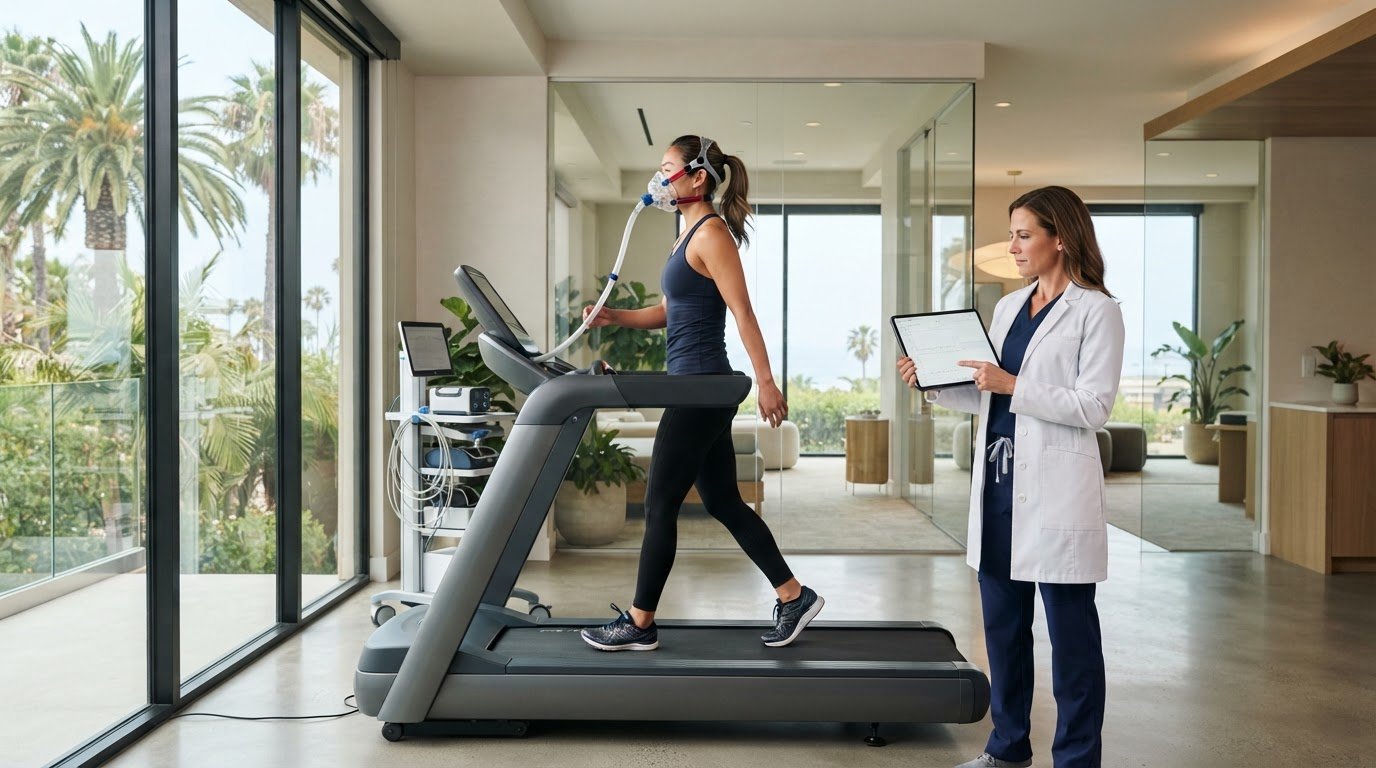
VO2 max testing measures how the body uses oxygen during exercise. The result helps describe aerobic fitness under physical effort. It can inform endurance planning, training discussions, or fitness tracking. The assessment focuses on aerobic capacity, not every health or performance question. It doesn’t measure body composition, movement quality, or energy use at rest.
A test typically involves exercise that becomes more demanding as measurements are collected. The exact protocol depends on the equipment and testing setup. A provider may use a treadmill or stationary cycle, with the participant following instructions as effort rises. The assessment ends according to the protocol and the participant’s ability to continue. Ask what exercise mode the appointment uses and what the testing process involves. Knowing the steps can help you arrive prepared and follow directions consistently.
Before booking, define the reason for testing. A runner might want a baseline for endurance training; someone restarting a routine may want an objective starting point. Those goals shape how the result can be applied. VO2 max is one data point, not a complete training prescription or medical diagnosis. Interpret it alongside your activity history, current goals, and other relevant measurements. Comparing results is most useful when testing conditions and exercise routines are reasonably consistent.
- Clarify the goal: Identify whether you want a baseline, training insight, or a way to compare future assessments.
- Review the protocol: Understand the exercise equipment, effort progression, and instructions for the visit.
- Share relevant context: Describe your usual activity and any factors that could affect exercise participation.
During testing, concentrate on following the provider’s instructions rather than trying to control the result. The assessment depends on exercise effort and the measurements collected under the chosen protocol. Afterward, ask how the reported value relates to your stated goal. For example, an endurance-focused routine may use the result differently from general fitness tracking. A clear explanation helps turn a measurement into a practical reference point, without treating one figure as the whole picture.
If you’re considering a local assessment, explore the details of VO2 max testing and how it can inform your fitness profile. Use the result to guide a focused discussion about training goals, routine, and the next useful measurement. Progress comes from a repeatable process: assess, interpret, then adjust. A provider can explain the test’s scope and help you understand what the output does and doesn’t measure.
Aerobic capacity testing
Aerobic capacity describes how effectively your body supports sustained activity. Walking briskly, cycling, and running all rely on oxygen use during effort. VO2 max testing measures oxygen use during exercise and helps assess aerobic endurance. The result addresses performance under physical effort, not every dimension of fitness. It doesn’t describe movement quality or body composition.
The test’s value depends on the question you bring to a clinic. Someone preparing for longer runs may want an endurance baseline. Someone returning to regular activity may want a starting point for a gradual routine. In either case, explain your current activity and intended goal before testing. Those details give context to the result and help make the measurement more relevant.
Aerobic capacity testing follows a structured exercise protocol. The testing equipment and method shape the experience, so learn whether the assessment uses a treadmill or stationary cycle. Follow the instructions as effort changes, and focus on completing the protocol consistently. If you’re comparing future assessments, using the same exercise mode and similar conditions can make results easier to interpret. The measurement reflects the test setup as well as your effort.
- For endurance planning: Use the result as one reference when considering training intensity and progression.
- For a new routine: Pair the measurement with a realistic activity goal and your current exercise habits.
- For progress tracking: Keep the testing method and relevant conditions consistent when comparing results.
Interpret each measurement for what it actually represents. An endurance result doesn’t automatically answer questions about strength, recovery, or nutrition, and one assessment cannot show how every part of a wellness plan is working. Ask what the reported measurement means, how it relates to your goal, and which decisions it can reasonably inform. Someone building a cycling routine, for example, can use aerobic capacity as context for endurance planning, not as a measure of cycling technique.
Before scheduling fitness diagnostic testing near me in Los Alamitos, identify the decision you hope testing will support. Bring a concise account of your activity routine and describe any recent changes affecting exercise. Then review the protocol and ask how results are explained afterward. This sequence keeps the assessment focused: define the goal, complete the test, interpret the data. Aerobic capacity is most useful when it informs a practical next step, rather than standing alone as a score.
Exercise physiologists and health experts describe VO2 max as an important determinant of aerobic endurance capacity during exercise. That description supports using the measurement as one piece of an endurance-focused discussion, rather than treating it as a complete account of fitness. When you visit NAWRA, keep the result tied to the goal you identified before testing, and ask how the reported measurement informs that goal. A useful next step is one that fits your activity plans and the limits of what this assessment measures, not a conclusion about unrelated aspects of wellness.
Documents and preparation for a visit
Preparation depends on the assessment you book. A movement screen, exercise test, body composition scan, and lab-based test can have different instructions. Review your appointment details, bring identification and relevant health information, and note your medications and current exercise routine. Be ready to explain the goal you want the assessment to support. A clear purpose helps keep the visit focused.
Does insurance cover fitness assessments or exercise testing? Coverage depends on your plan, the purpose of the test, and whether it is considered clinical care. A wellness assessment for personal planning may be treated differently from testing connected to a medical evaluation. Review your plan’s coverage terms before budgeting for an assessment.
Do I need a referral or appointment for fitness testing near me? Referral requirements depend on the test and facility, while appointments are arranged according to the facility’s booking process. Plan to schedule ahead and bring any referral or relevant records you already have. This helps the visit proceed with the correct assessment and context.
Use a short preparation checklist before leaving home. For an RMR Metabolic Test, follow the specific fasting instructions: the test takes twenty minutes seated, breathing into a mask, after a fast of at least five hours. Allow time for check-in, and don’t assume every assessment has the same preparation rules. An exercise test and a metabolic test involve different procedures.
- Bring: identification, appointment details, relevant records, and a medication list.
- Write down: your wellness goal, typical activity, and questions about results.
- Review: test-specific instructions, including any fasting directions for lab work.
- Wear: clothing suited to the booked activity, especially for movement or exercise testing.
Before an exercise-based assessment, note your recent activity and any changes to your routine, such as reducing training or starting a new program. Share this context during your visit. It helps explain the conditions around your test and makes interpretation more relevant. Bring questions about the protocol, the measurements, and how the results connect to your goal.
Keep the visit practical. Confirm the appointment time, location, and required documents in your booking information. If several assessments are scheduled, organize instructions by test rather than relying on memory. Save relevant records together, then arrive ready to describe your goal in one or two sentences. This preparation supports a more orderly visit and helps you leave knowing what was measured and what the results mean for your next wellness decision.
Fitness profile options
A fitness profile can focus on one measurement or combine several assessments. Start with the decision you want the results to inform. Someone planning an exercise routine may prioritize aerobic capacity, while someone tracking body composition may choose a DEXA Body Composition scan. A useful profile gives each measurement a clear purpose; unrelated results can make interpretation less focused.
An RMR Metabolic Test measures resting metabolic rate, respiratory exchange ratio, resting heart rate, and total daily energy expenditure. It takes twenty minutes seated, breathing into a mask, after a fast of at least five hours. Resting metabolic rate is one component of energy use, not a measure of aerobic endurance or body composition. Choose this assessment when you want metabolic information, and consider activity separately when interpreting total daily needs.
Body composition testing addresses a different question: how the body is composed. It can provide context that body weight alone doesn’t show. Consider it when your goal involves tracking body composition rather than measuring exercise capacity. Aerobic testing, by contrast, focuses on performance during physical effort. Selecting between these options starts with your goal, not with the assumption that one profile suits everyone.
How do I compare fitness testing services at gyms, sports medicine clinics, and labs? Compare the measurement offered, the testing protocol, and how results are explained. A gym, clinic, or lab may differ in focus, so assess the actual test and its relevance to your goal rather than relying on the setting’s name.
- For exercise planning: Choose a measurement tied to endurance or activity goals.
- For body composition: Select an assessment designed to evaluate composition, not just weight.
- For energy-use context: Consider resting metabolic rate as one part of the larger picture.
Before selecting a profile, write down the question you want answered. A search for fitness diagnostic testing near me should start with your goal, not simply the closest location. Then compare each test’s purpose with the information you need. If you want to adjust an exercise routine, consider how aerobic capacity results could inform that decision. If you’re reviewing nutrition, distinguish resting metabolic rate from total daily energy expenditure.
Also consider how you’ll use the results over time. A measurement can establish a reference point, while a later assessment may help you review changes. For a meaningful comparison, keep the test type consistent and record relevant context, such as changes in activity or nutrition. When comparing options for fitness diagnostic testing near me, remember that different tests measure different variables, so results from separate methods aren’t direct substitutes.
Choose a focused profile, understand what each measurement represents, and connect the findings to a clear goal. To explore diagnostic profile options, consider which measurements align with the question you want answered. The next step is a better-informed wellness plan, not simply a longer test list.
NAWRA: EMSCULPT NEO
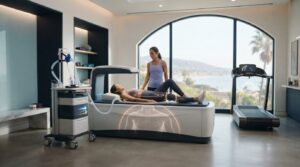
NAWRA Wellness offers Emsculpt NEO for non-invasive body sculpting and muscle stimulation. Fitness diagnostics answer measurement questions; Emsculpt NEO is a treatment for a different goal focused on body contouring. DEXA Body Composition provides information about bone, fat, and lean tissue to inform a wellness plan. Sculpting isn’t weight loss. Choose according to whether your priority is measurement or treatment.
If you’re considering EMSCULPT NEO, use your assessment goals to guide the conversation about what you want to address. For a separate focus on body composition, DEXA Body Composition can provide relevant measurement. Explore NAWRA’s options, then contact NAWRA with your questions.
Make Your Next Wellness Decision With Clarity
Before booking, decide what you want your next step to accomplish. Are you looking for information to guide a wellness plan, or considering a treatment for a different goal? Keeping the two distinct helps you choose appropriately. DEXA Body Composition measures body composition; Emsculpt NEO and ExoPod Full-Body Therapy are non-invasive wellness treatments. Nawra Wellness follows a measurement-first process, with an assessment before treatment and measurement again afterward.
If you’re searching for fitness diagnostic testing near me, use your goal to guide the conversation. Share what you want to understand, then explore the relevant option without assuming one service answers every question. A focused discussion can help you choose a practical next step for your wellness priorities.
Contact NAWRA about fitness testing to discuss your goals and explore the available options. Take the next step with a clear objective and a plan that fits your priorities.
Frequently Asked Questions
What does a fitness assessment include, such as VO2 max, body composition, and movement screening?
A fitness assessment may combine tests that measure different aspects of fitness. VO2 max testing assesses aerobic capacity and training zones at maximum effort. DEXA Body Composition measures bone, fat, and lean tissue by region, including visceral fat. A Functional Movement Screen uses seven movements to assess movement patterns. For example, an endurance goal points toward aerobic testing, while body composition questions call for a different measurement.
How should I prepare for a fitness diagnostic test?
Follow the instructions for the specific test and organize your health information before your visit. An RMR Metabolic Test takes twenty minutes seated, breathing into a mask, after a fast of at least five hours. Bring a concise note about your goal, routine, and relevant health details. This context can help you understand how the measurement relates to your wellness plan.
How long does fitness testing take, and when are results available?
Testing time varies by assessment, and result timing depends on the measurements collected and their review. A DEXA scan takes about ten minutes on the table; an RMR test takes twenty minutes seated. VO2 max testing involves exercise at maximum effort, so its protocol differs. The useful next step is understanding what the report measures and how that information relates to your goal.
Where can I get fitness testing near me, and what are the hours and locations?
Fitness testing is available at wellness and diagnostic facilities in Los Alamitos. Hours depend on the facility and appointment schedule, and different tests may be offered at different locations, so identify the assessment you need before selecting a visit.