
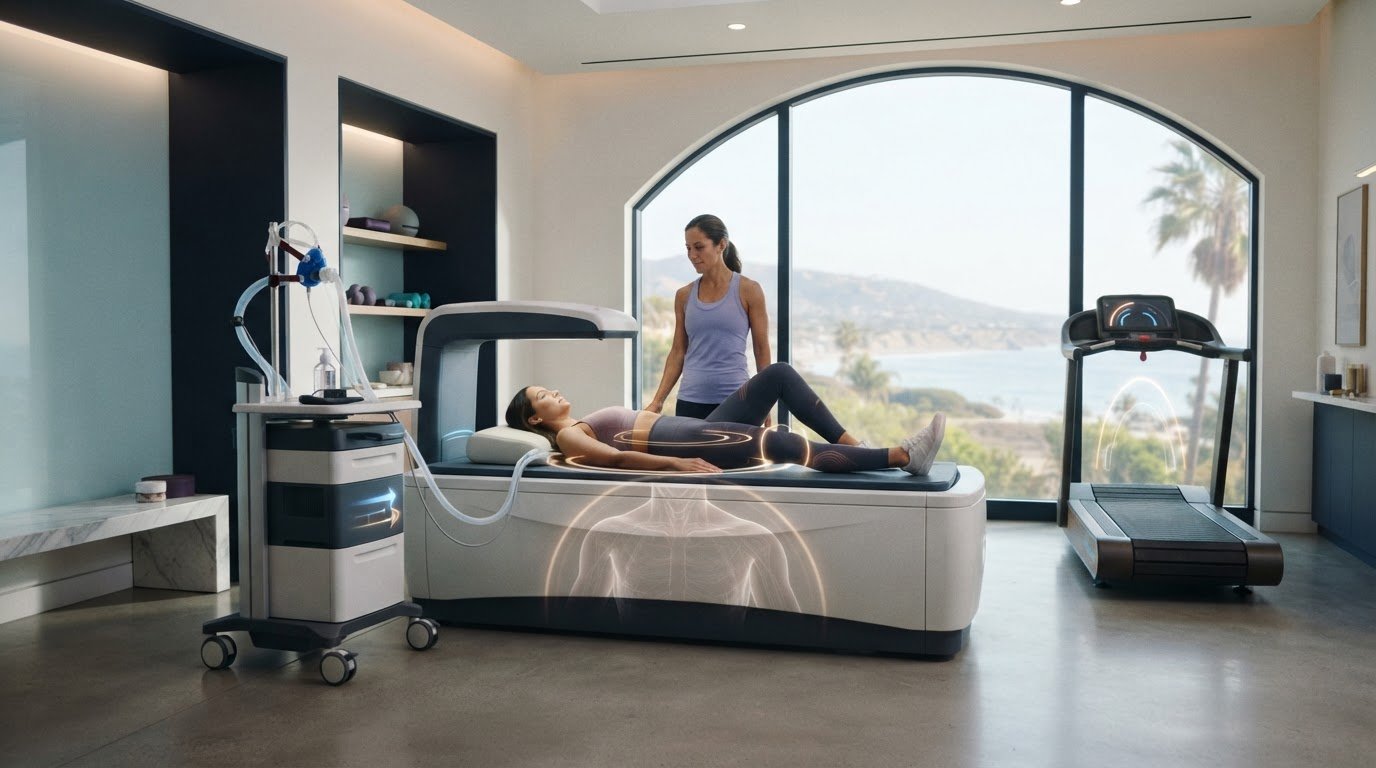
A fitness baseline gives you more useful context than a scale reading alone. A fitness diagnostic testing visit in Los Alamitos can measure body composition, resting metabolic rate, and aerobic capacity to clarify your starting point. Each measure answers a different question: what your body is made of, how much energy it uses at rest, and how it performs during exercise.
It’s reasonable to want more than a number without context. A DEXA scan assesses body composition, an RMR test measures resting energy expenditure, and a VO2 Max assessment evaluates aerobic capacity. Together, these results can help you understand what to track and which measures best match your goals.
This guide covers common baseline tests, how body composition and resting metabolism are measured, and how to prepare for an appointment. It also explains how to compare follow-up results fairly: consistent testing conditions make changes easier to interpret. The goal is practical clarity, so you can understand the measurements and use them to plan informed next steps.
Key Takeaways
- Use body composition measures as context, not as a single verdict. According to the National Heart, Lung, and Blood Institute, a waist circumference of 35 inches or more in women is associated with greater health risk.
- An RMR test measures the energy your body uses at rest, adding useful context when setting nutrition and fitness goals.
- Prepare for fitness testing by following the appointment instructions and using a brief warm-up, such as walking in place for 3 to 5 minutes.
- Make progress comparisons more meaningful by repeating measurements under consistent conditions and tracking changes over time.
- Choose assessments that match what you want to understand, from body composition and resting metabolism to aerobic capacity.
Body composition analysis
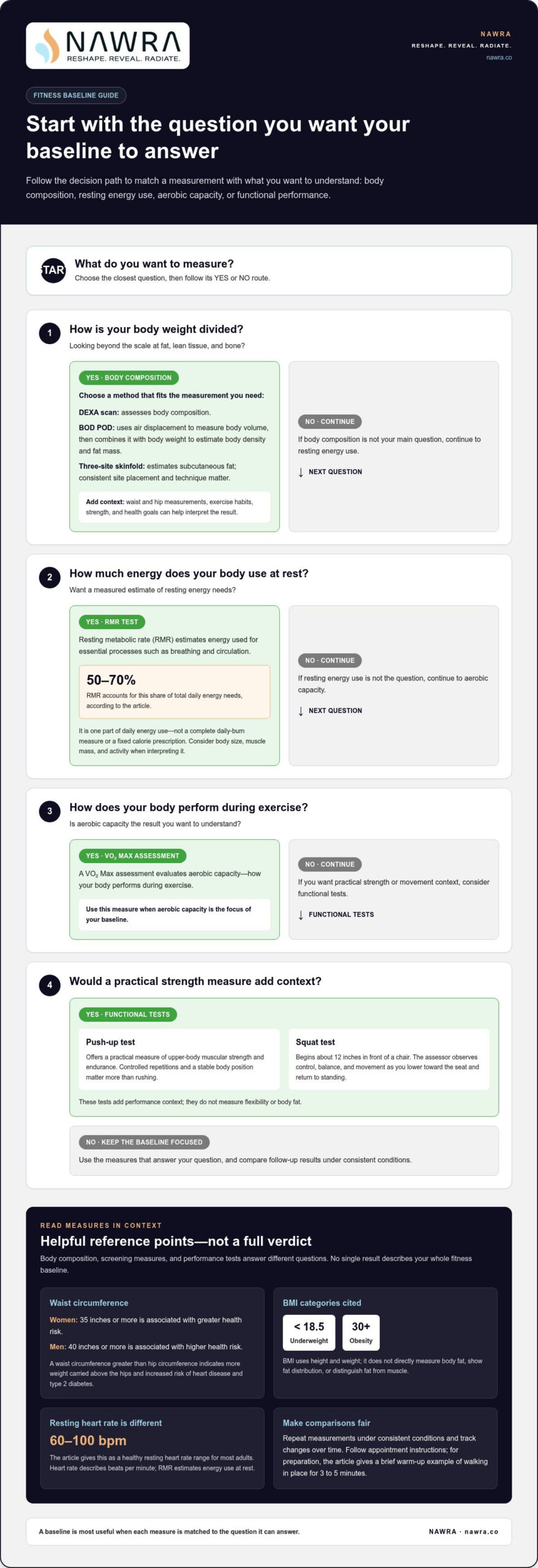
Body composition shows how body weight is divided among fat, lean tissue, and bone. It provides context that weight alone cannot. A baseline can include a body composition scan and waist and hip measurements, interpreted alongside exercise habits, strength, and health goals. Because each method measures something different, the measurement method matters as much as the result.
Body-fat distribution adds another layer. A waist circumference greater than hip circumference indicates more weight carried above the hips and increased risk of heart disease and type 2 diabetes. According to the National Heart, Lung, and Blood Institute, a waist circumference of 35 inches or more for women is associated with greater health risk. For men, a waist circumference of 40 inches or more is associated with higher health risk, according to the National Heart, Lung, and Blood Institute. These measurements describe risk patterns, not a full account of fitness.
BMI is another screening measure, calculated from height and weight rather than a direct body-fat measurement. According to the Centers for Disease Control and Prevention, a BMI below 18.5 is classified as underweight in the page’s BMI categories. A BMI of 30 or above is classified as obesity, according to the Centers for Disease Control and Prevention. BMI does not show where fat is distributed or distinguish fat from muscle, so it should be read with other measures.
DEXA Body Composition uses a scan to assess body composition. A BOD POD uses air displacement: you sit inside an enclosed chamber while the system measures body volume, then combines that measurement with body weight to estimate body density and fat mass. The methods differ, though both offer more detail than a scale. For useful comparisons over time, keep testing conditions consistent.
Functional tests can complement body composition data. A push-up test gives a practical measure of upper-body muscular strength and endurance. The assessor records controlled repetitions while maintaining a stable body position; technique matters more than rushing. For lower-body strength, the squat test begins with the person standing about 12 inches in front of a chair. The person lowers toward the seat and returns to standing, allowing the assessor to observe control, balance, and movement. These tests don’t measure flexibility or body fat, but they add useful performance context to a health and fitness baseline.
A three-site skinfold method provides another estimate of body fat, using different measurement sites for men and women. Skinfold readings estimate subcutaneous fat, so consistent site placement and technique are essential when comparing results. Pairing this measurement with waist data and functional tests gives a more complete profile than relying on a single result.
Strength training can support functional fitness. The article recommends resistance exercises for the upper and lower body two to three times a week. Most healthy adults should do strength exercises for all major muscle groups at least two times a week to help maintain strength throughout the body.
Resting metabolic rate testing
Resting metabolic rate (RMR) estimates the energy your body uses while resting. It supports a more informed view of daily energy needs than activity estimates alone. RMR accounts for 50-70% of a person’s total daily energy needs. The rest of daily expenditure includes movement, exercise, and the energy used to process food. An RMR test measures one part of that picture, not your complete daily burn.
Testing can show how your current routine relates to your energy needs. The result provides a baseline for discussing nutrition or training adjustments, not a fixed calorie prescription. For example, if you change your exercise routine, you may want to know whether your estimated resting energy needs have also changed. A measured result adds context, but it does not capture every activity or daily variation.
Resting metabolic rate (RMR) is the energy your body uses for essential processes such as breathing and circulation. Body size and muscle mass are relevant when interpreting the result. Muscle tissue uses energy, and daily activities add to expenditure beyond rest. Consider an RMR estimate alongside body composition, activity patterns, and the purpose of testing.
A resting heart rate is a separate measure, not a substitute for RMR testing. For most adults, a healthy resting heart rate is 60 to 100 beats per minute. It describes how often the heart beats while resting; an RMR test estimates energy use at rest. Recording heart rate and metabolic rate answers different questions, even when both measurements are collected during a baseline assessment.
An RMR measurement needs to capture a resting state, not the immediate effects of activity. Follow the test preparation instructions, arrive ready to rest, and tell the assessor about recent exercise or changes to your routine. These details help put the result in context. NAWRA’s RMR Metabolic Test provides a measured starting point when energy needs are a key question. Use the result to inform a discussion of nutrition and activity, then compare future measurements under similar conditions. The number is most useful when it helps guide a practical next step.
Heart-rate targets can add context when activity is considered alongside an RMR result, but they describe exercise intensity rather than resting energy use. The target heart rate zone for adults is 50% to 85% of maximum heart rate for their age. Adults doing moderately intense activity can aim for 50% to 70% of their age-based maximum heart rate, while adults doing vigorous activity can aim for 70% to 85% of their age-based maximum heart rate. For a cardio session, the recommendation is to exercise at 60 to 70 percent of maximum heart rate.
Estimate maximum heart rate using 220 minus a person’s age in years. For a 60-year-old, the estimated maximum heart rate is 160 beats per minute. These ranges help frame effort during activity; they do not measure the energy the body uses while resting. Keeping the measures distinct helps prevent an exercise target from being mistaken for an RMR result. Use RMR to discuss resting energy needs and heart-rate targets to frame cardio intensity, rather than treating either measure as a complete account of daily energy expenditure.
Tracking fitness progress
A baseline only becomes useful when later measurements can be compared with it. Repeat the same assessments under similar conditions, then record the date, results, and relevant changes to your exercise program. A follow-up test around six weeks after beginning an exercise program can show early direction. Another approach is testing at 12 weeks, a follow-up interval recommended by a university fitness center.
Choose measurements that match your goal. To track aerobic fitness, use a repeatable cardio measure and note how the effort feels. For body composition, compare results from the same assessment method rather than switching between a scan, a scale, and a home estimate. Weight can fluctuate with routine changes, so consider it alongside other results rather than as the sole marker.
Clinic fitness tests can offer more standardized measurement conditions and assessment methods than home tests, especially when equipment or trained observation is involved. Home assessments can still track simple measures, such as heart rate after a brisk 10-minute walk. For either setting, consistency in technique, timing, and recording determines how useful comparisons are.
Insurance coverage depends on your plan’s terms and the purpose of testing. A wellness or performance assessment differs from testing billed as part of medical care, so coverage depends on the benefit and billing category.
Keep a simple record after each appointment. Note the date, test method, result, and any change that could affect interpretation, such as a new exercise routine or an injury. Record whether the assessment followed the same protocol. This makes it easier to distinguish a genuine change in fitness from differences in equipment, technique, or testing conditions.
Look at trends, not isolated results. One measure can change while others remain steady. For example, a change in weight alongside a similar strength assessment describes different aspects of progress. If an injury interrupts training, note it in your record rather than comparing results as though your program continued unchanged.
Use each follow-up to make a specific decision. Review which measures changed, which stayed stable, and whether your program still matches your goal. Repeat the same test using the same method and focus on the same outcomes. A structured cycle of baseline, training, and reassessment turns separate numbers into a clearer picture of progress.
Appointment preparation
Start preparing before your appointment by identifying what you want to measure, such as resting metabolism, aerobic capacity, or physical movement. Your goal helps shape the test sequence and the information to bring. Write down your current exercise routine and any recent changes to give the results useful context.
Screening and medical clearance requirements vary by fitness test. They depend on the planned assessment, health history, current symptoms, and relevant medical conditions. Share these details before testing, especially if the assessment involves vigorous exercise or movement that could aggravate an injury.
Follow the instructions for the specific test rather than applying one preparation rule to every assessment. Resting and exercise tests measure different things. If you’re completing several assessments, ask which comes first and whether prior activity could affect a resting measurement. Keep the instructions with your appointment details.
For fitness tests involving movement, a warm-up can consist of walking in place for 3 to 5 minutes. Use that time to move comfortably and notice how your body feels. Don’t turn the warm-up into a workout. The purpose is to prepare for the assessment, not to tire your muscles before the test begins.
Plan practical details in advance. Wear clothing that allows the required movement and footwear suited to the planned exercise assessment. Bring your test instructions and note relevant changes to your routine. If a recent injury affects walking, bending, or exertion, mention it before testing begins. This helps the assessor account for your current physical capacity.
During the appointment, listen to each instruction before starting a test. Ask for clarification if a movement or stopping cue is unclear. During an exercise assessment, report unusual discomfort or symptoms promptly instead of pushing through. If heart rate is measured, follow the assessor’s timing instructions so the reading matches the intended stage of activity.
After testing, record the date, assessment names, and preparation details that may matter for future comparisons. Note whether you completed the same warm-up or followed the same test sequence. A simple record helps separate changes in preparation from changes in fitness. Use the findings to plan clear next steps for your daily activity and training routine.
Complete fitness testing
A complete assessment can include aerobic endurance, strength, flexibility, and balance tests. The right mix depends on the fitness questions you want answered.
Choose a clinic that explains each test, follows consistent procedures, and records results clearly. A useful assessment matches your goals and physical capacity rather than relying on a single score.
Aerobic fitness can be assessed with a 1.5-mile run or jog, or a 1-mile walk. On a standard quarter-mile track, four laps equal one mile. A treadmill can provide another controlled setting for an aerobic test, with the protocol determining how effort is assessed. These options measure performance differently, so compare the same test method when tracking endurance over time.
Other checks add detail. During a sit-and-reach assessment, reach three times and record the farthest point. The test uses a yardstick taped around the 15-inch mark, and each reach is held for at least one second. A balance test can record how long you stand on one foot; a study linked balancing for at least 10 seconds with reduced mortality risk among people ages 51 to 75.
Fitness testing can involve risks related to exertion, and suitability depends on the test, health history, current symptoms, and physical capacity. Share relevant health information before testing, follow the instructions, and stop if symptoms arise during exercise.
To find a nearby clinic, search your city or ZIP code with the assessment you need, such as aerobic testing or body-composition assessment. Compare whether the stated testing matches your goal and includes results you can track.
Testing Costs
Fitness baseline testing costs in the United States depend on the assessments included, equipment, and how results are interpreted. The price depends on the case and is given after a quote request; factors include test selection, the scope of assessment, and reporting. Compare what each quoted assessment covers, rather than comparing a single figure without its testing details.
Appointment Duration
Appointment length depends on the selected tests, preparation, rest periods, and result review. A walk test, flexibility check, and treadmill assessment involve different steps. Ask how the appointment is structured and whether results are reviewed during the visit, so you can plan for the full assessment.
NAWRA: EMSCULPT NEO
NAWRA offers EMSCULPT NEO, a non-invasive body sculpting and muscle stimulation treatment. It may suit you if your baseline assessment leads you to explore body contouring or muscle stimulation. DEXA Body Composition provides additional body composition data to support your tracking plan.
Use your test results to clarify what you want to address, then consider which service aligns with that goal. A measurement can inform the decision; it doesn’t replace your personal priorities or a structured fitness routine. To learn more about these options, visit nawra.co.
Turn Your Baseline Into a Clear Next Step
Your assessment is a starting point, not a verdict. Use the results to decide which measures matter most to your goals, then choose a next step that fits those priorities. A fitness baseline testing clinic can provide objective measurements to inform that decision, while your goals guide what you do with the information.
At NAWRA, DEXA Body Composition measures body composition, while EMSCULPT NEO and ExoPod Full-Body Therapy address different wellness and treatment goals. The right fit depends on what you want to focus on after testing. Define your priority, understand the relevant option, and consider how it fits your broader plan.
Ready to explore a next step based on your goals? Contact NAWRA about fitness testing. Start with clarity, then move forward with purpose.
Frequently Asked Questions
What is fitness baseline testing and what does it measure?
Fitness baseline testing uses repeatable measures to establish a starting profile. Depending on your goals, a fitness baseline testing clinic may assess body composition, resting energy use, and aerobic capacity. Each measure should answer a practical question, such as whether training changes coincide with changes in aerobic performance or body composition. Treat results as wellness measurements, not a diagnosis.
What tests are included in a fitness baseline assessment at a clinic?
A clinic assessment may combine body composition, resting metabolic rate, and aerobic-capacity tests, with movement or strength checks when relevant. In Los Alamitos, NAWRA offers DEXA Body Composition, RMR Metabolic Test, and VO2 Max Test. The specific test combination should align with what you want to measure, rather than assuming every assessment uses the same battery. These services have not been evaluated by the FDA and are not intended to diagnose, treat, cure, or prevent any disease.
How should I prepare for a fitness baseline test?
Follow the preparation instructions for each test, as requirements differ by assessment. For an RMR test, the protocol is twenty minutes seated, breathing into a mask, after a fast of at least five hours. Note relevant changes to your exercise routine and share health details that could affect movement or exertion. For movement tests, wear clothing and shoes that let you move comfortably and safely.
How often should I repeat fitness baseline testing?
Repeat testing when you need to evaluate a training block or reassess a specific goal, using the same methods and similar conditions. Fitness measurements can be repeated about six weeks after beginning an exercise program; the University Fitness Center recommends follow-up testing at 12 weeks. Choose the interval based on the change you want to evaluate, then compare the new results with your original record.