
A deep sweat can feel like a reset, but it isn’t proof that your body is flushing out toxins. If you’re searching for “infrared detox therapy Orange County,” that distinction matters: heat affects the body, but broad detox claims often go beyond what the evidence establishes.
It’s reasonable to want clear answers before booking a session. Infrared heat can offer a structured recovery experience, but it doesn’t replace the liver and kidneys, which handle the body’s routine waste processing. This guide separates established physiology from marketing language and explains how to approach a session with sensible safety precautions.
You’ll learn what infrared heat can and can’t do, how to prepare, what to notice during and after a session, and when to seek medical guidance before using heat. We’ll also explain what to expect from NAWRA’s ExoPod full-body therapy in Los Alamitos, so you can consider a local recovery option with realistic expectations, without treating sweating as a measure of detox.
Key Takeaways
- Infrared detox therapy Orange County is best understood as a heat-based wellness experience, not a medical detox procedure.
- Sweating mainly helps regulate body temperature; the liver and kidneys handle the body’s primary waste-processing functions.
- Infrared heat, compression, cold exposure, and general recovery offer different experiences. Consider your goals and relevant cautions rather than ranking them.
- Prepare by reviewing suitability, following facility instructions, starting conservatively, and monitoring how you feel.
- NAWRA’s ExoPod full-body therapy offers a local recovery option. Follow the clinic’s session guidance and keep expectations grounded.
What Does Infrared Detox Therapy in Orange County Actually Mean?
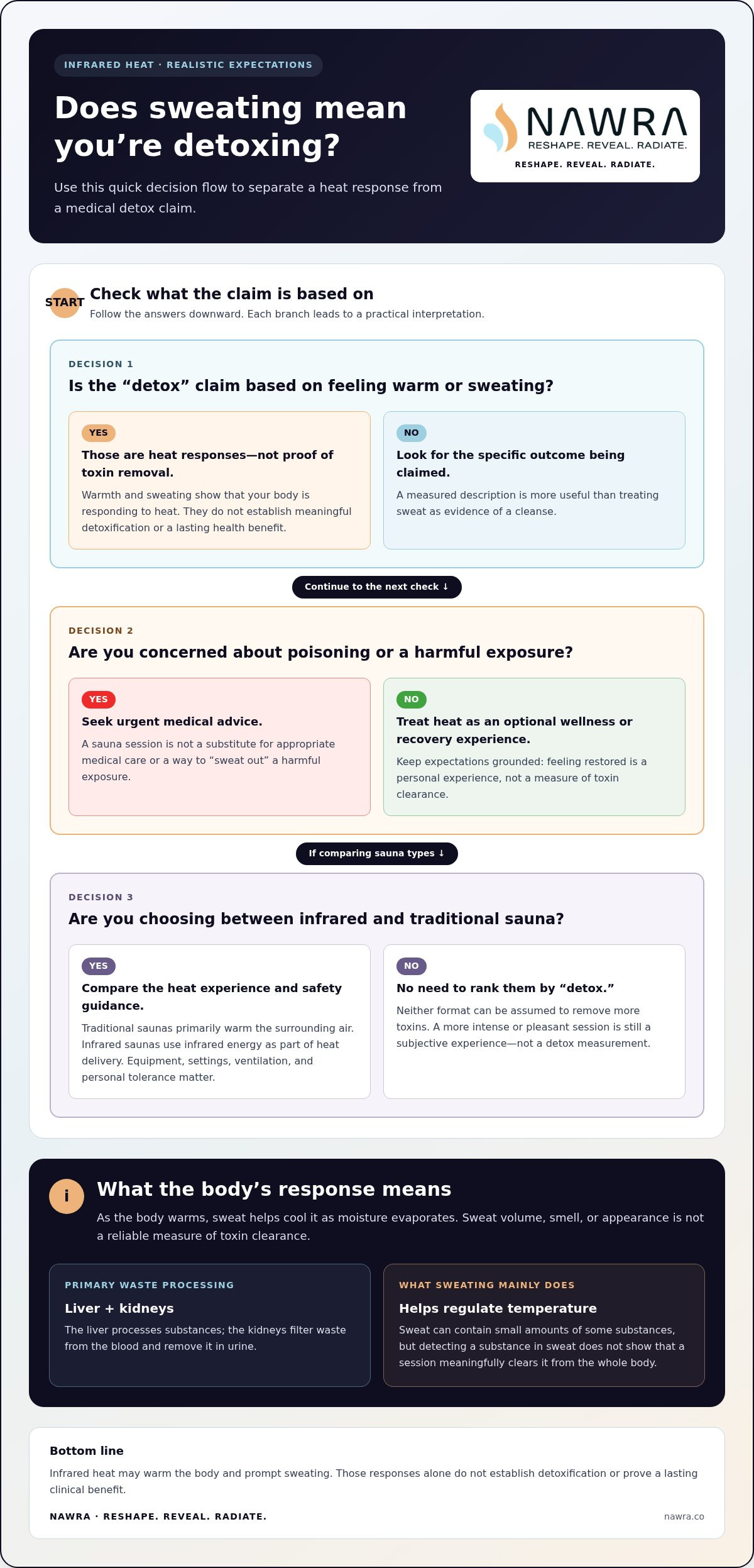
In local wellness marketing, “infrared detox therapy” usually describes a heat-based session in an infrared sauna or pod. The word detox can imply more than the experience establishes. Infrared heat may make you feel warm and cause sweating, but neither sensation shows that a meaningful amount of harmful substances has left your body.
Working definition: Infrared heat therapy is a wellness experience that warms the body and may prompt sweating. It is not a clinically established method for removing toxins or treating poisoning.
That distinction matters when comparing claims about infrared detox therapy Orange County. Your liver processes substances, while your kidneys filter waste from the blood and remove it in urine. Sweating primarily helps regulate body temperature. Sweat can contain small amounts of some substances, but detecting a substance in sweat doesn’t show that a session meaningfully clears it from the whole body.
What happens when infrared heat warms the body?
Infrared energy is a form of electromagnetic radiation. In an infrared sauna, the heat source uses this energy to warm the body and nearby surfaces rather than relying only on heating the room’s air. The experience depends on the equipment and its settings, so don’t assume broad claims about how deeply heat reaches the body apply to every device. For a general overview, see Understanding Infrared Saunas.
As your body temperature rises, you may feel warmer and sweat as your body responds to heat. These are expected responses, not measurements of toxin removal. Infrared sauna terminology also differs from red light therapy: both involve light beyond the visible spectrum, but they describe different wellness approaches and shouldn’t be treated as interchangeable.
What does “detox” mean in wellness advertising?
In advertising, detox is often a loose label for feeling refreshed or completing a wellness routine. In medicine, treating poisoning or a harmful exposure means assessing the specific substance and using appropriate medical care. A sauna session isn’t a substitute for that care. If you suspect poisoning, seek urgent medical advice rather than trying to sweat it out.
Sweat tests can detect substances, but that alone doesn’t establish a useful detox effect. The amount released, its significance to total body exposure, and whether the process improves health are separate questions. The U.S. National Center for Complementary and Integrative Health notes that evidence for detox and cleanse claims is limited; see Detoxes and Cleanses: What You Need to Know. A measured description is more useful than treating sweat as proof of a cleanse.
How Infrared Heat and the Body’s Detox Systems Work
To assess claims about heat, distinguish an immediate body response from a lasting health outcome. Warm skin, sweating, and a temporary rise in body temperature show that the body is responding to heat. They don’t establish that harmful substances have been removed or that health has improved over time.
Infrared heat can create a warming experience and prompt sweating; those responses alone can’t establish meaningful detoxification or prove a lasting clinical benefit.
Sweating, temperature regulation, and what research can show
As the body warms, sweat glands release fluid onto the skin. As that moisture evaporates, it helps cool the body. Sweat volume, smell, and appearance can vary with heat, activity, hydration, and individual differences. None is a reliable measure of toxin clearance.
Infrared research examines possible biological effects, but evidence about a mechanism or short-term response isn’t the same as proof of a long-term health outcome. The review Scientific Basis of Infrared Therapy discusses infrared radiation and its biological effects. It shouldn’t be read as evidence that sweating in a sauna detoxifies the whole body. Claims about lasting benefits require studies that measure meaningful outcomes, not just warmth or sweat.
Infrared sauna versus traditional sauna
Traditional saunas primarily warm the surrounding air, which then warms the body. Infrared saunas use infrared energy as part of heat delivery, so the room conditions and perceived warmth may differ. Equipment, settings, ventilation, and personal tolerance all matter. Neither format can be assumed to remove more toxins.
There’s no single best option for everyone. One person may prefer the feel of a traditional hot room; another may find a different heat environment more comfortable. A pleasant or intense session is still a subjective experience, not a detox measurement. For anyone researching infrared detox therapy Orange County, compare the heat experience and safety guidance, not unsupported promises about which method “cleanses” more.
In practical terms, think of heat as an optional wellness or recovery experience, not a way to compensate for exposure to a harmful substance or replace medical care. The liver chemically processes many substances, while the kidneys filter blood and eliminate waste in urine. These systems work continuously and don’t rely on a sauna session to perform their core functions.
For a local example of full-body infrared heat in a recovery setting, explore NAWRA’s full-body infrared therapy and follow the session instructions. Keep expectations measured: warmth may feel restorative, but how you feel during a session doesn’t verify toxin removal.
Infrared Detox Therapy vs. Other Orange County Recovery Options
Recovery services can share a wellness setting while offering very different experiences. Heat creates warmth; compression applies pressure; cold exposure introduces a cooling stimulus. General recovery may include supportive practices such as rest, gentle movement, or a planned routine. The useful question isn’t which option is best overall, but which experience fits your goal, preferences, and safety needs.
| Option | Intended experience | Typical format | Relevant cautions |
|---|---|---|---|
| Infrared heat | Warmth and a heat-based wellness or recovery experience | Session in an infrared sauna or full-body pod | Heat tolerance varies. Follow session guidance and consider medical advice if you have health or medication concerns. |
| Compression | External pressure, often focused on limbs | Wearable compression equipment used during a session | Pressure may not suit every person or circumstance. Follow device guidance and seek clinical advice when appropriate. |
| Cold exposure | A brief cooling experience | Cold-based equipment or environment, depending on the service | Cold can feel intense. Personal tolerance and health considerations matter. |
| General recovery | Support for a recovery routine without one defining heat, pressure, or cold stimulus | Rest, gentle movement, or other planned practices | Match the approach to your condition and avoid using wellness services in place of medical care. |
When might someone explore infrared heat?
Infrared heat may appeal if you want a quiet, warming wellness session and are comfortable in a heated environment. Consider what you want from the experience: relaxation, a structured recovery routine, or simply trying a different modality. Heat tolerance is personal, so your comfort during the session matters more than chasing a particular sweat level. Treat it as an optional wellness experience, not a treatment for disease or a weight-loss or toxin-removal method.
How does infrared heat differ from compression or cold therapy?
Compression offers pressure rather than warmth; cold exposure feels cooling rather than heated. These are different physical inputs, so your preference and intended experience can guide your choice. If you’re comparing local approaches, “Recovery Therapy in Orange County: Compare Your Options” provides a broader framework, while “BOA Compression Therapy Near Me: A Local Guide to NAWRA” focuses on compression. Choose with your goals, comfort, and relevant safety guidance in mind.
For readers considering infrared detox therapy Orange County, keep the comparison evidence-aware: no modality is a universal solution or a substitute for medical care. If you have a health condition, take medication that may affect heat or temperature tolerance, or feel unsure about a modality, seek guidance from a qualified healthcare professional before booking. Comfort, purpose, and safe use are a more reliable basis for choosing than broad promises.
How to Prepare for an Infrared Heat Session Safely
A well-managed heat session starts before you enter the sauna or pod. Your health, medications, hydration, and comfort with heat all affect whether the experience is appropriate. Use this sequence as a practical baseline, then follow the facility’s screening and session instructions.
- Review your suitability. If you’re pregnant, have a health condition, or take medication that could affect temperature regulation, blood pressure, or fluid balance, speak with a healthcare professional before using heat. Share relevant concerns through the facility’s screening process. Don’t use a session to manage symptoms or replace medical care.
- Follow the facility’s instructions. Equipment and session protocols vary. Read the guidance for the specific sauna or pod, including how to operate it and end the session. Don’t assume a temperature or duration used elsewhere is right for your session.
- Start conservatively. If you’re new to infrared heat or unsure about your tolerance, take a cautious approach within the facility’s instructions. You don’t need to stay until you’re sweating heavily or prove anything through endurance.
- Monitor how you feel. Pay attention throughout the session. If you feel unwell or the heat becomes uncomfortable, stop and exit rather than pushing through.
Before the session: suitability and simple preparation
Arrive normally hydrated and avoid a session if you’re ill, already overheated, or feeling unwell. Tell the facility about relevant health concerns and follow its screening guidance. Avoid alcohol before heat exposure, and don’t treat extra water as a way to make an otherwise unsuitable session safe. There’s no universal temperature or duration that fits every person and device.
During and after the session: use comfort as a signal
Heat should remain tolerable. Stop promptly if you experience dizziness, weakness, nausea, or confusion. Move to a cooler area and seek appropriate help, especially if symptoms are severe, persist, or worsen. Afterward, cool down gradually and drink fluids according to your personal needs. A sauna isn’t a way to replace fluids lost through sweating, correct dehydration, or treat a medical problem.
For readers considering infrared detox therapy Orange County, safety is about suitability and response, not the amount of sweat. Keep the experience measured: follow instructions, listen to your body, and stop when needed. If you’re exploring a local guided option, explore NAWRA’s ExoPod full-body therapy and review the clinic’s session instructions before your visit.
Exploring Full-Body Infrared Therapy at NAWRA in Orange County
For readers interested in heat as part of a recovery routine, NAWRA offers ExoPod full-body therapy at its Los Alamitos clinic. It’s a wellness service, not a medical detox procedure. Set expectations around the experience itself: full-body heat exposure in a recovery setting, with your comfort and the clinic’s session instructions shaping the experience.
NAWRA serves people in Los Alamitos, Cypress, Cerritos, Long Beach, Seal Beach, La Palma, Buena Park, Lakewood, Anaheim, Norwalk, Irvine, Laguna Niguel, Newport Beach, Huntington Beach, Bellflower, Tustin, Fullerton, and Yorba Linda.
What to expect from a full-body infrared sauna pod
The ExoPod is NAWRA’s full-body infrared therapy option. Follow the clinic’s instructions for using it, and pay attention to how you feel rather than treating sweat as a measure of results. The purpose is a heat-based recovery experience, not toxin removal. For more background on the format, NAWRA’s dedicated explainer, Full Body Infrared Sauna Pod: How It Works, Benefits, and Safety, provides additional context.
That distinction can make the experience easier to evaluate. You may be exploring warmth as a way to unwind or add a structured heat session to your wellness routine. Those are personal goals, not proof of a medical effect. If a session feels uncomfortable, follow the clinic’s directions for ending exposure; there’s no need to push through discomfort to make the visit worthwhile.
Choose a realistic goal for your recovery routine
Before booking, identify what you want from the session. Relaxation and experiencing infrared heat are realistic wellness goals. Treating a health condition, removing toxins, or replacing medical care are not. If you have health concerns or take medication that could affect heat tolerance, get medical guidance first and follow NAWRA’s screening and session instructions.
Consistency should be personal and appropriate. A routine is useful only if it fits your health needs, comfort, and the facility’s guidance. Don’t increase frequency or exposure simply because you expect a stronger detox effect. A measured approach lets you notice how you respond and adjust without turning the session into a test of endurance.
For people researching infrared detox therapy Orange County, NAWRA offers a local recovery option centered on full-body heat exposure and realistic expectations. Explore NAWRA’s Orange County recovery services to consider whether ExoPod therapy fits your wellness routine.
Make Your Next Recovery Choice With Clarity
Your next step doesn’t need to be a dramatic reset. Decide what you want from a heat session, consider whether it suits your health and comfort, then use that goal to guide your choice. Clear expectations make it easier to evaluate the experience without relying on detox promises.
If you’re exploring infrared detox therapy Orange County, look for guidance that treats heat as a wellness experience and keeps claims measured. NAWRA’s precision-focused, data-driven approach and ExoPod full-body therapy offer a local way to explore heat with a practical mindset.
Explore NAWRA’s recovery services in Orange County and consider which option aligns with your personal recovery goals. Choose thoughtfully, follow appropriate guidance, and take the next step at a pace that feels right for you.
Frequently Asked Questions
Is infrared detox therapy scientifically proven to remove toxins?
No. Infrared heat can cause sweating, but that doesn’t establish meaningful toxin removal or a medical detox effect. The liver and kidneys handle the body’s primary waste-processing functions. The National Center for Complementary and Integrative Health notes that evidence for detox and cleanse programs is limited. When reading research, look at what it measured, such as a specific substance or clinical outcome, rather than relying on broad wellness marketing language.
Can infrared sauna therapy help with weight loss?
Any drop on the scale immediately after a heat session may reflect fluid loss, not fat loss. Rehydrating can restore that fluid weight. A single weigh-in can’t show a lasting change in body composition, and claims of durable weight loss from sauna use need strong supporting evidence. Don’t use heat exposure as a substitute for nutrition, movement, or individualized medical advice about weight management.
How should I prepare for an infrared sauna session?
Follow the facility’s instructions, arrive feeling well, and maintain your usual hydration. If it’s your first session, don’t try to tolerate intense heat or match someone else’s routine. Plan to leave if you feel dizzy, nauseated, unusually weak, or otherwise unwell. For example, if you’re recovering from an illness or feel dehydrated, postpone the session rather than assuming you can sweat through it.
Is infrared heat therapy safe for everyone?
No. Health conditions, pregnancy, medications, and individual heat tolerance can affect whether a session is appropriate. If a medication makes you unsure about your response to heat, ask your healthcare professional before booking instead of changing how you take it. Follow the facility’s screening guidance. Stop exposure if concerning symptoms develop, and seek medical help if symptoms are severe, persistent, or worsening.
What is the difference between infrared sauna therapy and red light therapy?
Infrared sauna therapy involves heat exposure; red light therapy is a distinct approach involving light. The terms aren’t interchangeable, even if a wellness business offers both. Before a session, identify which modality is being used and its stated purpose. Evidence about one approach shouldn’t be assumed to apply to the other, and neither should automatically be considered a proven detox method.
Where can I explore full-body infrared therapy in Orange County?
NAWRA offers ExoPod full-body therapy as part of its recovery services at its Los Alamitos location, serving communities including Los Alamitos, Cypress, Cerritos, Long Beach, Seal Beach, La Palma, Buena Park, Lakewood, Anaheim, Norwalk, Irvine, Laguna Niguel, Newport Beach, Huntington Beach, Bellflower, Tustin, Fullerton, and Yorba Linda. If you’re researching infrared detox therapy Orange County, use the clinic’s full-body infrared sauna pod guidance to understand the experience and safety considerations. Set a realistic goal, follow the session instructions, and treat sweating as a heat response, not proof that toxins have been cleared.
What should I do if I feel dizzy during an infrared sauna session?
End the heat exposure promptly and move to a cooler area. Sit or lie down somewhere safe, and take fluids if you’re alert and able to drink. Don’t resume the session while symptoms continue. If dizziness is severe, persists, worsens, or comes with other concerning symptoms, seek medical help. If you’re unsure whether the situation is urgent, contact an appropriate medical service for guidance. To explore NAWRA’s ExoPod full-body therapy and session guidance, visit NAWRA.