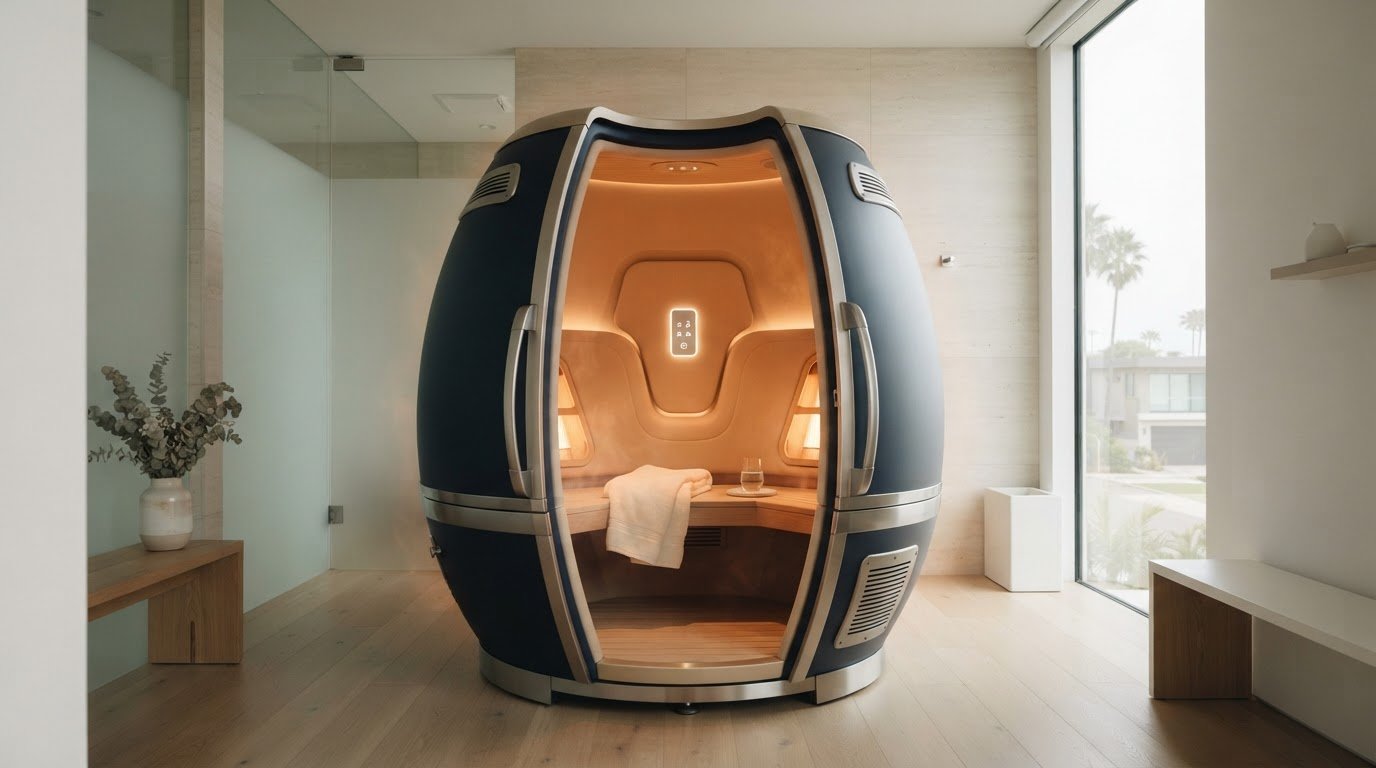
A sauna pod is a format, not a health outcome. A full body infrared sauna pod uses infrared emitters to deliver radiant heat, while a traditional sauna primarily heats the surrounding air. The difference can affect how a session feels, but it does not prove that either format delivers every benefit its marketing promises.
If you’re considering infrared heat for comfort, recovery, or general wellness, it helps to separate what’s known from what’s claimed. Research on sauna use varies by sauna type, so findings from traditional Finnish saunas should not automatically be applied to infrared pods. Claims about detoxification and weight loss deserve particular caution.
This guide explains how pods work, how they compare with other heat experiences, and what evidence does and does not support about their proposed benefits. It also covers practical comfort and heat-safety considerations. NAWRA offers ExoPod Full-Body Therapy as a distinct recovery option, not an infrared sauna pod. Knowing the difference can help you compare modalities without confusing a treatment format with a proven result.
Key Takeaways
- Compare a full body infrared sauna pod with blankets, tents, and traditional saunas by format, heat environment, and practical use.
- Separate immediate effects such as warmth and sweating from claims about longer-term health outcomes.
- Use the device’s operating instructions and your own comfort to guide preparation, rather than relying on a universal session template.
- Define your recovery goal before deciding whether a heat-based modality fits your routine.
- Understand that NAWRA’s ExoPod Full-Body Therapy is a distinct recovery option, not an infrared sauna pod.
Full-Body Infrared Sauna Pods: What Makes Them Different?
A sauna is a heated environment used for exposure to warmth. “Infrared” describes radiant energy used to produce heat, while “full body” generally describes a format intended to expose much of the body during a session. A full body infrared sauna pod is a device category, not a guarantee of a particular sensation or health result. Pods can differ in shape, heating elements, controls, and operating instructions.
How does an infrared sauna pod differ from a traditional sauna?
A traditional sauna typically warms the surrounding air and surfaces, and the body absorbs heat from that environment. An infrared sauna uses infrared emitters to create radiant warmth. The air may also warm, but the device is designed around infrared exposure rather than hot air alone. This difference can help explain why the experiences feel different, but it does not make one format universally better.
“Infrared sauna” covers different designs. The type and placement of the emitters, the enclosure, and the manufacturer’s instructions all affect how a particular device operates. For a general overview of the category and common claims, see Infrared Sauna. Treat broad descriptions as background, not as a substitute for device-specific information. Do not assume every pod reaches the same conditions or should be used for the same length of time.
For a practical comparison, look beyond headline temperature claims. Find out whether the device uses infrared emitters, how you are positioned in relation to them, and what the manufacturer says about controls, setup, and use. Those details tell you more than a general claim that infrared is “gentler” or more effective. Comfort depends on both the individual and the equipment.
What does “full body” mean in this context?
In this category, “pod” often refers to an enclosed or capsule-style structure designed to surround or accommodate the user. The configuration varies: an enclosure may cover different parts of the body, and positioning and exposure can differ by model. The label alone does not tell you which areas receive warmth or how evenly it is delivered. The device’s design and instructions provide the relevant details.
This differs from localized heat devices, which target a limited area, and sauna blankets, which wrap around the body rather than forming a separate pod enclosure. Portable sauna tents may look pod-like in product listings but can use different heating methods. Appearance alone is not enough to identify the format, so check how the device produces heat and how it is intended to be used.
Finally, “full body” describes intended coverage, not evidence of clinical benefit. A product label cannot establish that a device improves recovery, treats a condition, or produces a lasting health change. Keep the format, immediate experience, and claimed outcome separate. NAWRA’s ExoPod Full-Body Therapy is a distinct full-body therapy offering. It should not be confused with an infrared sauna pod or assumed to use the same mechanism.
How Infrared Heat Works, and What Benefits the Evidence Supports
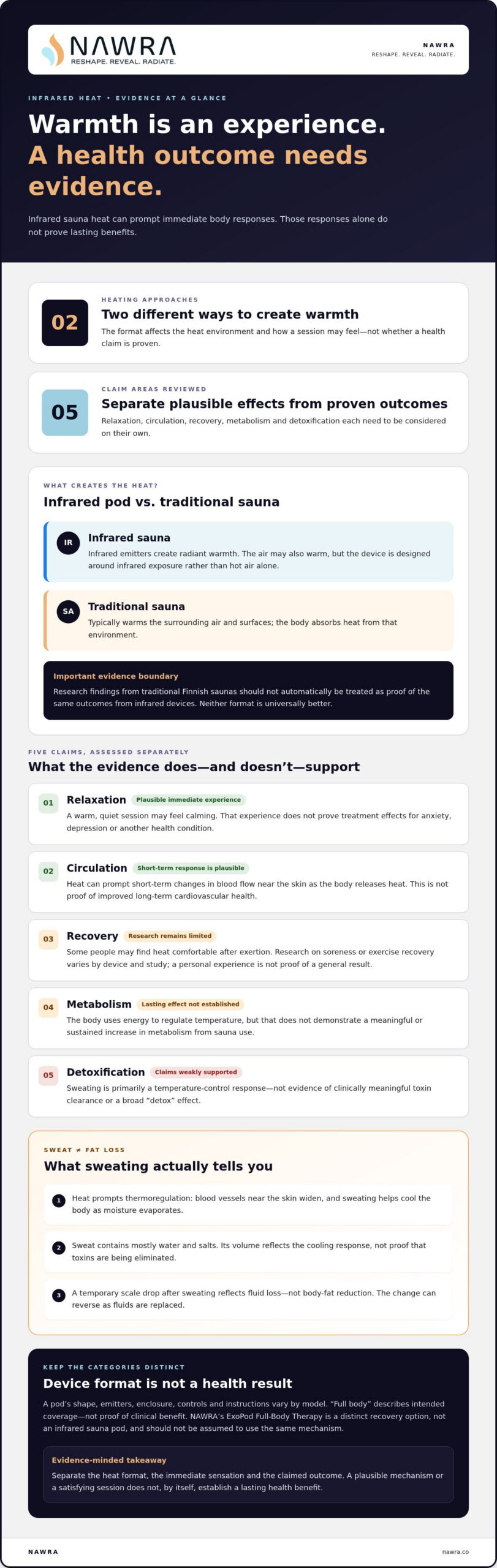
Infrared heat warms the body and prompts its normal thermoregulation response. Blood vessels near the skin widen to help release heat, and sweating helps cool the body as moisture evaporates. The response can feel intense, but sweating is a normal cooling process, not a measure of how much health benefit a session provides.
A plausible mechanism is not the same as a proven clinical outcome. Heat may temporarily affect circulation or create a feeling of relaxation. Neither response alone establishes lasting improvements in health, fitness, or recovery. Evidence also depends on the heat method studied. Findings from traditional Finnish sauna research should not automatically be treated as proof of the same outcomes from infrared devices.
Which infrared sauna pod benefits are plausible, and which need caution?
Assess each claim separately, and distinguish an immediate experience from a lasting outcome:
- Relaxation: A warm, quiet session may feel calming, and that immediate experience can be meaningful. It does not prove a treatment effect for anxiety, depression, or another health condition.
- Circulation: Heat can prompt short-term changes in blood flow near the skin as the body works to release heat. That response is plausible, but it should not be confused with evidence that a pod improves long-term cardiovascular health.
- Recovery: Some people may find heat comfortable after exertion. Research on infrared sauna use for muscle soreness or exercise recovery remains limited and varies by device and study. A positive personal experience is an anecdote, not proof of a general result.
- Metabolism: The body uses energy to regulate temperature, but this does not demonstrate a meaningful or sustained increase in metabolism from sauna use.
- Detoxification: Claims that sauna sweating removes harmful toxins or produces a broad “detox” effect are weakly supported. Sweating is primarily a temperature-control response, not evidence of clinically meaningful toxin clearance.
Does sweating mean the body is detoxifying or losing fat?
No. Sweat contains mostly water and salts. Its volume reflects the body’s cooling response, not proof that toxins are being eliminated. The scale may show a temporary drop after sweating because fluid has been lost. That is not the same as reducing body fat, and the change can reverse as fluids are replaced.
Sweat can reduce body water temporarily; hydration restores fluid, while lasting fat loss requires changes in body fat, not simply a hot session. Keep that distinction in mind when evaluating a full body infrared sauna pod advertised for weight loss. A short-term weight change after heat exposure does not establish a lasting change in body composition.
Start with your goal, then assess the evidence for the modality rather than relying on broad promises. NAWRA’s ExoPod Full-Body Therapy is a distinct recovery option, separate from infrared sauna use. Do not assume it works through the same mechanism.
Infrared Sauna Pod vs. Sauna Blanket, Tent, or Traditional Sauna
Similar names can describe different experiences. A full body infrared sauna pod generally refers to an enclosed format intended for broad body exposure, but products marketed as “pods” do not all share the same construction or heating method. A blanket, tent, or traditional sauna differs in how the user is positioned, how heat is delivered, and how much of the body is enclosed. Compare the actual design, not just the label.
| Format | General heat environment | Enclosure and position | Practical use |
|---|---|---|---|
| Infrared sauna pod | Uses infrared emitters; surrounding air may also warm. | Often an enclosed or capsule-style setup, though coverage and user position vary. | Review device-specific setup and operating instructions. The name alone does not specify how it works. |
| Sauna blanket | Some models use infrared heating; technology depends on the device. | Wraps around the user, typically while lying down. It is not a separate room or capsule. | Consider the wrapped format and follow the manufacturer’s setup and use instructions. |
| Portable sauna tent | May use infrared or another heating approach, depending on the design. | Creates a small enclosure; the user’s position and the extent of coverage can differ. | Check the heat source and assembly instructions rather than inferring them from appearance. |
| Traditional sauna | Generally heats the surrounding air and surfaces. | A sauna room, commonly used seated on a bench. | Requires access to a sauna space and follows that facility’s or unit’s guidance. |
How does a pod compare with an infrared sauna blanket or tent?
The most visible difference is the setup: a blanket wraps around the body, while a pod or tent creates an enclosure. That distinction can affect how enclosed the user feels and how the session fits into a routine. But neither “pod” nor “tent” reliably identifies a specific heat source. Product descriptions can use these terms inconsistently, so look for the stated heating method and the manufacturer’s instructions.
How does it compare with a traditional sauna?
A traditional sauna typically warms the room’s air and surfaces. Infrared equipment uses emitters to provide radiant heat, though the surrounding air can warm too. One person may prefer the room-based experience, while another may find an enclosed device more comfortable. Comfort is a personal response, not evidence that one format produces greater health benefits.
Product format alone does not establish effectiveness. A pod’s enclosure, a blanket’s wrap, or a traditional sauna’s heated room describes the setup, not a proven clinical outcome. Compare design, heat source, operating instructions, and comfort separately from any benefit claim. No format should be treated as a guaranteed recovery method or a replacement for appropriate medical care.
How to Prepare for a Session and Think About Heat Safety
Heat tolerance differs from person to person and can vary with hydration, health, medication, and the device itself. Start with the manufacturer’s instructions, not a session length or temperature borrowed from a different full body infrared sauna pod.
What should someone consider before using an infrared sauna pod?
Before starting, understand the device and consider how you may respond to heat:
- Read the operating instructions. Learn how to start, adjust, and stop the device, and follow its guidance on setup, clothing, and use. Controls and instructions are not necessarily interchangeable between models.
- Make hydration part of your preparation. Arrive normally hydrated and consider whether you have recently lost fluids through exercise, illness, or heat. Do not turn the session into a test of endurance.
- Choose comfort over a target. Begin conservatively within the manufacturer’s guidance. You do not need to match someone else’s session or push through discomfort.
- Consider your health and medications. If you’re pregnant, have a health condition, or take medication that may affect heat tolerance, ask a clinician whether heat exposure is appropriate for you. The same applies if you have concerns about a medication patch. The research guidance advises removing transdermal patches before sauna use, but follow your clinician’s and product-specific instructions.
Clinician guidance is especially important for people with unstable cardiovascular disease, a recent stroke, severe low blood pressure, or an active bleeding disorder. These factors can change how the body responds to heat. Do not treat a general online session template as personal medical advice.
What signs mean a session should stop?
Stop the session if you feel dizzy, nauseated, unusually weak, or faint. End the heat exposure, leave the device safely, and cool down. Do not resume just to complete a planned duration. If symptoms are severe, persist, or concern you, seek appropriate medical care.
Prepare a cool, comfortable place to rest afterward, and give yourself time to notice how you feel before returning to strenuous activity. If you are uncertain about your response, pause rather than increasing the heat or extending the session. Stay within the device’s operating guidance and your own tolerance.
Safety means knowing the instructions, recognizing your limits, and stopping when your body signals distress. NAWRA also offers ExoPod Full-Body Therapy as a distinct recovery option, separate from infrared sauna use.
Full-Body Sauna Pods for Recovery in Orange County
Recovery works best as a plan, not a collection of promises. Before choosing a full body infrared sauna pod or another modality, identify what you want to support. Are you seeking a relaxing experience, a way to unwind after activity, or help addressing a specific concern? A clear goal makes it easier to set realistic expectations and assess whether an approach feels useful over time.
How can readers think about recovery options without relying on hype?
Start with three questions: What’s my goal? What does the evidence say about this approach? How do I respond to it? Track your experience without assuming that one comfortable session proves a lasting benefit. If your goal involves a symptom, injury, or health condition, educational information can help you frame questions, but it is not a diagnosis or individualized clinical advice. A clinician can help you understand what care is appropriate for your circumstances.
That distinction matters when comparing recovery therapy options in Orange County. Different modalities have different formats and evidence bases. The useful question is not simply which one sounds most advanced, but whether it aligns with your goal, expectations, and personal situation. An infrared sauna pod is one format for heat exposure, not a substitute for individualized care or a guaranteed route to recovery.
What does NAWRA’s broader recovery approach include?
NAWRA serves Los Alamitos and nearby communities, including Cypress, Cerritos, Long Beach, Seal Beach, La Palma, Buena Park, Lakewood, Anaheim, Norwalk, Irvine, Laguna Niguel, Newport Beach, Huntington Beach, Bellflower, Tustin, Fullerton, and Yorba Linda. Its recovery services include ExoPod Full-Body Therapy, BOA lymphatic drainage, and ExoFreeze cryo. These are distinct offerings, not interchangeable formats. ExoPod is not an infrared sauna pod, and the fact that each is full-body or recovery-focused does not mean they share a mechanism or outcome.
For readers exploring compression-related care, BOA lymphatic drainage is another distinct service to consider on its own terms. Compare each modality by its purpose, the information available about it, and how it fits your needs. If you’re considering options for a health concern, involve a qualified clinician rather than treating a wellness service as a diagnosis or replacement for medical care.
A thoughtful recovery plan can include more than one type of support, guided by your goals and response. NAWRA also offers diagnostic services such as DEXA body composition scans, RMR tests, and VO2 Max assessments, which can provide additional context for broader wellness planning. Explore NAWRA’s wellness services to learn about its offerings and consider which options match your interests.
Choose Your Next Step With Clarity
Let your goal guide your next move. If you’re considering a full body infrared sauna pod, decide what you want from the experience and how you’ll judge whether it suits you. Keep that decision separate from claims the evidence cannot establish. If you have a health concern, discuss it with a qualified clinician rather than relying on a wellness modality to provide an answer.
Recovery can also be considered alongside broader measures of wellness. NAWRA offers ExoPod Full-Body Therapy as a distinct recovery service, alongside DEXA, RMR, and VO2 Max assessments. These options serve different purposes, so choose based on your goals rather than assuming they work alike.
Take a measured approach: clarify your priorities, consider your individual needs, and explore options that fit. Explore NAWRA’s recovery and wellness services to learn more and choose a next step that aligns with your goals.
Frequently Asked Questions
Is a full-body infrared sauna pod the same as an infrared sauna?
No. A full body infrared sauna pod is one format of infrared sauna, not a synonym for every infrared sauna. “Infrared” refers to the heating approach; “pod” describes an enclosure style. Designs vary, so check the device’s specifications and instructions. NAWRA’s ExoPod Full-Body Therapy is a separate therapy offering, not an infrared sauna pod. Similar names do not mean the equipment or experience is the same.
Can an infrared sauna pod help with relaxation?
It may feel relaxing, but the experience varies from person to person and is not a guaranteed health outcome. Someone might enjoy quiet time in a warm environment after a demanding day, while another person may find the heat uncomfortable. Treat relaxation as a possible personal response, not evidence that the session treats anxiety, improves sleep, or produces lasting benefits.
How often can someone use a full-body infrared sauna pod?
There is no one frequency that suits every person or device. Follow the specific manufacturer’s guidance, and do not adopt a schedule intended for a different model. Consider how you feel during and after use, including whether heat affects your usual activities later that day. If you have a health condition or questions about regular heat exposure, ask a clinician before setting a routine.
What should someone wear in an infrared sauna pod?
Follow the device’s instructions because clothing guidance can differ by design. If the manual permits clothing, choose something comfortable that will not distract you or restrict movement as you enter or exit. If it specifies clothing limits or other requirements, follow them rather than assuming advice for a sauna blanket or cabin applies. Use a towel only if the instructions allow it.
Can someone use an infrared sauna pod after exercise?
Some people may choose heat as part of a post-exercise wind-down, but it is not a proven recovery requirement. Avoid beginning a session if you still feel overheated, dehydrated, dizzy, or unwell. Let your body settle first, and follow the device’s operating guidance. If exercise has caused unusual symptoms, or you have a health condition that affects heat tolerance, seek appropriate clinical advice before using heat.
What happens if someone feels dizzy or nauseated during a session?
Stop the heat exposure and leave the device safely. Sit or lie down somewhere cooler, and do not restart the session to meet a planned target. If you’re with someone, let them know how you feel. Seek medical care for symptoms that are severe, persistent, or concerning, especially if you faint, feel confused, have chest pain, or experience difficulty breathing.
Are infrared sauna pods appropriate for everyone?
No. People who are pregnant or have unstable cardiovascular disease, a recent stroke, severe low blood pressure, or an active bleeding disorder should get clinician guidance before heat exposure. Medication can also affect suitability; ask a prescribing clinician about transdermal patches before a session. For people considering wellness options in Los Alamitos, NAWRA’s ExoPod Full-Body Therapy is a distinct offering, not an infrared sauna pod.