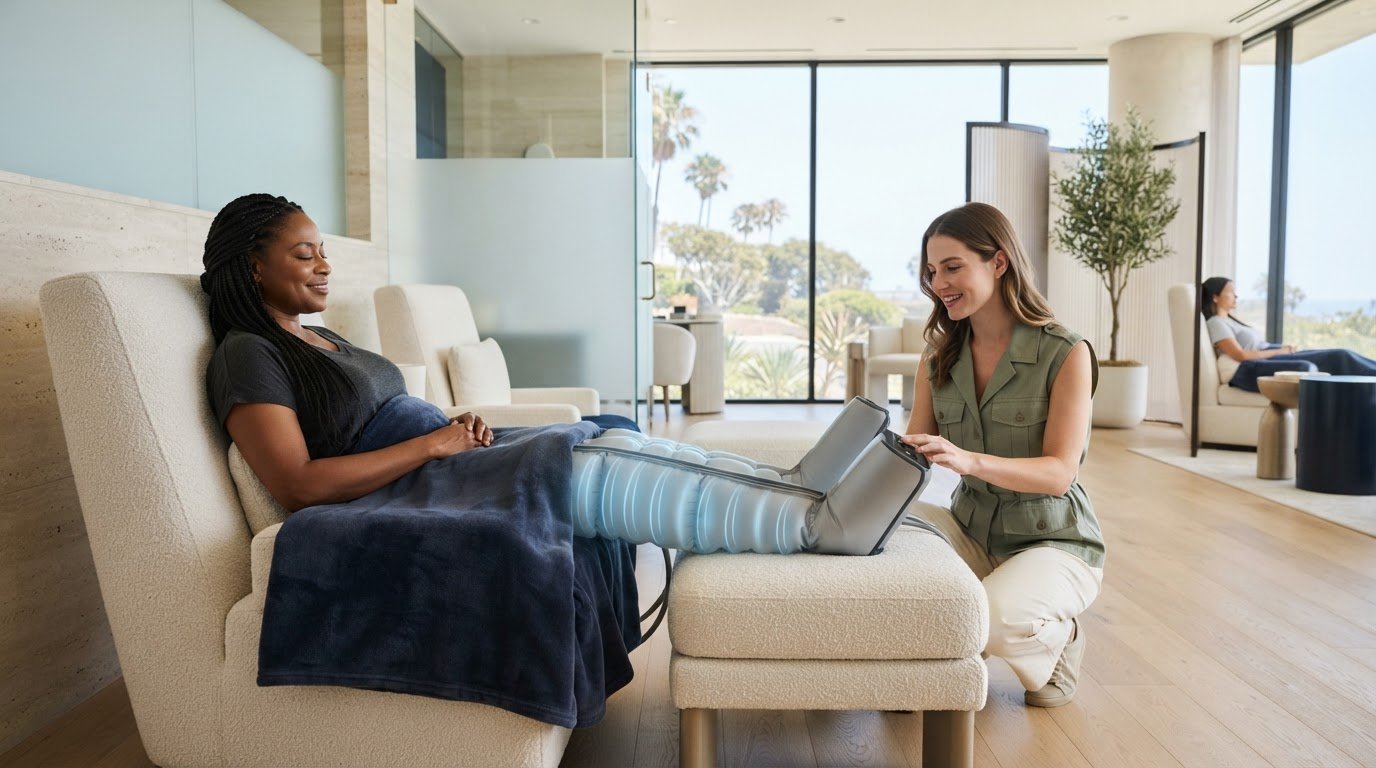
Could a recovery session feel like a targeted squeeze rather than a massage? If you’ve searched “BOA compression therapy near me,” you’re likely looking for a clear answer about what happens, what the service is intended for, and whether it fits your needs. BOA lymphatic drainage uses a wearable compression system to apply pressure in cycles. It’s different from hands-on massage, and it shouldn’t be treated as a cure-all.
At NAWRA in Los Alamitos, a BOA lymphatic drainage session is 45 minutes and is part of a broader recovery and wellness setting. The clinic is a local option for people in nearby Cypress, Cerritos, and Long Beach, as well as other surrounding communities. This guide explains the basic mechanism, compares compression with massage and other recovery approaches, and outlines practical safety considerations. It also helps distinguish the service’s intended wellness role from medical treatment. If you have a diagnosed condition such as lymphedema, seek clinical guidance before considering a wellness session.
Key Takeaways
- Understand how pneumatic compression applies external pressure and how sequential pressure differs from a steady squeeze.
- Compare BOA compression with hands-on massage by considering how each is delivered, its intended purpose, and your needs.
- Before exploring BOA compression therapy near me, define your goal, consider your health context, and review the service details.
- Discuss relevant diagnoses, symptoms, or recent procedures with a qualified clinician before considering a wellness session.
- See how NAWRA’s BOA lymphatic drainage fits within its recovery and therapeutic wellness services in Los Alamitos.
What to expect from BOA compression therapy near Los Alamitos
Searching for “BOA compression therapy near me” often starts with two practical questions: what is the service, and what happens during a session? BOA compression therapy is a form of pneumatic compression. A wearable garment or system applies pressure to the body in a controlled way. At NAWRA in Los Alamitos, BOA lymphatic drainage is offered as part of recovery and therapeutic wellness services, and the session is listed as 45 minutes.
The basic experience is externally applied pressure. That doesn’t make a wellness session a clinical assessment, and it shouldn’t be mistaken for diagnosis or treatment of a medical condition. The lymphatic system is a network involved in moving fluid through the body; the lymphatic system provides background on its role. How a person feels during or after a session can vary.
How BOA compression fits into a local recovery routine
Think of BOA as one possible part of a broader recovery routine that may include a full body infrared sauna pod, not a universal solution. Someone looking for a general wellness experience may have a different goal from someone interested in post-exercise recovery. NAWRA’s Los Alamitos location is convenient to consider for people coming from nearby Cypress and Cerritos, among other local communities. To assess fit, start by naming your goal, then consider whether an equipment-based compression service aligns with it.
Experiences and outcomes aren’t identical from person to person. A session may feel like rhythmic pressure, but that sensation alone doesn’t prove a particular change in circulation, fluid movement, appearance, or recovery. Keep expectations measured: BOA lymphatic drainage is offered as a wellness service, and individual results shouldn’t be assumed or guaranteed.
What compression therapy can and cannot tell you
A wellness session provides an experience of externally applied compression. It cannot identify the cause of swelling, establish a diagnosis, or replace care for a medical condition. If you have diagnosed lymphedema, consult a clinician rather than relying on a wellness session as medical treatment.
A service’s intended use describes what it is designed to offer; it does not establish a proven result for every individual. That distinction matters when considering claims about lymphatic drainage, circulation, or recovery. If you have a relevant diagnosis, persistent or unexplained symptoms, or have recently had a procedure, discuss whether compression is appropriate with a qualified clinician before booking. A clear goal and appropriate clinical guidance help you make an informed choice.
How BOA compression therapy works: pressure, sequence, and purpose
Pneumatic compression uses a garment or system to apply external pressure to the body. In BOA compression, pressure may be delivered in a sequence rather than evenly everywhere at once. The result is a patterned compression experience, not a diagnosis or a guaranteed physiological outcome.
In plain terms, pneumatic compression uses a wearable system to apply pressure; sequential compression means that pressure is delivered in stages, with the pattern and settings determined by the equipment and service. This explains the general mechanism without specifying the protocol used in every session.
What sequential compression means in plain English
Picture a gentle wave moving along a shoreline, rather than the whole beach being covered at once. Sequential compression follows a similar broad concept: pressure progresses across parts of a garment. Steady, uniform pressure, by contrast, describes pressure that remains more consistent across an area. The analogy explains the pattern, not the force or clinical effect.
Compression systems can differ in design, coverage, sequence, and available settings. Those details matter when comparing services: a chamber count, pressure figure, or program associated with one machine does not tell you what another system does. At NAWRA, the service is BOA lymphatic drainage. Focus on that service rather than assuming equipment specifications or protocols from other systems apply.
Why goals matter when interpreting the mechanism
The same general mechanism may be discussed in different contexts, including relaxation, general wellness, or post-exercise recovery. Those goals are not interchangeable with medical treatment. If you’re considering compression because of diagnosed lymphedema, unexplained swelling, or another health concern, a clinician’s assessment is more appropriate than relying on a wellness session to evaluate the cause.
Pressure applied through a garment describes what the equipment does. It doesn’t, by itself, prove that a specific person will experience improved circulation, increased lymphatic flow, less soreness, or faster recovery. Claims about treating a condition or changing a clinical symptom require appropriate medical evidence and assessment. Keep the distinction clear: intended use is not an individual outcome.
If you’re considering a session after exercise, ask yourself whether compression fits your recovery therapy options in Orange County and personal circumstances. If relaxation is your priority, the experience itself may be the main consideration. Neither goal makes the service a substitute for diagnosis, prescribed care, or individualized medical advice.
If you’re searching for BOA compression therapy near me, focus on the mechanism and intended purpose, not just the language used to promote benefits. NAWRA offers BOA lymphatic drainage within its recovery and therapeutic wellness services. You can review NAWRA’s wellness services and consider whether the offering aligns with your goals. Bring health concerns to a qualified clinician.
BOA compression therapy versus massage and other recovery approaches
BOA compression and massage can both involve pressure, but they deliver it differently. A compression system applies pressure through a garment; hands-on massage uses a practitioner’s touch and technique. Neither is automatically better. Compare how each is delivered, its intended purpose, and whether it suits your needs and health context.
Compression therapy and hands-on massage are different approaches
Equipment-applied pressure follows the system’s design, while hands-on work can vary with the practitioner’s technique and the session’s focus. That distinction doesn’t establish that one approach is stronger, more effective, or more consistent. If you’re considering a lymphatic drainage massage alternative, use the table to compare delivery methods and factors that may shape suitability.
| Approach | Delivery method | Typical purpose | Factors that shape suitability |
|---|---|---|---|
| BOA pneumatic compression | A garment or system applies external pressure, which may be delivered in a sequence. | A wellness or recovery experience, depending on the service and the person’s goal. | Personal comfort, the goal for the session, and relevant health conditions or symptoms. |
| Hands-on massage | A practitioner applies touch and manual techniques. | May be chosen for relaxation or a particular bodywork goal. | The technique offered, the areas addressed, personal preference, and health context. |
| Clinician-directed lymphatic care or rehabilitation | Care is selected and guided by a qualified clinician according to an individual assessment. | Evaluation or management of a medical concern, as clinically appropriate. | Diagnosis, symptoms, medical history, and the clinician’s care plan. |
| General recovery practices | May include rest or movement as part of a person’s routine. | Supporting day-to-day recovery habits. | Activity level, individual needs, and any clinical advice already received. |
Use this comparison to clarify what you’re looking for. If you want an equipment-based wellness experience, pneumatic compression may be relevant. If you prefer manual touch, massage is a different format. If you need assessment or treatment for a diagnosed condition, a wellness service is not a substitute for clinical care.
When clinical guidance matters more than a wellness comparison
Persistent swelling, unexplained symptoms, or a diagnosed condition calls for clinical guidance. A wellness service cannot establish what’s causing a symptom and shouldn’t replace individualized medical advice, prescribed care, or rehabilitation. If your concern is medical, discuss it with a qualified clinician before choosing a wellness option.
For someone searching “BOA compression therapy near me,” suitability is personal, not a contest between services. Consider the intended use, how pressure or touch is delivered, and whether your goal is general wellness or medical care. NAWRA offers BOA lymphatic drainage within its recovery and therapeutic wellness setting, giving local readers an equipment-based wellness option to consider while keeping clinical needs in the right hands.
How to assess fit and prepare for BOA compression therapy near Los Alamitos
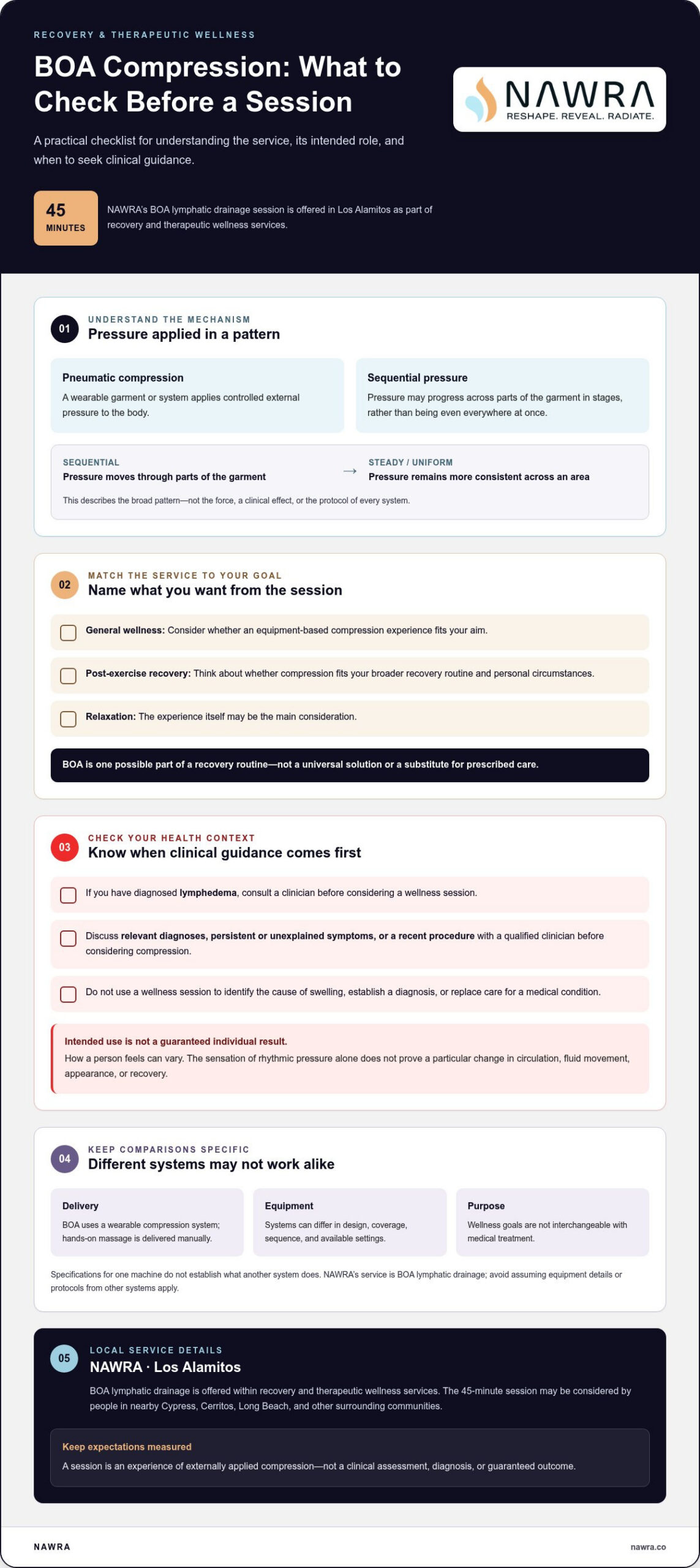
A little preparation can help you decide whether a wellness session matches your needs. Before booking BOA compression therapy near me, use three steps: define your goal, consider your health context, and review the service information. This keeps your decision grounded in what you’re looking for rather than broad promises about results.
- Identify your goal. Is your priority relaxation, general recovery, or a clinical concern? BOA lymphatic drainage is offered as a wellness service, not as a way to diagnose or treat a medical condition.
- Consider your health context. Note relevant diagnoses, persistent or unexplained symptoms, and recent procedures. Discuss these with a qualified clinician before considering a wellness treatment, especially if your reason for seeking compression is health-related.
- Review the service information. Understand the session’s stated purpose and follow the clinic’s service-specific instructions. Don’t assume every provider uses the same equipment, settings, or process.
Questions to consider before choosing a session
Be specific about what you want from the experience. Someone seeking a relaxing wellness session may weigh different factors than someone interested in general post-exercise recovery. If your main concern is a symptom or diagnosed condition, first find out what guidance a qualified clinician recommends for your situation. Choosing between wellness services won’t answer a medical question.
There’s no universal schedule or eligibility rule that applies to everyone. Your goals and health context are individual. If a symptom is persistent, unexplained, or connected to a diagnosis, seek clinical guidance rather than treating a wellness service as an assessment.
Practical preparation without assumptions
Before your session, share relevant health information and any concerns that could affect your comfort. Follow the instructions provided for the specific service instead of relying on advice meant for a different machine or clinic. Clothing requirements, preparation routines, pressure levels, and session schedules can vary, so use the service-specific directions rather than assuming a standard applies.
During the session, speak up if you feel discomfort or notice an unexpected symptom. Communicating clearly gives the provider an opportunity to respond. You don’t need to push through an experience that feels concerning. If a symptom seems medical, pause the wellness decision and seek guidance from a qualified clinician.
For local readers considering BOA lymphatic drainage as part of a broader recovery routine, NAWRA offers recovery and therapeutic wellness services in Los Alamitos. Review the service information with your goal in mind to make a considered choice. Explore NAWRA’s local recovery services.
Find BOA compression therapy near you at NAWRA in Los Alamitos
If you’ve been searching for BOA compression therapy near me, focus on three points: understand the pressure-based mechanism, match the service to your goal, and keep medical concerns within clinical care. BOA lymphatic drainage is a wellness service. It isn’t a diagnostic assessment, and its intended use doesn’t guarantee a particular result for every person.
NAWRA offers BOA lymphatic drainage within a broader recovery and therapeutic wellness setting. The clinic is at 5122 Katella Avenue, Suite 201, in Los Alamitos, and is a local option for people in the city and nearby communities. The surrounding area includes Cypress, Cerritos, Long Beach, Seal Beach, La Palma, Buena Park, Lakewood, Anaheim, Norwalk, Irvine, Laguna Niguel, Newport Beach, Huntington Beach, Bellflower, Tustin, Fullerton, and Yorba Linda. NAWRA’s broader precision wellness focus also includes diagnostic testing and other wellness services, including a cryo facial in Los Alamitos, so BOA is one option within a wider range of offerings, not a universal answer for every recovery goal.
Why explore BOA lymphatic drainage at NAWRA
A useful starting point is clarity about fit. Someone interested in a general wellness experience may have a different goal from a person looking for support after exercise. Neither goal guarantees a particular outcome. Choose with realistic expectations, consider your personal health context, and distinguish a wellness service from care for a diagnosed condition.
NAWRA offers BOA lymphatic drainage. Focus on the service itself rather than assuming equipment details from another provider apply to the session. If you have a medical diagnosis, persistent swelling, unexplained symptoms, or a recent procedure, let clinical guidance inform your next step.
A clear next step for nearby readers
Before deciding, review the service information and identify what you want from the experience. Consider whether your goal is a wellness or recovery interest, or whether it relates to a medical concern that needs clinician input. This distinction helps keep expectations grounded, whether you’re coming from Los Alamitos or another nearby community.
BOA compression doesn’t need to replace every other recovery approach. It’s one option within NAWRA’s therapeutic wellness offering, and suitability depends on your goals and health context. For an overview of the local service, Explore BOA lymphatic drainage at NAWRA.
Choose your next step with clarity
Your next step doesn’t need to be a commitment to a particular treatment. Decide whether a wellness session aligns with your goals, or whether a health concern should be discussed with a qualified clinician first. If you’re still searching for BOA compression therapy near me, look for service information that helps you make that distinction without promising a specific result.
NAWRA brings BOA lymphatic drainage together with other recovery services and precision wellness diagnostics. That broader setting lets you consider options with your priorities in mind, while keeping individual outcomes and clinical needs in perspective. A thoughtful choice starts with a clear goal, relevant health context, and realistic expectations.
Review the service details and consider whether BOA lymphatic drainage fits what you’re looking for. Explore BOA lymphatic drainage at NAWRA and take your next step with confidence.
Frequently Asked Questions
Is BOA compression therapy safe for everyone?
No. A wellness session shouldn’t be assumed suitable for every person or health situation. If you have a diagnosis, ongoing symptoms, or concerns about how compression could affect you, get guidance from a qualified clinician before booking. This is especially relevant for people searching for BOA compression therapy near me in Los Alamitos or nearby Cypress and Cerritos: location doesn’t replace an individualized safety assessment.
Can I use BOA compression therapy after surgery?
Only consider it after discussing the plan with the clinician responsible for your post-surgical care. The procedure, healing stage, and any instructions you’ve received all matter, so there isn’t a single waiting period that fits everyone. Don’t use a wellness session as a substitute for your recovery plan. If your clinician advises against external compression or recommends a specific approach, follow that guidance.
How long does a BOA compression therapy appointment take?
NAWRA lists its BOA lymphatic drainage session as 45 minutes. Use that as the session duration when planning your visit, and follow any separate arrival instructions provided for the service. Timing at another location may differ, so don’t use another clinic’s schedule to plan a visit to NAWRA. The stated duration doesn’t predict how you’ll feel afterward.
What should I wear to BOA compression therapy?
Follow the service-specific instructions rather than assuming every compression system has the same clothing requirements. For planning your day, choose comfortable clothing for travel and use NAWRA’s directions for what to wear during the session. Don’t rely on advice for a different device or provider. If you have clothing or skin sensitivities that could affect comfort, include that in the health information you share beforehand.
How often should you book BOA compression therapy?
There isn’t one schedule that can be recommended for everyone. Your reason for considering the service, how you respond, and your health context all matter. Avoid treating a suggested frequency as a medical prescription or assuming more sessions mean better results. If you’re considering repeat sessions for a diagnosed condition or ongoing symptoms, discuss the plan with a qualified clinician rather than using wellness visits as a substitute for care.
What happens if the compression feels uncomfortable?
Speak up as soon as you notice discomfort or an unexpected sensation. You aren’t obliged to endure a session that feels concerning; communicate clearly so the provider can respond. If the sensation feels concerning or you develop an unexpected symptom, stop and seek appropriate clinical guidance. Sharing relevant health concerns before the session can also help you decide whether to proceed.