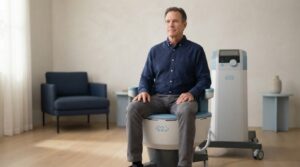
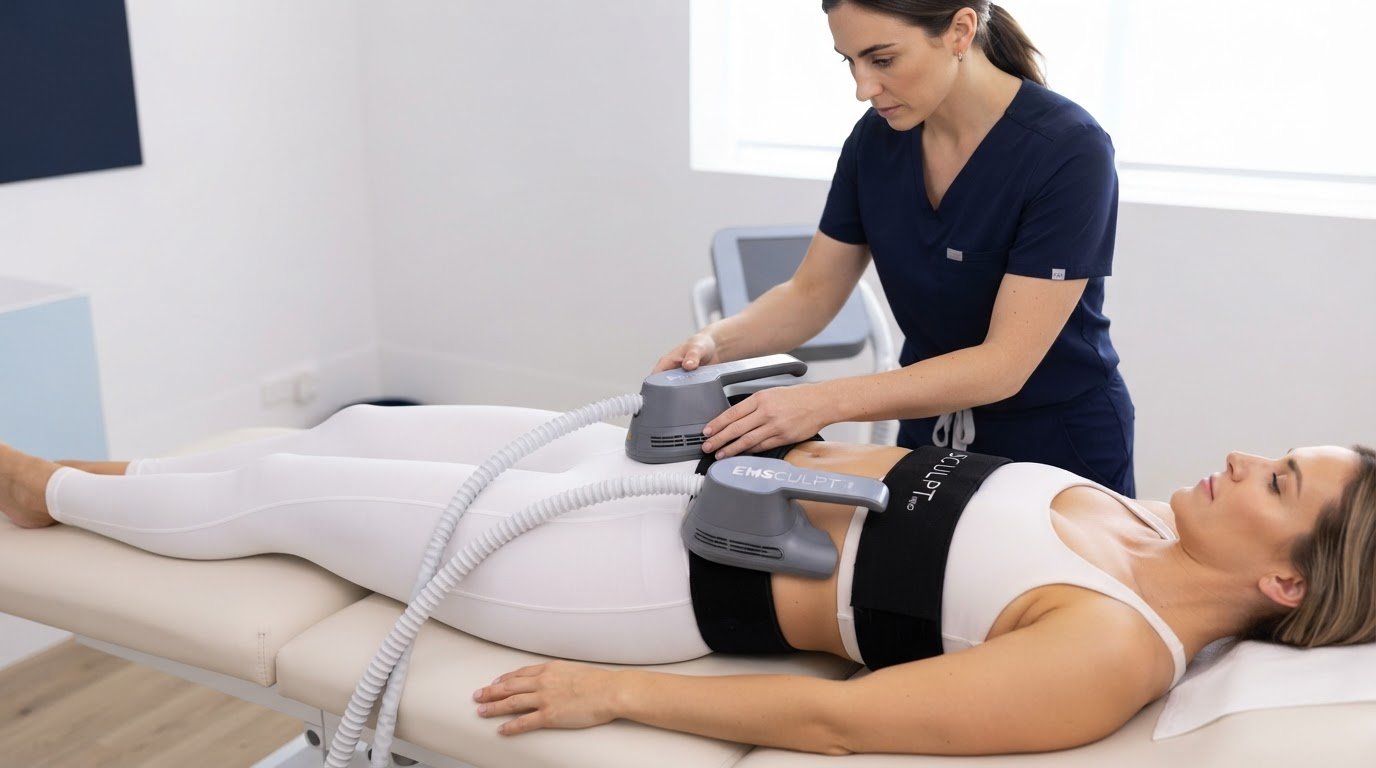
Non-surgical localized fat reduction may suit someone near a stable, healthy weight with a small area of fat that remains despite diet and exercise. Fat freezing, or cryolipolysis, targets fat in a treated area; it isn’t a weight-loss method, and results are generally more subtle than surgical fat removal. Fat-freezing treatments typically produce an average fat reduction of about 20% to 25% in treated areas.
Want a more defined contour without surgery? It helps to understand what treatment can and can’t change, how fat freezing works, and what side effects may occur before deciding whether it aligns with your goals.
This guide explains how non-surgical options differ, who may be a suitable candidate, and why localized contouring isn’t the same as losing weight. It also covers possible risks, including temporary discomfort, redness, swelling, or bruising, so you can consider the decision with clear expectations.
Key Takeaways
- Compare fat-freezing, heat-based, light-based, ultrasound, and injectable approaches by how they target tissue and which areas they treat.
- Learn why changes develop gradually after treatment and what influences the contouring process.
- Recognize health and treatment-area factors, including implants, metal, and skin conditions, that can affect suitability.
- Separate localized contouring goals from changes in overall weight and body composition.
- Understand which temporary effects may occur and which uncommon complications deserve attention.
Is non-surgical fat reduction a good option for me?
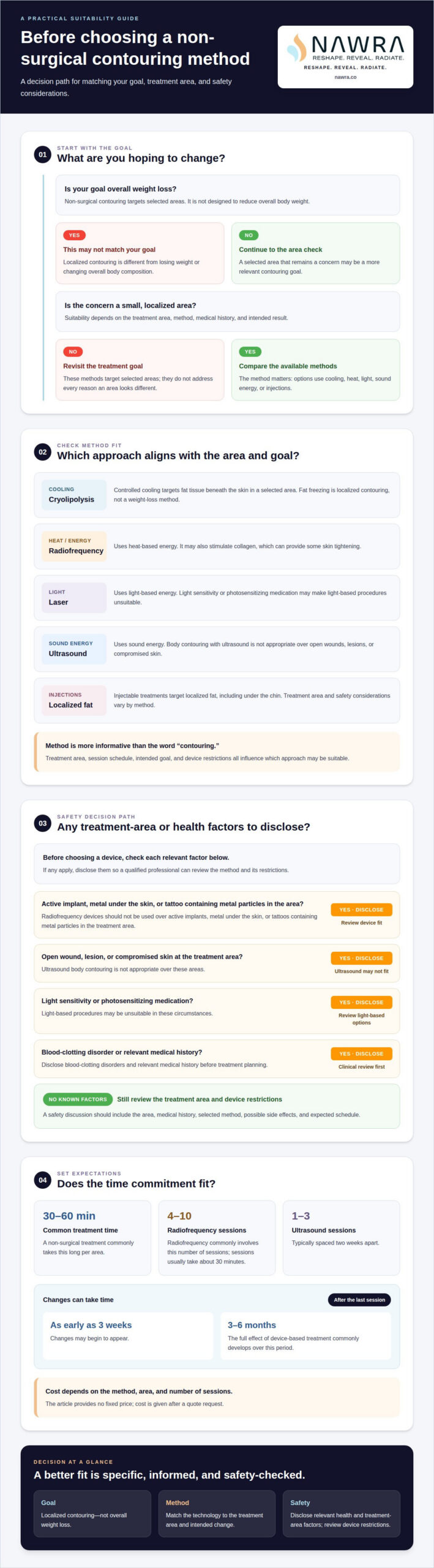
Suitability depends on the treatment area, method, medical history, and goal. Compare how each option works, how long sessions take, and what follow-up may involve.
Treatment Types and Approaches
Non-surgical contouring uses cooling, energy, or injections to target fat cells in selected areas. Cryolipolysis cools tissue; radiofrequency and laser treatments use heat or light-based energy. Ultrasound uses sound energy, while injectable treatments target localized fat, including under the chin. These methods differ in treatment area, session schedule, and safety considerations. Heat-based treatments may also stimulate collagen, which can provide some skin tightening. The right distinction is the method, not simply the word “contouring.”
Costs, Sessions, and Results Timing
Session length, treatment count, and the area being treated shape the overall commitment. A non-surgical treatment commonly takes 30-60 minutes per area, while radiofrequency sessions usually take about 30 minutes. Ultrasound treatments typically involve one to three sessions spaced two weeks apart; radiofrequency commonly involves four to ten sessions. Changes may appear as early as three weeks, while the full effect of device-based treatment commonly develops between three and six months after the last session. Cost depends on the method, area, and number of sessions, and is given after a quote request.
At-Home and Professional Treatments
At-home devices and professional treatments differ in how treatment is selected, applied, and monitored. A professional can assess the specific area, match a method to the intended goal, and account for device-related restrictions. For example, radiofrequency devices shouldn’t be used over active implants, metal under the skin, or tattoos containing metal particles in the treatment area. Home use doesn’t remove those considerations. Treatment planning also matters when an area needs a particular energy type or precise application.
Provider Qualifications and Safety
A safe treatment plan includes a review of the treatment area, relevant medical history, and the selected device’s restrictions. Before treatment, disclose active implants, metal beneath the skin, and blood-clotting disorders. Skin conditions also matter: ultrasound body contouring isn’t appropriate over open wounds, lesions, or compromised skin. Light-based procedures may be unsuitable with light sensitivity or photosensitizing medication. A qualified professional should explain the method, possible side effects, and expected schedule, then document the treatment plan. That discussion helps identify whether another approach is more suitable.
Cryolipolysis and fat freezing
Cryolipolysis, commonly called fat freezing, uses controlled cooling to target fat tissue beneath the skin. CoolSculpting is a well-known name associated with this cosmetic approach, while cryolipolysis describes the treatment method. The distinction matters: a brand name identifies a particular offering, while the method describes cooling used for body contouring. It targets a specific area, not overall weight or fitness. Diet and exercise remain separate from this localized procedure and its purpose.
During treatment, an applicator cools the selected area. The cooling affects targeted fat cells, which are then gradually cleared by the immune system over two to three months. Fat-freezing treatments typically produce an average reduction of about 20% to 25% in treated areas. That figure describes the treated area, not a percentage change in total body weight. The result develops progressively, so the immediate appearance after a session doesn’t show the final contour.
Treatment plans vary by method, treatment area, and individual goals. At NAWRA, ExoFreeze Cryo targets stubborn fat areas, while Emsculpt NEO combines radio-frequency heating and HIFEM electromagnetic energy to target fat and build muscle in the same session. These treatments aren’t liposuction, and they don’t address every reason an area looks different. A concern involving skin or muscle may call for a different approach.
Patience is part of the process. As the body clears treated fat cells over two to three months, changes emerge gradually rather than immediately. Exercise may remain part of a person’s broader wellness routine, but it doesn’t accelerate the treatment’s clearance process. A clinician can explain what the planned treatment targets and what changes to track in the treated area. Comparing the same area over time gives a clearer view than judging the result straight after cooling.
Fat freezing is one option within cosmetic contouring, not a universal answer. It centers on cooling; other approaches use different methods and may suit different treatment goals. For a broader wellness focus rather than localized fat freezing, ExoPod Full-Body Therapy is a separate offering, not a cryolipolysis treatment.
How non-surgical fat reduction works
Non-surgical treatments use different methods to target selected areas or support other goals. Emsculpt NEO combines radio-frequency heating and HIFEM electromagnetic energy to address fat and muscle in the same session. ExoFreeze Cryo uses controlled cooling with EMS for targeted stubborn fat areas. These non-invasive treatments aren’t liposuction and aren’t designed to reduce overall body weight. Sculpting isn’t weight loss.
With device-based non-invasive treatment, energy reaches tissue through the skin. Cryolipolysis, including CoolSculpting, uses controlled cooling; radiofrequency uses heat, while ultrasound uses sound energy. Non-invasive laser procedures use light-based energy. After some methods destroy fat cells, the lymphatic system clears them over the following weeks and months. Cells destroyed through non-invasive fat removal are permanently gone, though remaining fat cells can still change in size. The treatment area, method, and response shape the visible contour.
Laser-assisted liposuction is different because it is minimally invasive. A local anesthetic numbs the treatment site, and laser energy is used during the procedure. It should not be confused with non-invasive laser lipo, which applies light-based energy without the same minimally invasive approach. For example, an abdomen treatment using a non-invasive device targets tissue through the skin; laser-assisted liposuction involves a procedure at the treatment site. The terms sound similar, but the methods and recovery considerations differ.
Before choosing a treatment, clarify the area you want to address and the change you hope to measure. NAWRA starts with a clinical scan, then treatment and a follow-up measurement. DEXA Body Composition provides a region-by-region view of bone, fat, and lean tissue, including visceral fat, helping you assess body composition rather than expecting a treatment to change scale weight.
A treatment’s mechanism helps explain what it targets. Emsculpt NEO combines radio-frequency heating with HIFEM electromagnetic energy to address fat and muscle in the same session. ExoFreeze Cryo uses controlled cooling with EMS for targeted stubborn fat areas. Other NAWRA services address different goals, including recovery and body composition. These options aren’t interchangeable, so the treatment plan should reflect your priority.
Start by identifying your goal: a localized contour change, muscle stimulation, skin rejuvenation, or broader body-composition insight. Non-surgical treatments aren’t liposuction, and sculpting isn’t weight loss. NAWRA’s measurement-first process begins with a clinical scan before treatment and measures again afterward, so progress is assessed against your goal rather than assumed from appearance alone.
Possible side effects and rare complications
Before treatment, disclose implants, metal beneath the skin, medications, and blood-clotting disorders. During a session, the device targets the selected area; afterward, temporary skin effects or discomfort may occur.
Recovery depends on the method and treatment area. Many patients return to everyday activities immediately after non-invasive fat removal, but possible effects and rare complications still deserve attention.
Potential Side Effects
Commonly reported effects of non-invasive body-contouring devices include pain or discomfort, redness, swelling, bruising, and palpable nodules that aren’t visible. The exact experience can vary by method and treated area, such as the abdomen or thighs. These effects matter because they can affect comfort and how the skin feels after a session, even when there’s little downtime.
Injections for excess chin fat have a distinct recovery profile. Some people experience extreme swelling for as long as two weeks after injections. That duration is specific to this reported effect, not a standard recovery timeline for every treatment. A treatment discussion should cover the method, the area involved, expected effects, and how to report a concern after the procedure.
Complications and Risks
Treatment suitability depends on the method, area, and your health history. Before treatment, disclose active implants, metal beneath the skin, medications, blood-clotting disorders, and skin concerns. NAWRA starts each protocol with a clinical scan before treatment and measures again afterward, helping keep the process focused on your goals and body composition.
Light-based treatments may not suit people with light sensitivity or photosensitizing medications. Disclose active implants, metal under the skin, and blood-clotting disorders before treatment. These details help determine whether the proposed method and placement are appropriate. A device’s suitability depends on its energy type and the treatment area, so risks for one procedure shouldn’t automatically be applied to another.
Downtime and Aftercare Expectations
Downtime describes the time needed before resuming everyday activities. Most people can return to normal activities immediately after non-invasive fat removal, although redness, bruising, swelling, or discomfort may still be present. A prompt return to routine doesn’t mean the treatment has no side effects; it describes activity, not how the treated skin feels.
Follow the instructions for your specific treatment and track progress using the appropriate measurement. NAWRA’s process is to measure, treat, then measure again. DEXA Body Composition provides region-by-region information on bone, fat, and lean tissue, including visceral fat.
Non-surgical fat reduction versus weight loss
Localized fat reduction targets a selected area; weight loss changes overall body weight. These are different goals. A contouring treatment may affect the outline of an area without changing scale weight in the same way. Sculpting isn’t weight loss, and body contouring doesn’t replace a weight-loss program. Consider whether you’re focused on a specific area or broader body composition.
Think of localized contouring as an area-specific goal, not a weight-loss program. Emsculpt NEO combines radio-frequency heating and HIFEM electromagnetic energy to address fat and muscle in the same session. Neither is a substitute for weight management. Sculpting isn’t weight loss, and Cryo can’t fix loose skin.
A scale measures body weight, while DEXA Body Composition measures bone, fat, and lean tissue region by region, including visceral fat. These measurements answer different questions. NAWRA’s measurement-first process helps you track body composition before and after a treatment rather than treating scale weight as a measure of localized contour.
Fat-cell effects also differ from weight change. When a non-invasive treatment destroys fat cells, those treated cells are permanently gone. That doesn’t prevent future weight gain or changes elsewhere in the body. The distinction is practical: localized fat reduction through non-surgical treatment targets selected tissue, while longer-term body weight reflects broader factors. A temporary change in appearance immediately after a session also shouldn’t be confused with a gradual contouring result.
Choose your goal before choosing a treatment. Describe the area you want to address and whether your priority is localized contour, muscle stimulation, recovery, or body-composition insight. NAWRA begins every protocol with a clinical scan before treatment, then measures again. This helps align the treatment plan with your goal instead of assuming one option addresses every concern.
The takeaway is simple: fat reduction and weight loss answer different needs. Localized contouring may refine one area, but it doesn’t significantly change overall weight or replace diet and exercise. Use a scale to track weight, and assess contouring by changes in the treated area over time. Keeping those measures separate sets accurate expectations and helps prevent a local cosmetic treatment from being mistaken for a whole-body weight-loss solution.
NAWRA
NAWRA can help you put localized contouring goals in context with broader body-composition information. If you’re weighing a treatment decision, DEXA Body Composition offers a way to assess body composition, while EMSCULPT NEO, ExoPod Full-Body Therapy, and BOA Lymphatic Drainage address different wellness goals. These offerings aren’t fat-freezing treatments, so the first step is clarifying whether your priority is body-composition insight, muscle stimulation, or another aspect of wellness. That distinction keeps the next step aligned with your goal rather than assuming every treatment changes localized fat in the same way.
Contact NAWRA to discuss your goals and explore which available option may fit them.
Make your next step goal-led
Choosing a non-surgical approach to localized fat reduction starts with defining what you want to change and how you’ll measure progress. A focused contouring goal differs from broader body-composition insight or muscle stimulation. NAWRA’s process is to measure, treat, then measure again, so the next step reflects your priority.
NAWRA offers DEXA Body Composition, EMSCULPT NEO, and ExoPod Full-Body Therapy. These options address different wellness goals, so a conversation can help clarify which direction aligns with yours. Individual suitability depends on factors such as your treatment goals and health history.
Contact NAWRA to discuss your options and take a clear, informed next step toward your goals.
Frequently Asked Questions
Should You Consider Non-Invasive Fat Removal?
Consider non-surgical contouring if your goal is a localized change rather than overall weight loss. First identify the area you want to address and the result you hope to measure. Sculpting isn’t weight loss, and non-invasive treatments aren’t a substitute for surgery. NAWRA starts with a clinical scan to help align the treatment plan with your goal.
What Is Non-Invasive Body Contouring?
Non-invasive body contouring uses devices or other treatments to target selected areas without surgery. For example, a device may use cooling, heat, light, or ultrasound energy. These methods differ from treatments focused on muscle or skin. Clarify what tissue and area a proposed treatment targets, then assess whether that matches your goal. “Body contouring” describes different methods, not one uniform procedure.
What Is Non-Surgical Fat Removal?
Non-surgical localized fat reduction refers to non-invasive treatments intended to address selected areas. At NAWRA, ExoFreeze Cryo uses controlled cooling with EMS for targeted stubborn fat areas, while Emsculpt NEO combines radio-frequency heating and HIFEM electromagnetic energy to address fat and muscle in the same session. These are distinct approaches, so the process starts with a clinical scan and a treatment plan matched to your goal.
Are the Results Similar to Those Seen With Liposuction?
No. Non-invasive treatments aren’t a substitute for surgery, and they shouldn’t be expected to produce the same results as liposuction. Emsculpt NEO and ExoFreeze Cryo are non-invasive options with different purposes and technologies. Set expectations around the specific treatment area and your goal. Sculpting isn’t weight loss, and Cryo can’t fix loose skin.
How Can the Results Be Permanent?
NAWRA’s measurement-first process assesses body composition before treatment and measures again afterward. DEXA Body Composition measures bone, fat, and lean tissue region by region, including visceral fat. These measurements provide information about body composition, not a guarantee of a particular contour or body shape. Individual results vary and are not guaranteed.
How Do I Ensure a Safe Experience When Choosing a Non-Surgical Body Sculpting Procedure?
Share your medical history, medications, implants, metal beneath the skin, and skin concerns before treatment. At NAWRA, every protocol starts with a clinical scan, followed by treatment and another measurement. This measurement-first process supports decisions based on your goals and body composition. These services have not been evaluated by the FDA and are not intended to diagnose, treat, cure, or prevent any disease. NAWRA serves Los Alamitos, Cypress, Cerritos, Long Beach, Seal Beach, La Palma, Buena Park, Lakewood, Anaheim, Norwalk, Irvine, Laguna Niguel, Newport Beach, Huntington Beach, Bellflower, Tustin, Fullerton, and Yorba Linda.
What Non-Surgical Treatments Reduce Localized Fat?
NAWRA offers Emsculpt NEO, which combines radio-frequency heating and HIFEM electromagnetic energy, and ExoFreeze Cryo, which uses controlled cooling with EMS for targeted stubborn fat areas. They have different purposes and mechanisms, so the right approach depends on your goal and treatment area. Every protocol starts with a clinical scan, followed by treatment and another measurement.
How Do Cryolipolysis, Laser Lipolysis, Radiofrequency, and Ultrasound Fat Reduction Compare?
Emsculpt NEO combines radio-frequency heating with HIFEM electromagnetic energy to address fat and muscle in the same session. These non-invasive methods have different targets and aren’t interchangeable. NAWRA’s process begins with a clinical scan before treatment, then measures again, giving you a way to assess progress against your goal.