

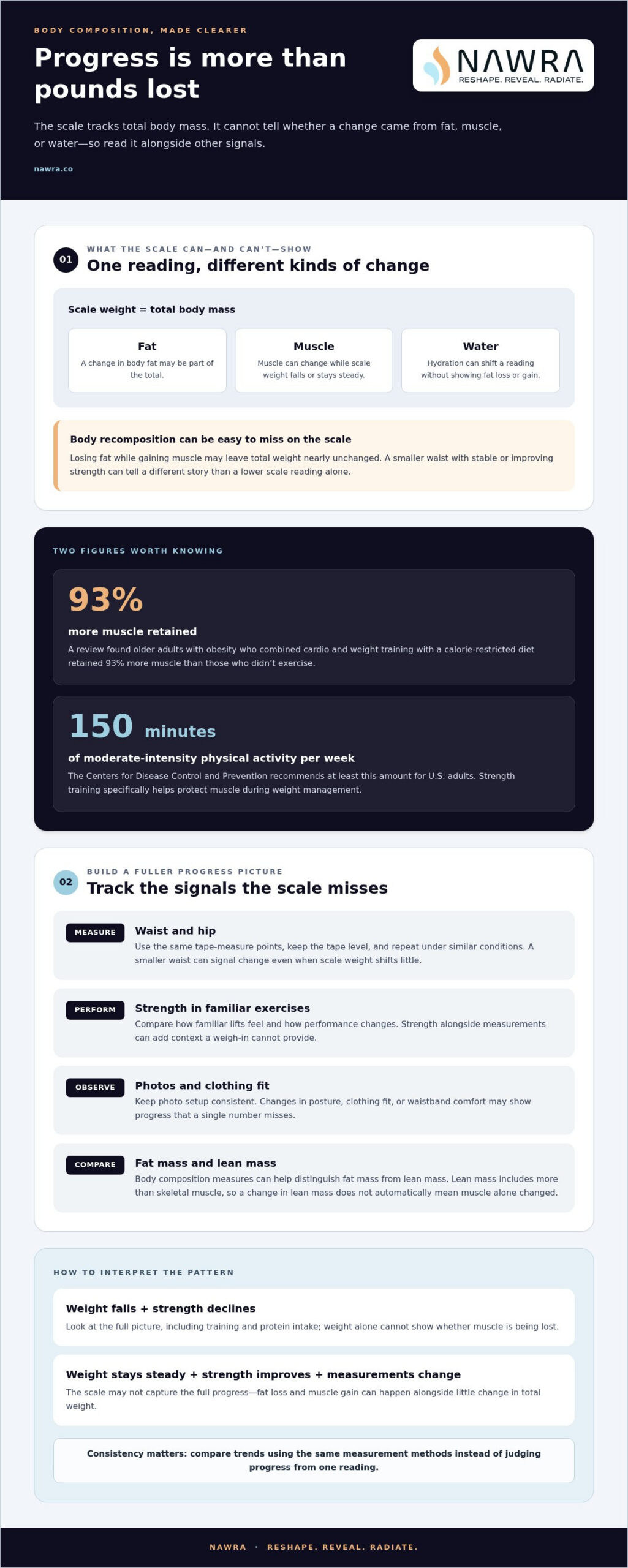
The scale can fall while you lose muscle, or stay steady while you lose fat and gain muscle. That’s the key distinction in body composition vs. weight loss: weight loss tracks total body mass, while fat loss tracks one part of it. The number alone can’t show what changed.
If you weigh yourself consistently, it makes sense to look for progress on the scale. But water, food, and exercise can shift your weight, while strength gains or changes in how your clothes fit may tell a different part of the story.
This guide explains how weight loss differs from fat loss, what body composition measurements can reveal, and how strength training and protein support muscle retention during weight management. You’ll also learn how to read scale changes alongside other indicators, so progress means more than pounds lost.
Key Takeaways
- Scale weight reflects total body mass, not whether changes came from fat, muscle, or water.
- Track trends alongside waist measurements, progress photos, and physical performance for a fuller view of change.
- Body composition measures can help distinguish fat mass from lean mass and provide context a traditional scale can’t.
- Strength training and adequate protein can support muscle preservation during weight management.
- Consistent measurement methods make it easier to interpret progress and adjust your approach with better information.
What’s the Difference Between Weight Loss and Fat Loss?
Weight loss is a change in total body mass; fat loss is a reduction in body fat. Understanding body composition vs. weight loss means looking beyond the scale to see what has changed.
Body recomposition improves the ratio of muscle to fat, even when total weight changes slowly. It doesn’t always require a calorie deficit: a deficit can support fat loss, while strength training and adequate nutrition support muscle retention or growth.
Preserving Muscle During Weight Loss
Muscle preservation means reducing body fat while limiting muscle loss during calorie restriction. It matters because the scale can drop as muscle mass declines, making weight alone an incomplete measure of progress. Crash dieting or excessive cardio may lead to losing muscle along with fat. A more sustainable approach pairs a manageable calorie deficit with strength training and adequate protein.
For example, a smaller waist with stable or improving strength can suggest a different change than a lower scale reading paired with declining performance. Adequate protein may help support muscle retention during weight loss. The right intake and training plan should account for a person’s needs and activity.
Understanding Lean and Fat-Free Mass
Fat-free mass includes everything that isn’t fat, while lean body mass generally refers to muscle, bones, organs, and water. Skeletal muscle is attached to bones and supports movement and strength. These terms describe related but distinct parts of body composition, so a change in lean mass doesn’t automatically mean skeletal muscle alone has changed.
That distinction matters during weight loss. A person may lose water or other lean tissue as well as fat, and a total-weight reading won’t separate those changes. Muscle also supports metabolism, insulin sensitivity, strength, and function as people age. Tracking lean mass alongside fat mass can help show whether a weight change reflects the desired shift in body composition.
Losing Fat While Building Muscle
Body recomposition means shifting toward less fat and more muscle, even if the scale barely moves. A calorie deficit can help reduce fat, but it isn’t required for every improvement in the muscle-to-fat ratio. The balance depends on calorie intake, exercise, protein, and the body’s response to strength training.
For a practical example, someone may lose fat while gaining muscle and see little change in total weight. Strength training provides a stimulus for muscle, while protein supplies building material. A review found that older adults with obesity who combined cardio and weight training with a calorie-restricted diet retained 93% more muscle than those who didn’t exercise. That finding illustrates why training can matter during a deficit.
Sustainable progress focuses on reducing excess fat while preserving lean muscle and hydration. The Centers for Disease Control and Prevention recommends that U.S. adults get at least 150 minutes of moderate-intensity physical activity per week. That activity can support overall movement habits, while strength training specifically helps protect muscle during weight management.
Use more than one signal to interpret results. Compare body weight with strength, clothing fit, and body composition measurements over time. If weight falls but strength also declines, consider whether calorie restriction or exercise is affecting muscle. If weight stays stable while strength improves and measurements change, the scale may not capture the full progress.
Are Scales Accurate at Measuring Weight Loss?
A scale accurately records total weight, but it can’t identify what that weight consists of. Focusing only on weight or body-fat percentage can obscure changes in muscle, hydration, strength, or waist size.
Tracking Changes Beyond the Scale
Track progress with measurements, photos, and physical performance to spot changes a scale misses. Use the same tape-measure points and photo setup each time, then compare strength in familiar exercises. For example, improving a lift while waist measurements decrease offers context that a single weigh-in can’t provide.
Record these measures alongside your program instead of relying on memory. A progress photo can show changes in posture or clothing fit, while exercise performance reflects what your body can do. If you’re losing weight but struggling to maintain strength, review the full picture, including your training and protein intake.
Measuring Waist and Hip Changes
Waist and hip measurements track changes in body size at specific locations. Measure at the same points each time, keep the tape level, and use similar conditions for every reading. A smaller waist or looser waistband can signal fat loss, even when the scale changes little.
Compare waist and hip readings rather than treating either as a complete result. For example, a changing waist measurement alongside stable clothing fit at the hips can reveal a pattern that scale weight alone misses. Consistent technique matters: changing tape placement makes comparisons less useful, even when your body hasn’t changed.
Limits and Risks of Scale-Based Tracking
A scale measures total body weight, not its components. Daily readings can shift with hormones, food, and exercise, so a higher number after a meal doesn’t establish fat gain. Likewise, a lower number doesn’t prove that you lost only fat. Interpret the trend alongside other measures instead of judging progress from one reading.
Relying only on weight can make muscle loss or reduced strength easy to miss. Body-fat percentage has its own limitation: it doesn’t describe physical performance or explain every change in body mass. For example, two people can have the same body-fat percentage but differ in strength, measurements, and overall composition.
Wellness Measures Beyond Weight
Physical performance, waist measurements, photos, and clothing fit add useful context to weight tracking. Note how familiar exercises feel and whether you’re maintaining strength during a weight-loss program. These measures don’t replace body composition data, but they can reveal changes in function and fit that a scale can’t show.
Choose a small set of measures you can repeat consistently, then compare them over time. A body-composition assessment can provide more detail about fat and lean mass; a body composition assessment can complement measurements and performance tracking. Together, these signals help distinguish a change in total weight from a broader shift in body composition.
Fat mass percentage and visceral adipose tissue
Body-fat percentage describes the share of body mass made up of fat, while visceral adipose tissue refers to fat stored around internal organs. These measure different aspects of composition, so neither figure alone captures the full difference between fat mass and lean body mass.
Fat Mass, Lean Mass, and Body Fat Percentage
Body fat mass includes essential fat, which supports bodily functions, and stored fat. Lean body mass includes muscle, bones, organs, and water. These categories help explain why two people at the same body weight may have different proportions of fat and lean tissue.
Weight loss can reduce fat mass, lean mass, or both. Body-fat percentage helps describe the balance between fat and non-fat tissue, but it doesn’t identify exactly which lean tissues have changed. That distinction matters when assessing whether a change in body mass reflects fat loss while maintaining muscle.
How BMI Fits Into the Picture
Body mass index, or BMI, compares weight with height; it doesn’t directly measure body fat percentage or show where fat is stored. For most people, a healthy BMI value is between 18.5 and 24.9. BMI can provide one screening measure, but body composition adds information about fat mass and lean mass.
To calculate BMI using pounds and inches, multiply weight in pounds by 703, then divide by height in inches twice. For instance, the calculation uses the same height value both times. Using BMI alongside body composition measures can give a fuller view than either figure alone, especially when someone’s muscle mass affects total weight.
Why Visceral Adipose Tissue Matters
Visceral fat is associated with increased risks of heart disease, diabetes, and certain cancers. Unlike fat stored beneath the skin, it surrounds internal organs. A total body weight reading can’t show its distribution, and body-fat percentage alone may not reveal where fat is concentrated.
Body composition analysis can track visceral fat levels alongside fat percentage, lean muscle mass, hydration status, and metabolic indicators. BIA combined with waist circumference measurements has been reported to estimate visceral adipose tissue with 97% of the accuracy of MRI. This estimate adds context, but it doesn’t turn a measurement into a diagnosis.
Interpreting Measurements Together
Healthy body-fat percentage ranges vary with age and sex, so one percentage shouldn’t be treated as a universal target. The measurement method also matters. Results are most useful when interpreted alongside other indicators, such as waist circumference, BMI, and lean mass.
When evaluating progress, compare like with like. Review body-fat percentage and waist measurements together, then consider changes in lean mass and body weight. If BMI suggests one pattern while body composition shows another, the difference may reflect muscle, fat distribution, or both. This combined view is more informative than focusing on a single number during weight loss.
Strength training and adequate protein
Strength training and protein work together to support muscle during weight management. A calorie deficit can help create conditions for fat loss, but aggressive restriction without resistance exercise can also reduce muscle. The goal isn’t simply a lower number on the scale. It’s preserving strength and lean tissue while body fat changes.
The Centers for Disease Control and Prevention recommends that U.S. adults do muscle-strengthening exercise at least 2 days each week. Regular resistance work gives muscles a reason to adapt and maintain function. A practical approach is to train major muscle groups consistently, then track changes in the exercises you perform. If familiar movements become harder as weight falls, review the whole pattern, not just the scale.
Protein supplies amino acids used to build and maintain muscle. One listed target for active adults focused on muscle preservation is 0.7 to 1 gram per pound of bodyweight per day. Another guideline states that consuming around 0.8 grams per kilogram of body weight per day can support muscle retention and fat loss while dieting. These targets use different units and contexts, so avoid treating them as interchangeable without converting units.
Protein intake is one of several factors in preserving muscle. Total calorie intake, training stimulus, activity, and the pace of weight loss also shape the result. For example, a person who reduces calories sharply but skips strength training removes one important muscle-preserving stimulus. Aggressive dieting without strength training can cause 25-40% of weight loss to come from muscle.
Study findings offer context, not a universal prescription. In a four-week energy-deficit study, overweight recreationally active men in the higher-protein group consumed 2.4 g of protein per kilogram of body weight per day. The lower-protein group consumed 1.2 g per kilogram per day. Those results describe specific study groups, not an automatic target for every person losing fat.
Higher-protein diets may also support weight maintenance after a loss phase. Studies lasting 6 to 12 months found that a high-protein diet may help prevent weight regain after weight loss. In practice, maintaining protein intake alongside regular strength work helps keep muscle preservation in the plan, rather than treating it as an afterthought. Track training performance and body-composition measures to see how your approach is working.
Body composition monitoring and weight-loss progress
Accurate measurement depends on the method and consistent conditions. At home, bioelectrical impedance analysis estimates fat and lean mass; in a clinic, DEXA measures bone density, fat mass, and lean mass.
Monitoring Body Composition at Home
Home monitoring is most useful for tracking a consistent trend, not treating each reading as an exact measure. Bioelectrical impedance analysis, or BIA, estimates body composition using electrical signals, and results can vary with hydration and equipment quality.
For more comparable readings, use the same device under similar conditions each time. Record the result with the date, weight, and any relevant changes in hydration or routine. For example, comparing readings taken after exercise with readings taken at rest can make a trend harder to interpret. Pair BIA estimates with waist measurements, photos, and strength records instead of relying on one device output.
Home measurements can still show whether a program is moving in a consistent direction. If estimated fat mass shifts while weight stays similar, review the result alongside clothing fit and exercise performance. A single BIA reading doesn’t explain why a change occurred, so compare repeated measurements made with the same device and method.
Measuring Body Composition in a Clinic
Clinic-based measurement provides a structured assessment using equipment designed to measure body composition. DEXA scans measure bone density, fat mass, and lean mass, giving a more detailed view than total body weight. NAWRA offers DEXA Body Composition for people seeking more detail while monitoring weight-loss progress.
Skinfold-caliper estimates offer another method, but results depend on the skill of the person taking the measurements. Comparisons over time are most informative when the same method is used consistently. DEXA results can help distinguish a change in fat mass from a change in lean mass, while the scale records only total body mass.
Neither a home device nor a clinic assessment tells the whole story. Interpret measurements alongside nutrition, exercise, waist changes, and physical performance. For example, a change in measured fat mass alongside maintained strength gives a fuller picture than weight alone. Cardio and moderate activity can contribute to a weight-management program, while body composition measurements show how fat and lean tissue change.
Choose a method based on the question you need answered. Home BIA can support ongoing trend tracking; a DEXA assessment can provide separate fat, lean, and bone measurements. If you want a more detailed baseline for tracking body composition, schedule a DEXA Body Composition scan at NAWRA.
NAWRA: EMSCULPT NEO
NAWRA offers EMSCULPT NEO, a non-invasive option for muscle stimulation and body sculpting. It may suit you if your goals include more than tracking pounds and you’re considering an aesthetic treatment alongside broader weight-management efforts. It doesn’t replace nutrition, exercise, or progress monitoring.
For a clearer picture of changes in fat and lean mass, DEXA Body Composition provides measurements that add context to your goals. An assessment and a body-sculpting treatment serve different purposes: one measures composition, while the other focuses on muscle stimulation. Knowing the difference can help you choose the support that fits your priorities.
Contact NAWRA to discuss EMSCULPT NEO and body composition tracking.
Set a Progress Measure That Fits Your Goal
Start by deciding what progress means to you. Is your priority improved strength, a change in body size, or a clearer picture of your overall composition? Choose measures that connect directly to that goal, then review them consistently. A body composition vs. weight loss perspective can help you avoid treating one changing number as the entire result.
Bring a specific question to your next wellness conversation. You might want to understand how a body composition assessment could inform your goals, or whether EMSCULPT NEO aligns with your interest in muscle stimulation. NAWRA offers these as distinct services, not substitutes for tracking your own progress.
For a considered next step, contact NAWRA to learn more. Keep your goals clear, your measures relevant, and your approach grounded in the progress that matters to you.
Frequently Asked Questions
Can you lose fat without losing weight on the scale?
Yes. If fat mass decreases while muscle mass increases, total body weight may stay nearly unchanged. Your clothes may fit differently even if the scale shows a similar reading. Compare measurements and physical performance alongside weight to spot this pattern. A stable number doesn’t prove that nothing has changed; it simply can’t show which tissues account for your body mass.
How long does real fat loss take?
Fat loss takes time, and the pace depends on factors such as calorie intake, activity, and how consistently you follow a plan. A commonly described safe rate is 0.5 to 1 pound per week. Short-term scale changes can also reflect water, food, or exercise, so judge progress across repeated measurements rather than expecting each weigh-in to reflect fat change.
How much protein do I need to lose fat without losing muscle?
A general target that can support muscle retention during dieting is around 0.8 grams of protein per kilogram of body weight per day. That’s a starting reference, not a precise prescription for every person. For example, calculate your body weight in kilograms, multiply by 0.8, then plan meals that distribute protein across the day while supporting your overall nutrition needs.
What Is Body Composition?
Body composition describes the proportions of fat, muscle, bone, and water that make up your body. It helps explain why two people with similar body weights can have different builds or physical capacities. Think of it as a breakdown of body mass rather than a single total. A body composition assessment can add context when weight alone doesn’t explain changes in fit or performance.
Why do I look worse after losing weight?
Weight loss can include muscle as well as fat, and reduced muscle can change your body’s shape or firmness. The amount and distribution of fat loss also affect appearance; exercise can’t selectively remove fat from one chosen area. If your appearance concerns you, compare photos taken under similar conditions with changes in strength and fit. A lower scale reading alone can’t identify what has changed.
What is the difference between body composition and weight loss?
Weight loss means a reduction in total body mass; body composition describes what that mass consists of. The distinction matters because lower weight can result from losing fat, muscle, water, or a combination. For example, a person may lose fat while maintaining muscle and see only a modest change on the scale. Looking at body composition vs. weight loss helps clarify whether the change matches your goal.
How can you lose fat while maintaining or gaining muscle?
Pair a calorie deficit that supports fat loss with regular strength training and adequate protein. Avoid making the deficit so aggressive that training quality or recovery suffers. Follow a repeatable exercise plan and track whether familiar movements stay steady or improve. Fat loss and muscle gain can occur together, but results depend on factors such as starting fitness, nutrition, and training consistency.
How much protein and strength training support fat loss and muscle retention?
Around 0.8 grams of protein per kilogram of body weight per day can support muscle retention during dieting. The Centers for Disease Control and Prevention recommends that U.S. adults do muscle-strengthening exercise at least 2 days each week. Treat these as practical reference points, then consider how your meals, training schedule, and performance fit together as you pursue fat loss.