A stronger pelvic floor isn’t always the first goal; a well-functioning one is. To strengthen the pelvic floor after pregnancy in Seal Beach, start by understanding how the muscles contract, relax, and respond to everyday demands, then use that assessment to guide recovery.
It makes sense to think of Kegels as the answer. But pelvic floor muscles need coordination as well as strength, and symptoms can call for a closer look before adding exercises. The pelvic floor supports the bladder, uterus, and bowel, so changes may show up as leakage, pressure, pain, or difficulty controlling bowel movements.
This guide explains how the pelvic floor works, what preparation for childbirth and postpartum recovery can involve, and which symptoms warrant assessment. You’ll also learn how a professional evaluation can distinguish weakness from other concerns, so your next step is based on function rather than guesswork.
Key Takeaways
- Understand how the pelvic floor supports the bladder, uterus, and bowel, and why postpartum changes can affect its function.
- Learn why pelvic floor training depends on coordinated relaxation as well as contraction, not simply doing more Kegels.
- Recognize symptoms such as leakage, pelvic pressure, pain, or bowel-control changes that may warrant professional assessment.
- See how an examination can help identify pelvic floor function and guide appropriate next steps for recovery.
- Explore how NAWRA’s wellness offerings may complement broader postpartum health goals when they fit your needs.
What Is the Pelvic Floor?
After pregnancy, pelvic floor training means restoring coordination, strength, and relaxation, not simply repeating contractions. Kegels involve tightening and releasing these muscles; physical therapy adds assessment and feedback when symptoms or movement patterns need closer attention. A provider can tailor an approach to your symptoms, birth recovery, and goals, including returning to exercise.
- Start with a functional assessment. A pelvic floor physical therapist can assess how well the muscles contract and relax, then screen your readiness for activities such as running and jumping. This matters because weakness is not the only possible issue: a pelvic floor that stays too tight may feel worse with repeated strengthening exercises. An assessment helps guide the next step instead of assuming every postpartum concern needs more Kegels.
- Compare exercises with supervised therapy. Kegels involve tightening and relaxing pelvic floor muscles, and regular practice can support bladder control. Physical therapy adds individualized assessment and may use biofeedback, with sensors monitoring muscle activity. This can help a provider observe whether the muscles engage and release during training. Exercises need no special equipment, but feedback can be useful when technique or symptoms remain unclear.
- Let a provider set the Kegel dose. One postpartum pattern begins with a 3-second squeeze, followed by 5 to 10 seconds of relaxation. It uses 10 repetitions per session, with 3 to 8 sessions a day; the hold can increase by 1 second each week until it reaches 10 seconds. A provider can adjust the plan to your muscle response and symptoms, rather than treating that schedule as a universal prescription.
- Find focused assessment near Seal Beach. Look for a pelvic floor physical therapist who evaluates postpartum symptoms and screens readiness to return to activities such as running and jumping. A clinician involved in your postpartum care can help identify an appropriate referral. Ask about assessment of contraction, relaxation, and symptom triggers, so the plan addresses function rather than relying on exercise volume alone.
- Progress gradually and watch for warning signs. Avoid heavy lifting and high-impact exercise until a doctor says it’s okay. Stop any exercise that causes pain and discuss it with a doctor. Increased leakage, pelvic pressure, or discomfort during movement also deserves attention. A provider can assess whether exercise load, technique, or pelvic floor tension needs to change before you progress.
- Include the abdominal wall in recovery. Diastasis recti, or abdominal separation, can affect how the core manages pressure during movement. A provider can assess abdominal function and help select appropriate core exercises, rather than assuming every abdominal workout suits postpartum recovery. If an exercise causes pain or increases pelvic symptoms, for example, pause it and seek guidance before progressing to harder movements.
Pelvic floor muscle training is the gold standard for preventing and rehabilitating pelvic floor issues. A cited study reports about 30% of women perform Kegel exercises incorrectly without guidance; they need no special equipment.
Preparing the pelvic floor for childbirth and postpartum recovery
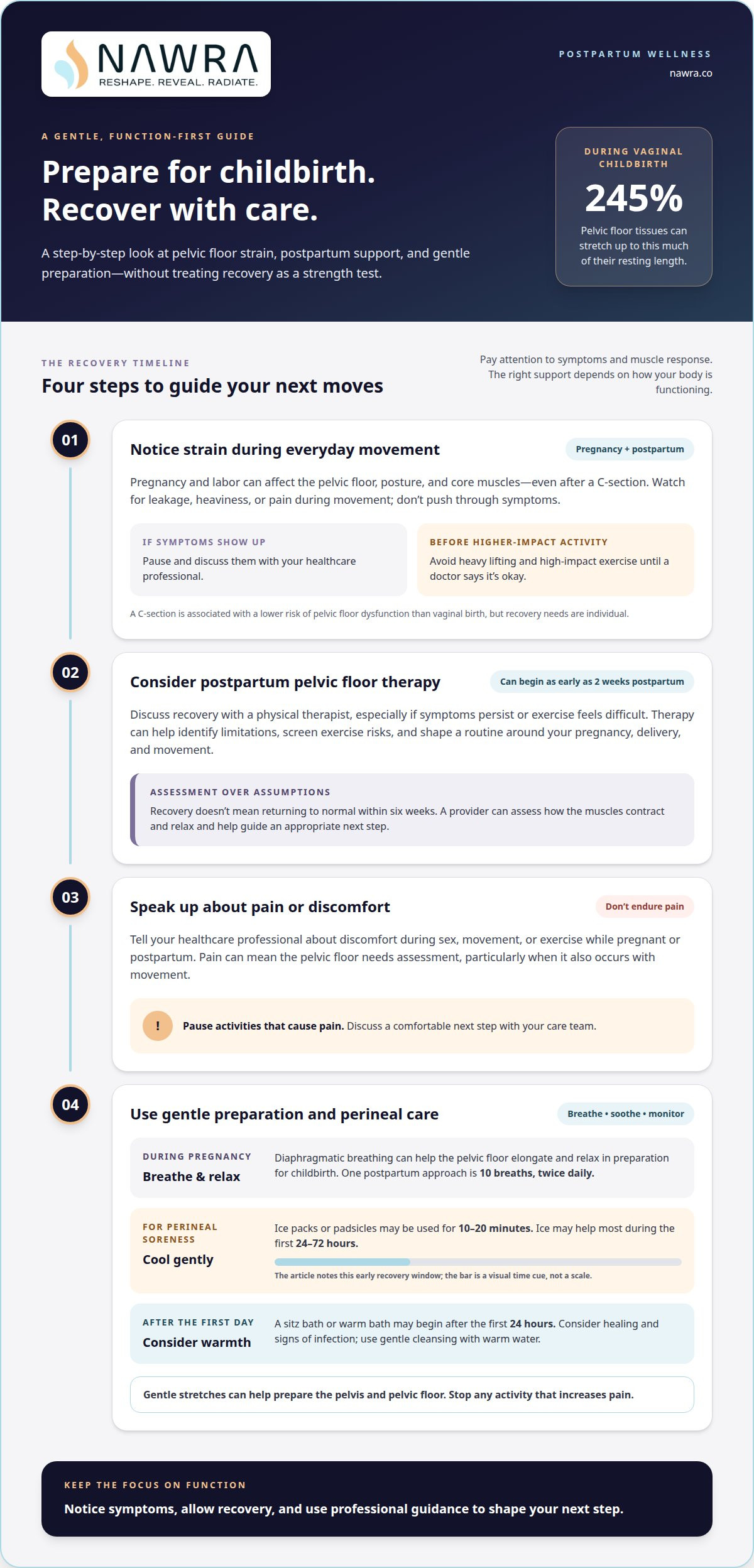
Preparation means managing pressure, movement, and recovery, not treating childbirth as a strength test. Use the steps below to identify strain and choose gentle support.
-
Address Pelvic Floor Strain
Notice how everyday tasks affect your pelvic floor during pregnancy and after delivery. Pregnancy and labor can affect the pelvic floor, posture, and core muscles, even after a C-section, which is associated with a lower risk of pelvic floor dysfunction than vaginal birth. Watch for leakage, heaviness, or pain during movement. Don’t push through symptoms or return to heavy lifting and high-impact exercise before a doctor says it’s okay.
-
Seek Postpartum Pelvic Floor Therapy
Discuss pelvic floor recovery with a physical therapist, especially if symptoms persist or exercise feels difficult. Recovery doesn’t mean returning to normal within six weeks; pelvic floor therapy can begin as early as two weeks postpartum. A physical therapist can screen exercise risks during pregnancy, identify limitations, and help shape an appropriate routine. Personalized care matters because each pregnancy and delivery affects movement differently.
-
Address Sexual Discomfort
Tell your healthcare professional about pain or discomfort during sex while pregnant or postpartum, rather than treating it as something to endure. Pain can mean the pelvic floor needs assessment, particularly if it also occurs during movement or exercise. A provider can consider your symptoms alongside recovery and muscle function. Pause activities that cause pain and discuss a comfortable next step with your care team.
-
Use Gentle Preparation and Perineal Care
Practice diaphragmatic breathing during pregnancy: it can help the pelvic floor elongate and relax in preparation for childbirth. During postpartum recovery, one approach is 10 breaths twice daily. For perineal soreness after delivery, ice packs or padsicles can be used for 10-20 minutes; ice may help most during the first 24-72 hours. A sitz bath or warm bath may begin after the first 24 hours, while considering healing and signs of infection. Use gentle cleansing with warm water, and stop any activity that increases pain.
During vaginal childbirth, pelvic floor tissues can stretch up to 245% of their resting length. This provides context for preparing the pelvis and pelvic floor with gentle stretches rather than treating preparation as a strength test. Suggested stretches include cat/cow, child’s pose, happy baby pose, deep squats, figure 4, and hip internal rotation stretching. These movements are suggested to help prepare the pelvis and pelvic floor for childbirth, and can be considered alongside breathing and attention to symptoms.
Postpartum recovery should not be expected to mean returning to normal within 6 weeks. Pelvic floor recovery with physical therapy can begin as early as 2 weeks postpartum, so support need not wait until a later point in recovery. After childbirth, ice packs, gentle cleansing with warm water, and warm sitz baths may help care for a sore or swollen perineum. The class also covers care for perineal or cesarean scar tissue to help prevent adhesions, discomfort, or tightness.
Pelvic floor anatomy and function
Think of the pelvic floor as a coordinated muscle group, not a single muscle. Its position at the base of the pelvis helps support pelvic organs and manage pressure during daily activities.
- Map the structures it supports. The pelvic floor supports the bladder, uterus, and bowel. These organs rely on muscles and connective tissues in the pelvis for support. The bladder stores urine, while the bowel moves waste through the body. Pelvic floor function is connected to both processes and to support for the uterus. This anatomy helps explain why symptoms can involve more than one bodily function.
- Consider how the muscles coordinate. Pelvic floor muscles need to contract and relax at the right times. A contraction helps close the openings used for urination and bowel movements; relaxation allows those functions to occur. Kegels are intended to train tightening and release, not constant gripping. If the muscles cannot relax, repeated contractions may not address the underlying coordination problem. A physical assessment can help distinguish muscle activity from the symptoms it may cause.
- Connect support with everyday pressure. Coughing, lifting, and changing position all alter pressure through the abdomen and pelvis. The pelvic floor responds as part of this system, alongside the abdominal muscles and breathing. A provider may ask how symptoms change during a particular movement, such as lifting a child or standing from a chair. That example connects anatomy to function without assuming a symptom has only one cause.
- Recognize what prolapse means. Pelvic organ prolapse refers to pelvic organs moving downward from their usual support. You may notice vaginal heaviness or a bulge, but those sensations alone do not establish a diagnosis. The bladder, uterus, or bowel can be involved. Describe the location and timing of symptoms to a clinician, including whether pressure appears after standing or during activity. An assessment helps clarify which support structures may be involved.
- Track function across different body states. Pelvic floor symptoms may be relevant during pregnancy, postpartum recovery, or a menstrual period. Note examples such as urinary leakage, difficulty controlling bowel movements, pelvic pressure, or pain, and when they occur. A provider can consider those details alongside muscle coordination and support. This gives a more useful picture than judging pelvic health by contraction strength alone, since effective function includes both support and release.
Signs of pelvic floor dysfunction
Ask a doctor or pelvic floor physical therapist to evaluate symptoms such as urinary or fecal incontinence, vaginal heaviness, a bulge, pelvic pain, or bowel-control problems. Seek medical care for heavy bleeding, severe pelvic pain, difficulty controlling bladder or bowel movements, or signs of infection after childbirth.
- Record bladder and bowel changes. Note examples such as urine leaking during a cough, difficulty holding gas, or trouble controlling a bowel movement. Record when each symptom appears, including during exercise, lifting, or daily tasks. This pattern gives a doctor or physical therapist concrete details to assess. Don’t dismiss repeated leakage as simply part of postpartum recovery, especially if it limits normal activities or makes you avoid movement.
- Pay attention to vaginal pressure. A feeling of heaviness, pressure, or a bulge in the vagina can be a sign of pelvic floor dysfunction. Note whether the sensation appears during standing, walking, or another activity, and whether it changes with position. These observations don’t diagnose prolapse, but they help a clinician understand how symptoms affect daily function and which assessment may be appropriate.
- Track pain by activity. Record pain during movement, exercise, or intercourse, including the activity and where discomfort occurs. Pain may relate to pelvic floor function or healing tissue, so don’t force an exercise or sexual activity that causes discomfort. Share specific examples with your doctor or physical therapist. A clear account helps distinguish a symptom pattern from general soreness.
- Notice how symptoms respond to effort. Write down whether leakage or pressure occurs during a cough, while lifting, or when returning to exercise. Note whether changing your breathing or posture changes the symptom. For example, record whether it happens when standing straight or bending to pick something up. Stop activities that cause pain, and discuss persistent or worsening symptoms with a clinician.
- Seek assessment when symptoms interfere. Urinary or fecal incontinence, pelvic heaviness, a vaginal bulge, pain during movement or intercourse, and bowel-control problems are reasons to consider evaluation by a pelvic floor physical therapist. These symptoms deserve attention when they affect exercise, daily routines, or comfort. Describe each symptom plainly, including how often it occurs and which activity triggers it.
- Follow up if progress stalls or urgent signs appear. If Kegels have not improved symptoms after 3 or 4 months, talk with a doctor. Seek prompt medical attention after childbirth for heavy bleeding, severe pelvic pain, difficulty controlling bladder or bowel movements, or signs of infection. These concerns call for medical evaluation, not simply more repetitions or a return to exercise.
Pelvic floor examination and assessment
A useful assessment connects symptoms to muscle function, pressure, and movement. For people seeking to strengthen the pelvic floor after pregnancy in Seal Beach, a physical therapist can use health history, observed movement, and muscle feedback to guide care.
- Describe the problem in practical terms. Tell the physical therapist what happens, when it happens, and which activity brings it on. For example, note leakage during a cough, pressure after standing, or discomfort during exercise. Include how symptoms affect daily tasks and whether they change with position. These details direct the assessment toward your priorities instead of a generic exercise routine.
- Review pregnancy, delivery, and recovery. Share relevant pregnancy and birth details, including whether you had a vaginal or C-section delivery. Explain when symptoms began and how they have changed during recovery. The therapist can consider these details alongside your current goals, such as returning to walking or preparing for higher-impact activity. For Seal Beach residents hoping to strengthen the pelvic floor after pregnancy, a clear timeline can help connect symptoms with specific recovery stages.
- Observe movement and pressure management. A functional assessment can consider posture, breathing, and how the pelvic floor responds during movements related to your symptoms. For example, the therapist may discuss what happens when you lift, cough, or change position. The goal is to understand which activity brings on pressure or leakage, rather than assuming the pelvic floor needs stronger contractions alone.
- Assess contraction and release. Pelvic floor muscles need to tighten and relax. A therapist can evaluate how those actions relate to your symptoms and exercise goals. Pelvic floor therapy may include biofeedback, using sensors to monitor muscle activity. That feedback can help show whether the muscles engage during a contraction and release afterward, adding useful information when Kegels don’t seem to address the problem.
- Use findings to shape exercise readiness. A pelvic floor physical therapist can screen readiness for pre-pregnancy exercise, including running and jumping. The assessment can relate your symptoms and movement to the demands of a chosen activity. Instead of progressing toward impact based only on time since delivery, use the screening to identify relevant limitations and guide a suitable next step.
- Clarify the plan and follow-up. Ask how the assessment findings relate to your symptoms, which changes to monitor, and what would signal the need to adjust exercises. Pelvic floor therapy sessions typically last 30 to 60 minutes. A clear plan should connect each exercise or movement goal to an observed need, such as improving relaxation or managing pressure during lifting.
For broader recovery support alongside pelvic floor care, explore full-body wellness options.
NAWRA
NAWRA can support broader postpartum wellness goals with services such as DEXA Body Composition, ExoPod Full-Body Therapy, and BOA Lymphatic Drainage. These offerings complement a recovery plan focused on overall wellness; they don’t replace assessment by a pelvic floor physical therapist for leakage, pressure, pain, or other pelvic symptoms. Consider NAWRA when you’re exploring wellness support alongside the specific guidance your pelvic health needs require. A focused next step keeps each concern connected to the appropriate care. Contact NAWRA to discuss your wellness goals.
Choose your next step with clarity
To strengthen the pelvic floor after pregnancy in Seal Beach, keep pelvic health assessment distinct from general wellness support. Pelvic floor symptoms call for guidance from a qualified pelvic floor professional; wellness services can complement broader goals but don’t replace that assessment.
NAWRA offers EMSCULPT NEO, DEXA Body Composition, and ExoPod Full-Body Therapy. Consider these services for broader wellness goals, not as treatment for pelvic floor dysfunction. A useful next step is to identify which goal you want to address, then choose support that matches it.
Contact NAWRA about your wellness goals and take the next step with a clear, informed plan.
Frequently Asked Questions
What are Kegel exercises?
Kegel exercises are repeated contractions and releases of the pelvic floor muscles. They target muscles involved in urinary control, but correct technique takes more than squeezing. A contraction should be followed by a deliberate release rather than continuous tension. Kegels need no special equipment. If they cause pain or symptoms worsen, stop and discuss the response with a healthcare professional instead of increasing repetitions.
What pelvic floor exercises may a provider recommend after pregnancy?
A provider may recommend Kegels, diaphragmatic breathing, pelvic tilts, or bridging, depending on your symptoms and movement. Breathing practice, for example, may focus on coordinating the abdominal wall and pelvic floor, while a pelvic tilt introduces controlled trunk movement. The provider considers how each exercise feels and whether it increases pressure or discomfort. The right starting point depends on your assessment, not on choosing the most demanding exercise.
When can a provider assess readiness to start pelvic floor exercises after vaginal birth or C-section?
A pelvic floor physical therapist can assess exercise readiness during pregnancy and postpartum recovery. Pelvic floor care may begin as early as two weeks postpartum. The assessment considers delivery history, healing, current symptoms, and the movement you hope to resume. Readiness for a gentle walk differs from readiness for running or jumping. Screening helps identify relevant limitations and guide progression without relying only on the method of delivery.
What are signs of pelvic floor weakness or dysfunction after pregnancy?
Signs can include urinary or fecal leakage, vaginal heaviness or a bulge, pelvic pain, and difficulty controlling bowel movements. Notice what brings symptoms on, such as coughing, lifting, exercise, or intercourse. A brief record of triggers and effects on daily activities can help a clinician understand the pattern. Seek medical attention for severe pelvic pain, heavy bleeding, trouble controlling bladder or bowel movements, or signs of infection after childbirth.
What does postpartum pelvic floor physical therapy involve, and how long does it take?
A session typically lasts 30 to 60 minutes and may include discussion of symptoms, assessment of movement, and a plan based on your goals. Biofeedback may help monitor pelvic floor muscle activity. The overall course depends on examination findings, symptoms, progress, and the activities you want to resume. For example, a plan for managing leakage during lifting may differ from one focused on returning to running.