
RMR — resting metabolic rate
Free consultation
Tell us where it hurts and we’ll send a personalized cold + infrared protocol plan within one business day.
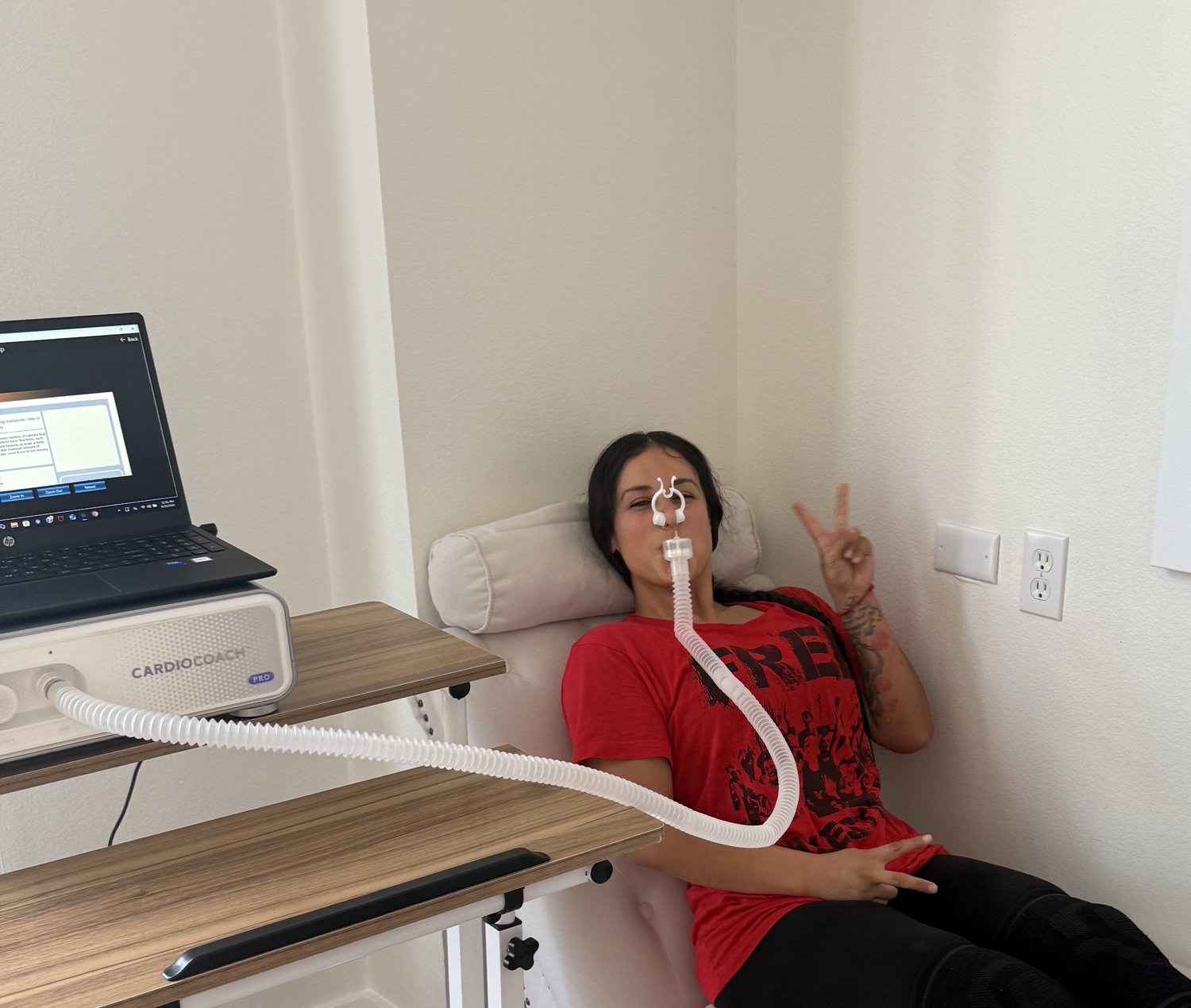
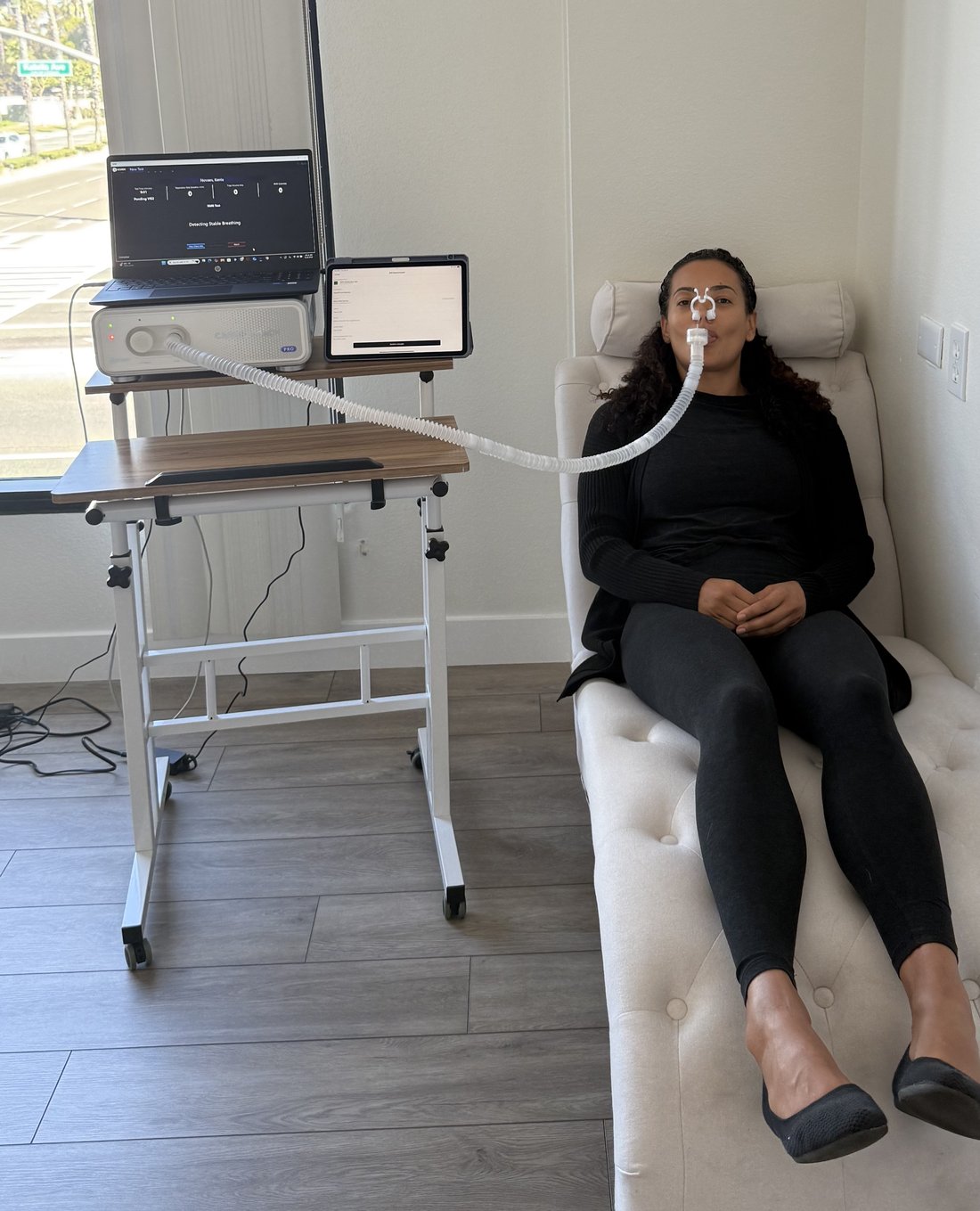
Why measure it
Apps, wearables, and online calculators all run the same kind of population equation: your height, weight, age, and sex, fitted to an average. For a lot of people that average is nowhere near right — published comparisons put predictive equations off by a wide margin for a meaningful share of individuals.
If your true resting burn is a few hundred calories below the estimate you’ve been eating to, you have been in a surplus while believing you were in a deficit. That is the entire explanation for a great many stalled plans, and no amount of discipline fixes a wrong number.
Indirect calorimetry measures it directly — oxygen in, carbon dioxide out — rather than predicting it. You breathe into a mask while sitting still, and the analyser reads what your metabolism is actually doing.
What you get
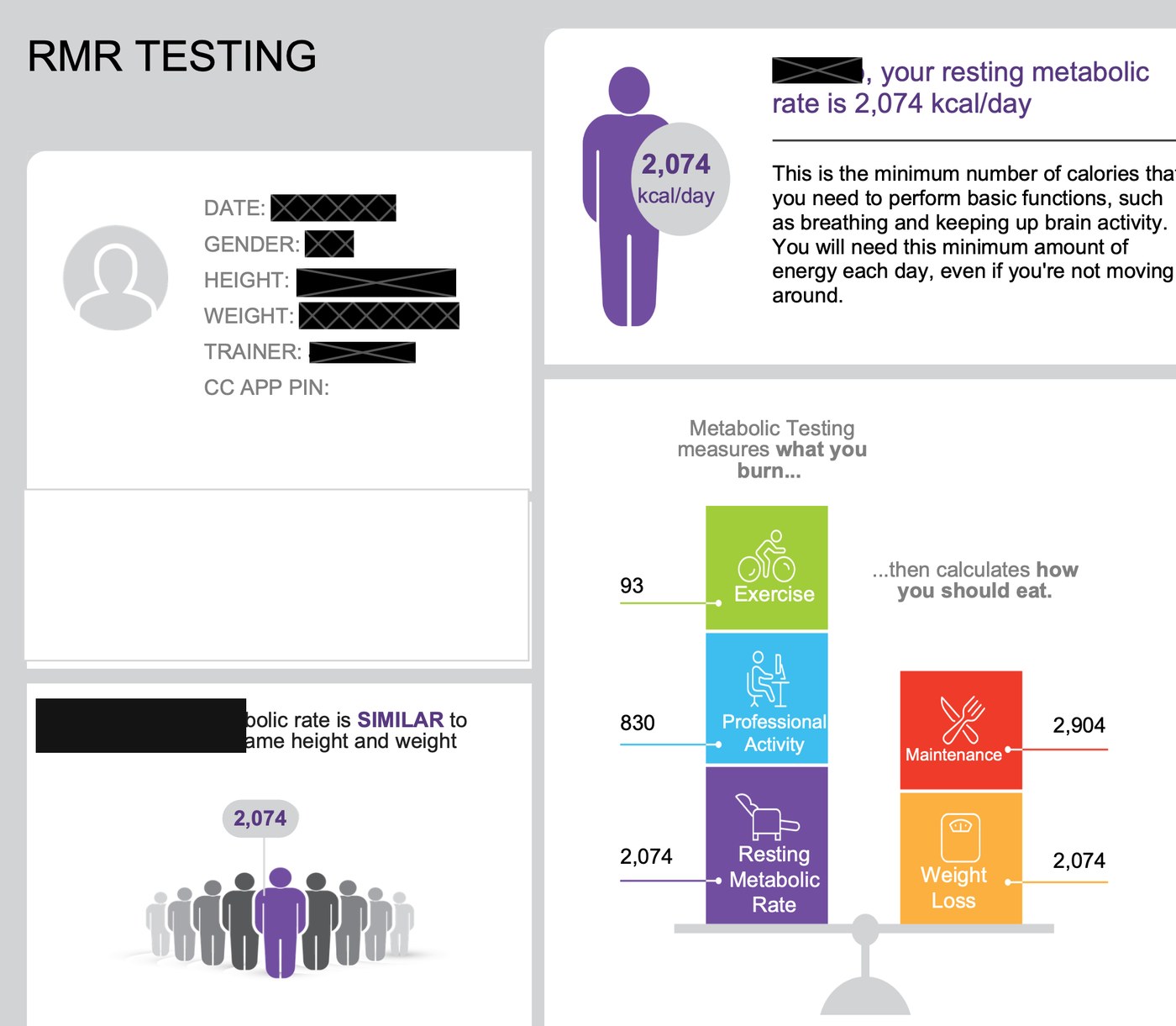
A sample report. Identifying details removed.
What your body burns keeping you alive — breathing, circulating blood, maintaining tissue — before you move at all. It’s the largest single component of your daily expenditure, typically around 70%, which is why getting it wrong throws everything else off.
Your test
Avoid exercise before the test. Arrive without rushing if you can — sitting quietly for a few minutes first makes the reading cleaner.
Pairs naturally with a DEXA scan — RMR tells you the calories, DEXA tells you whether the weight you lose is fat or muscle.
An RMR test measures energy expenditure. It is not a diagnostic test, and a low or high result is not a diagnosis of a thyroid or metabolic disorder — if something looks unusual we’ll say so and suggest you take it to your physician, which is where that conversation belongs.
Results reflect the day you were tested. Sleep, stress, recent dieting, and illness all move the number — which is why a retest after a few months is often more informative than the first one alone.
Knowing your RMR does not by itself change your body composition, boost your metabolism, or unlock anything. It replaces a guess with a measurement — which matters a great deal if you’ve been acting on a wrong guess, and rather less if your estimate happened to be close.
It’s also a snapshot of one morning. What makes it genuinely useful is retesting: measure now, change something deliberately, measure again in a few months, and see whether your metabolism moved. One number is information. Two is direction.
Pricing
$245 separately
You save $25
RMR tells you how many calories to eat. DEXA tells you whether the weight you then lose is fat or muscle. Separately they’re each half an answer; together they’re a plan you can check.
About 20 minutes seated, plus your results review. Full report to keep.
Testing is included at member rates across the Restore, Reshape, and Radiate tiers.
Common questions
Those use a population equation — height, weight, age, sex — fitted to an average person. This measures your actual gas exchange. If you happen to sit near the average, the estimate will be close. If you don’t, it can be off by enough to explain why a plan isn’t working.
Yes — at least five hours, and no caffeine or nicotine. Digestion raises your metabolic rate, so testing after eating gives you a number that isn’t your resting rate. Water is fine.